


Franchise Signage Rollout South Africa: Behind the Scenes
A franchise signage rollout in South Africa is one of the most logistically demanding brand projects a business can undertake, and most franchise owners underestimate it badly. You are not just printing signs. You are coordinating site surveys, landlord approvals, local authority by-laws, fabrication lead times, installation crews, and CI compliance checks across dozens, sometimes hundreds, of locations. Miss one step and the whole programme stalls. This guide pulls back the curtain on how large-scale multi-site signage deployments actually work, what goes wrong when they are rushed, and what separates a tight rollout from a drawn-out, budget-burning exercise.
Table of Contents
- Quick Takeaways
- What Is a Franchise Signage Rollout?
- Phase 1: Discovery and Site Audit
- Phase 2: CI Documentation and Sign Schedule
- Phase 3: Approvals, Permits, and Landlord Sign-Off
- Phase 4: Fabrication and Logistics
- Phase 5: Installation and Compliance Sign-Off
- Managing CI Consistency Across Locations
- Rollout Approach Comparison
- Common Mistakes That Derail Rollouts
- Frequently Asked Questions
- References
Quick Takeaways
| Key Insight | Explanation |
|---|---|
| Site audit before fabrication | Every location must be physically assessed before a single sign is produced. Facade dimensions, structural conditions, and electrical access vary significantly across sites. |
| Approvals are the longest lead item | Local authority permits, landlord sign-off, and structural certification can take weeks. Build these into your timeline from day one, not as an afterthought. |
| One CI document governs everything | A single, version-controlled corporate identity signage specification prevents colour drift, size deviations, and material substitutions across all sites. |
| Phased deployment reduces risk | Rolling out in priority batches rather than all at once lets you catch installation or compliance issues early before they replicate across the full network. |
| Single-vendor accountability matters | Using one signage partner for design, fabrication, and installation eliminates the blame-shifting and coordination delays that come with managing multiple suppliers. |
| South African by-laws vary by municipality | Johannesburg, Tshwane, Ekurhuleni, Cape Town, and eThekwini all have different outdoor advertising by-laws. What is approved in one municipality may be rejected in another. |
| Post-installation documentation closes the loop | A signed-off photographic record of every installed sign creates an asset register that is essential for insurance, lease renewals, and future rebrands. |
What Is a Franchise Signage Rollout?
A franchise signage rollout is the coordinated process of planning, producing, and deploying compliant, brand-consistent signage across multiple business locations at the same time or in structured phases. It covers everything from the initial site audit through to the final post-installation photographic sign-off. The scope typically includes exterior pylons, fascia and channel letter signage, interior branding, wayfinding, and point-of-sale display elements.
For South African franchise networks, the complexity is amplified by geographic spread. A retail franchise might have locations across Gauteng, the Western Cape, and KwaZulu-Natal, each governed by a different municipality with its own outdoor advertising by-laws. Add leased premises with landlords who each have their own approval requirements, and you quickly see why a franchise signage rollout is not a production job. It is a programme management job with production as one component.
The goal is not just to get signs up. The goal is to get the right signs up, in the right places, at the right time, in a way that passes inspection and holds up under a CI compliance audit years later.

Phase 1: Discovery and Site Audit
The single most common mistake in large-scale signage deployments is skipping directly to fabrication. Before a sign is designed, sized, or quoted, every location needs a physical site assessment. No two sites are the same, even within the same shopping centre.
What a Proper Site Survey Covers
A thorough site survey documents facade dimensions, wall construction materials, available electrical supply points, sightline distances for pylon signs, existing fixings that need to be removed, and any structural obstructions. It also establishes the sign hierarchy for the location: which sign leads, which signs are subsidiary, and how a customer navigates from street level to the entrance.
Site surveys also identify the planning consent position for each location. A sign that is permissible on a freestanding retail park in Midrand may need a full outdoor advertising application in a heritage-controlled precinct in the Johannesburg CBD. Discovering this after fabrication is expensive and embarrassing.
Asset Audit for Rebrands
When an existing franchise network is rebranding rather than launching new locations, the discovery phase includes an asset audit. This means documenting every sign that exists at every site: what it is made of, its current condition, whether it can be retro-fitted or must be replaced from scratch, and whether the existing structure can carry a new sign face. The asset audit drives the rebrand budget far more accurately than any estimate made from a spreadsheet.
Pro tip: Photograph every site at the survey stage with GPS-tagged images. These become the baseline record for your asset register and will save significant time during the compliance and insurance phases of the project.
Phase 2: CI Documentation and Sign Schedule
Once site data is in, the next step is translating the franchise's corporate identity manual into a site-specific sign schedule. This is where a lot of rollouts develop inconsistency problems if the process is not disciplined.
The CI Sign Specification Document
A CI sign specification document defines every sign type across the network: exact Pantone or RAL colour codes, approved font files, material specifications (aluminium composite, powder-coated aluminium, acrylic face, LED module type), illumination method, and acceptable size tolerances. This document is version-controlled. Every fabrication instruction references it by version number so that a sign made in month one matches a sign made in month eighteen.
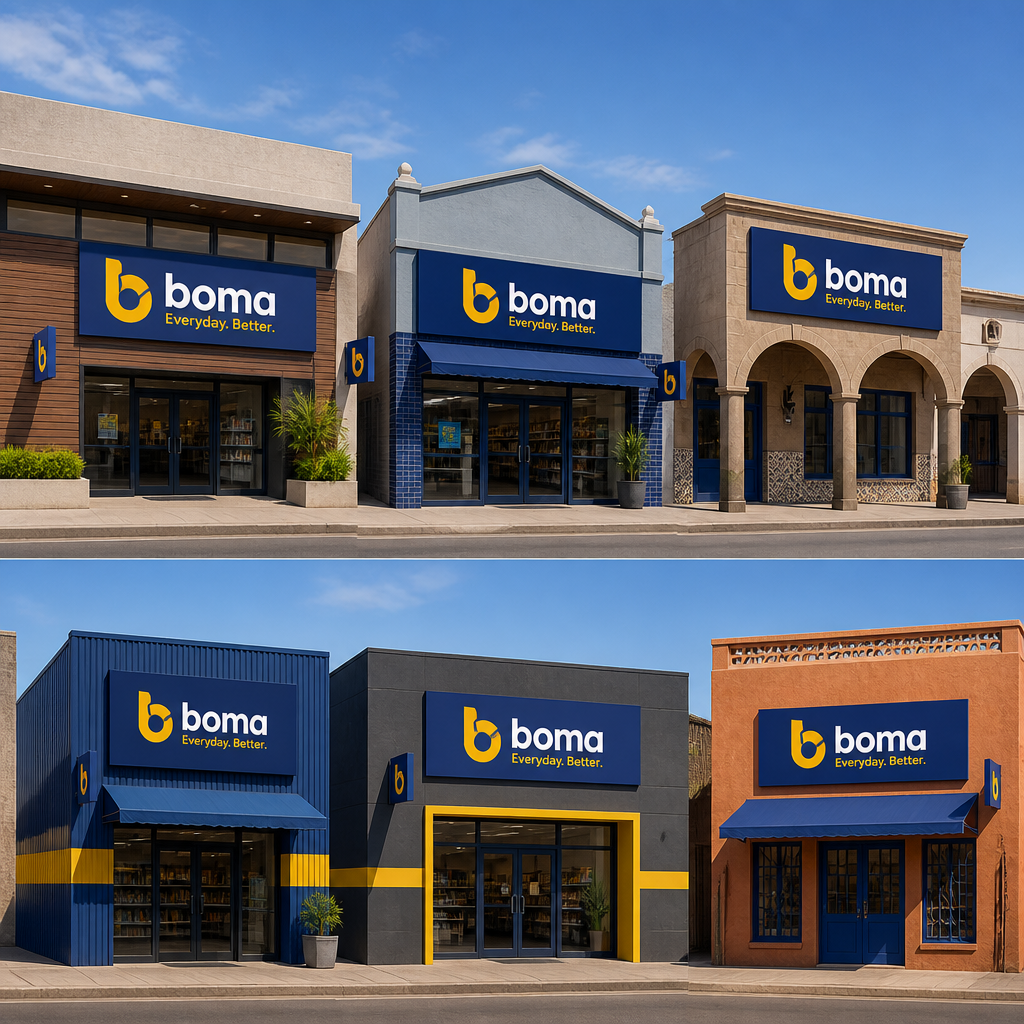
For South African franchise networks this document is critical because fabrication is rarely done in one factory. A multi-site signage deployment may draw on fabricators in Johannesburg, Durban, and Cape Town. Without a locked CI specification, colour and material drift creeps in between batches.
Site-Specific Sign Schedules
The sign schedule is the CI document applied to each individual location. It specifies which sign types go where, at what size, with what fixings, and in what sequence they are to be installed. A well-built sign schedule is also what your installation crews work from on the day. If it is vague, the crew improvises. Improvisation on a CI rollout is how you end up with a sign 200mm off-centre on your flagship store.
A disciplined franchise signage implementation ensures that every location reflects the same brand promise, even when the facade differs from site to site. The sign schedule is the mechanism that makes this possible in practice.
Phase 3: Approvals, Permits, and Landlord Sign-Off
This is the phase that surprises most franchise owners, because it is the one they have the least control over and the one that most frequently blows out timelines. Approvals are typically the longest lead item in any rollout, and the mistake is treating them as something you deal with after fabrication is underway.
Municipal Outdoor Advertising By-Laws
South African municipalities regulate outdoor advertising under their own by-laws, which are not uniform nationally. A pylon sign application in the City of Tshwane follows a different process, with different documentation requirements and different approval timeframes, than one in the City of Johannesburg or Buffalo City. For a franchise network spanning multiple provinces, the approval workload is substantial and highly variable.
Experienced signage project managers build approval timelines into the programme from the start, flag the sites with the most complex consent requirements, and engage with local authorities early. Waiting until everything else is ready before submitting permits is a reliable way to delay your go-live date by months.
Landlord and Body Corporate Requirements
Most retail and commercial leases require written landlord consent before any signage is installed or modified. Many shopping centres and business parks add their own signage specifications on top of municipal requirements, covering sign position zones, illumination restrictions, and maximum sign face areas. These requirements are site-specific and must be resolved before fabrication begins on that location's signs.
Pro tip: Request the landlord's signage specification document at the site audit stage, not at the approval stage. In South Africa, many older leases reference outdated specifications that no longer match what is actually on the property. Getting this resolved early prevents a redesign late in the process.
Phase 4: Fabrication and Logistics
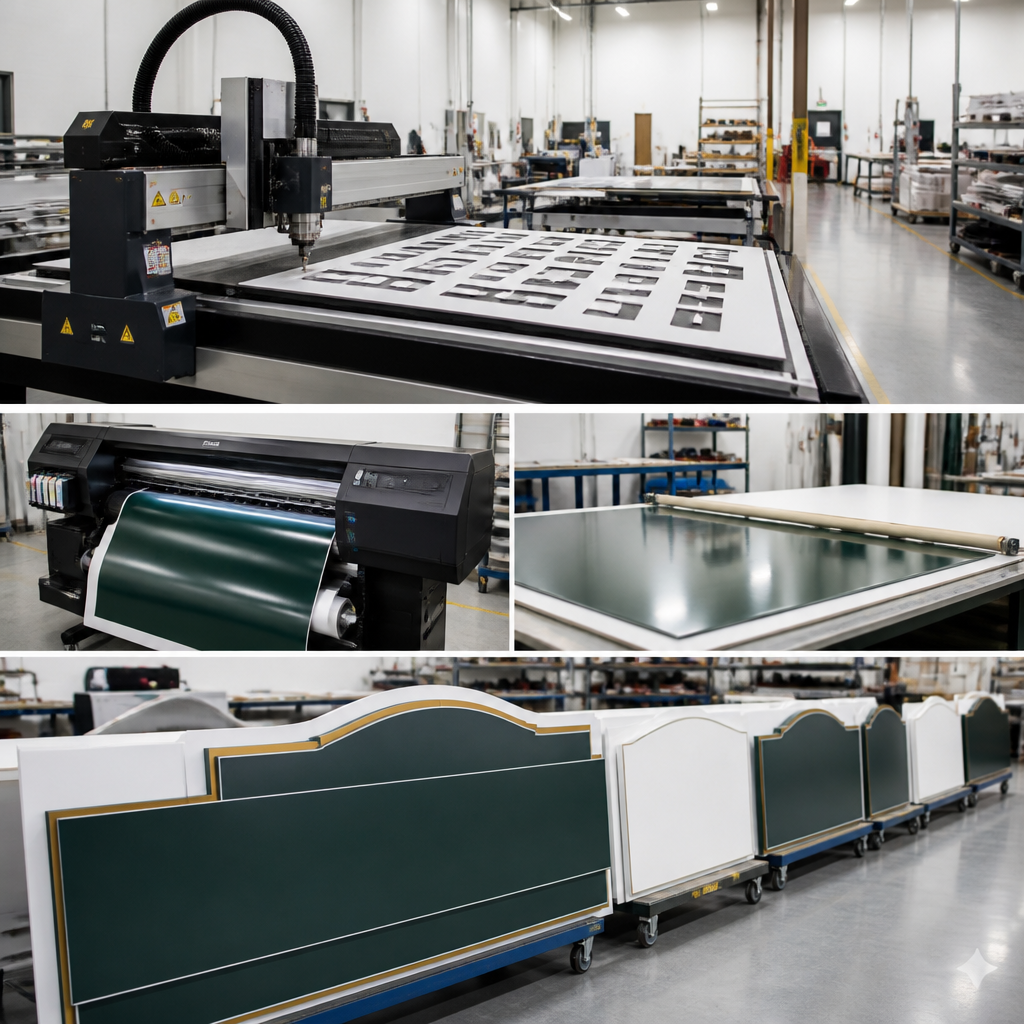
With site data confirmed, the CI specification locked, and approvals either in hand or on a tracked timeline, fabrication can begin. For a large network, this phase involves production planning across multiple sign types, sequenced against the installation schedule.
Production Sequencing
Not all signs for a site are made the same way or take the same time. LED-backlit pylon signs and fabricated channel letter sets have longer production cycles than flat-faced aluminium composite fascia signs. A well-planned production schedule staggers manufacturing so that all the components for a given site arrive at the installation location together, not in two separate deliveries three weeks apart.
For a nationwide franchise rollout, this requires tight coordination between the project management function, the fabrication workshop, and the logistics provider. A delay on one sign type for Site 12 should not hold up the installation of Sites 13 through 20.
Quality Control Before Dispatch
Every sign should be inspected against the CI specification before it leaves the fabrication facility. Colour accuracy, dimensional correctness, and illumination function are checked at this stage, not on site during installation. Discovering a batch of pylon sign faces with the wrong Pantone match when the installation crew is already on-site is costly in both time and credibility.
For franchise networks where the franchisor's brand team has final CI approval authority, it is practical to establish a photographic sign-off protocol at the quality control stage, where the fabricator submits images of completed signs against the specification before dispatch is authorised.
Phase 5: Installation and Compliance Sign-Off
Installation is the phase that is most visible and most often measured, but it is only as successful as the phases that preceded it. An experienced installation team working from a clear sign schedule, with all materials on site and all permits in hand, can move quickly and cleanly.
Crew Briefing and Site Safety
In South Africa, signage installation carries occupational health and safety requirements under the Occupational Health and Safety Act. For large-scale pylon sign installation or elevated fascia sign work, this includes working-at-heights compliance, scaffold or cherry picker safety, and electrical installation compliance under the Electrical Installation Regulations. These are not paperwork exercises. A crew that does not meet these requirements exposes the franchise and the signage contractor to liability.
Post-Installation Sign-Off
Every installed sign should be photographically documented and signed off against the sign schedule before the crew leaves the site. This creates the post-installation asset record that closes the loop on the rollout. It is also the basis for the franchisor's CI compliance audit and the document that confirms to the client that what was installed matches what was specified and approved.
In practice, the post-installation record is also the document that protects the signage contractor if a dispute arises later about what was installed, in what condition, and when. Skipping it is a false economy.
Managing CI Consistency Across Locations
Franchise CI signage compliance is not a one-time event. It is an ongoing operational responsibility. A sign that is installed correctly in year one can be modified by a franchisee, damaged and repaired with non-compliant materials, or simply degrade in ways that do not meet brand standards over time.
CI Audit Programme
Franchise networks that take brand standards seriously build CI signage audits into their operations calendar. This typically involves a periodic photographic review of every location's signage against the current CI specification. The audit identifies non-compliant signs, tracks their remediation, and provides the franchisor with a network-wide CI health score.
For networks operating across South Africa and into neighbouring markets such as Botswana, Zimbabwe, and Mozambique, remote photographic audit tools simplify this process significantly. Installation crews submit geo-tagged, time-stamped images at completion, and the project management team can verify compliance without visiting every site.
Managing Franchise Owner Modifications
A common CI problem in franchise networks is franchisee-initiated signage modifications. A franchisee adds a promotional banner that obscures the fascia sign. Another replaces a damaged sign panel with a cheaper non-specification material. These are not malicious decisions but they accumulate into a network-wide brand consistency problem. Clear franchise agreements that specify sign maintenance obligations and require pre-approval for any signage modifications are the operational counterpart to a well-executed initial rollout.
Rollout Approach Comparison
The table below compares the three main approaches franchise networks take to executing a multi-site signage rollout. Each has real trade-offs that affect cost, timeline, and CI consistency.
| Approach | How It Works | Key Trade-Off |
|---|---|---|
| Single turnkey signage partner | One provider manages design, fabrication, permits, installation, and sign-off across all sites. One project contact, one accountability line. | Requires choosing a partner with genuine national installation capability and proven CI management systems. The wrong choice is costly. The right choice eliminates most coordination risk. |
| Head office-managed multi-vendor | Head office coordinates separate suppliers for design, production, and installation. Allows competitive pricing at each stage. | Coordination complexity increases sharply with site count. Version control on CI specifications becomes difficult. Blame-shifting between vendors is common when problems arise. |
| Franchisee-managed per-site | Each franchisee procures their own signage locally to a provided CI specification. Reduces central project management burden. | CI consistency is almost impossible to maintain at network level. Local suppliers rarely match specification tolerances. Audit costs are high and remediation is ongoing. |
Common Mistakes That Derail Rollouts
After working through large-scale deployments, the same failure patterns appear repeatedly. They are not caused by bad intentions. They are caused by underestimating the complexity of the process and treating signage as a procurement task rather than a programme.
Starting Fabrication Before Permits Are Confirmed
This is the most common and most expensive mistake. Fabricating pylon signs to a specific size only to discover that the local authority requires a smaller structure means scrapping completed hardware. The budget hit is significant, but the schedule hit is worse because fabrication must restart from scratch while the installation window has already been missed.
Treating the CI Manual as the Sign Specification
A brand's CI manual is a design document. It tells you what the brand looks like. It does not tell a fabricator what gauge aluminium to use, which LED module achieves the correct face brightness, or how a sign must be fixed to a specific wall construction type. Translating the CI manual into a fabrication-ready sign specification is a technical step that requires signage engineering expertise, not graphic design. Skipping this translation creates quality and compliance problems downstream.
Underbudgeting for Approvals and Compliance
Permit fees, structural engineering sign-off, electrical compliance certificates, and landlord consent processes all carry costs that are sometimes left out of initial rollout budgets. For a network of twenty or more locations, these costs are material. Building a realistic contingency into the approval budget from the outset is not pessimism. It is accurate project costing.
For franchise networks planning their next deployment, or managing an ongoing rebrand across existing locations, custom signage solutions built around a centralised CI specification are the foundation of a compliant, on-brand result across every site. SignShopper's project teams in Gauteng manage the full process from site audit to post-installation sign-off, with CI compliance as the operational standard, not an afterthought.
Frequently Asked Questions
How long does a franchise signage rollout typically take in South Africa?
Timeline depends heavily on network size and permit complexity, but a realistic expectation for a full end-to-end rollout is four to twelve months for a network of ten to fifty locations. The primary variable is approval time, which is driven by municipal processes and landlord negotiations outside the signage supplier's direct control. Smaller networks with straightforward sites can move faster. Networks spanning multiple provinces should plan for the longer end of that range.
What is the difference between a CI manual and a sign specification?
A CI manual defines the brand's visual identity: colours, typography, logo usage rules, and design intent. A sign specification translates that into fabrication instructions: exact material types, dimensional tolerances, illumination specifications, fixing methods, and electrical requirements. You need both, and a competent signage partner converts your CI manual into a sign specification as part of the discovery phase. If a supplier goes straight to quoting without this step, that is a quality risk.
Can different franchise locations have different sign sizes and still be CI-compliant?
Yes, and in practice they must. Facade dimensions and structural constraints vary across a network. A CI-compliant sign specification defines acceptable size ranges, proportion rules, and approved adaptations for constrained sites rather than a single fixed size applied everywhere. The discipline is maintaining proportional and material consistency even when absolute dimensions differ. This is why site-specific sign schedules are critical.
Who is responsible for obtaining signage permits, the franchisee or the franchisor?
This should be defined clearly in the franchise agreement and in the rollout programme governance. In practice, central management of the permit process by the franchisor or their appointed signage partner is far more efficient than delegating it to individual franchisees. Franchisees rarely have the expertise to navigate municipal outdoor advertising applications, and inconsistency in how applications are prepared leads to inconsistent approval outcomes across the network.
What happens to non-compliant signs found during a CI audit?
Non-compliant signs identified during a CI audit are typically classified by severity: signs that are structurally unsafe or damaged require immediate remediation, signs with material or colour deviations are scheduled for replacement at the next maintenance cycle, and signs with minor positioning or accessory issues are corrected in-store. A well-managed audit produces a remediation register with assigned responsibilities and deadlines, not just a list of problems.
Is it possible to phase a large rollout to manage costs?
Yes, and phasing is generally the recommended approach for networks of more than twenty locations. Priority-based phasing, which sequences high-visibility flagship locations first and lower-traffic sites later, allows the network to test the production and installation process at smaller scale before committing the full budget. It also spreads capital expenditure across financial years. The key is maintaining version-controlled CI documentation so that signs produced in phase one and phase three are identical in specification.
If you have managed a franchise signage rollout in South Africa, we would like to hear what surprised you most about the process and what you would do differently.
We would love your feedback and any insights you would share with others. What perspective would you add?
References
- How franchise signage rollouts work: planning, approvals, and programme management across multiple locations
- Why site surveys and asset audits are critical to corporate signage rollout success
- What to expect from a full-service franchise LED sign rollout from consultation to installation
- Step-by-step guide to planning and executing a multi-site signage deployment