


Eco-Friendly Signage South Africa: Materials and Options
A retired shopfront sign is rarely recycled. It usually comes down with the rest of the fit-out waste, and its replacement is chosen for looks and price alone. For corporate and franchise brands in South Africa, that pattern is starting to look out of step with how customers and head offices judge a business. Eco-friendly signage South Africa buyers can actually use is wider than most people expect, and the trade-offs are clearer than the marketing suggests. This article sets out the materials, lighting choices and approval steps we walk clients through at SignShopper in Gauteng.
Table of Contents
- Quick Takeaways
- Why Eco-Friendly Signage Matters for Your Brand
- Sustainable Signage Materials That Hold Up
- Vinyl, Acrylic and Wood: The Trade-Offs
- LED Lighting and the Energy Question
- Comparing the Main Eco-Friendly Options
- Checking Eco Claims Before You Approve a Sign
- Outdoor Advertising Rules and Material Choice
- Rental and Reuse for Events and Pop-Ups
- Frequently Asked Questions
- References
Quick Takeaways
| Key Insight | Explanation |
|---|---|
| Judge a sign by its full life, not its first install | Durability and end-of-life recovery decide the real environmental cost. A sign replaced every two years is rarely the green choice. |
| Match the substrate to the location | Paper-fibre honeycomb board is rated for indoor use only. Exterior work belongs on recycled aluminium or another weather-rated material. |
| Ask for the spec sheet, not the slogan | Request the substrate, thickness, adhesive type and recyclability status in writing before you approve a mock-up. |
| Lighting runs every night, so control it | Put backlit and channel-lit signs on photocells or timers set to your trading hours. |
| Specify modular LED builds | Replacing a failed module costs less and creates less waste than replacing a sealed light box. |
| Check municipal rules before you pick materials | Outdoor advertising is governed by national guidance and local by-laws, and weight and fixing methods can affect approval. |
| Rent for events where you can | Reusable frames and rental stock cut the single-use waste that comes with event printing. |
Why Eco-Friendly Signage Matters for Your Brand
For corporate groups and franchise networks, the sign is often the first sustainability statement a building makes. Customers read it before they see the product, and a head office brand team reads it again when it approves a site. Not every client asks about materials, but the ones who do tend to be the larger accounts.

In our experience, the pressure comes from three places. Head offices want brand standards that cover materials as well as colour. Larger groups report on environmental performance and want suppliers who can show evidence. Landlords and body corporates increasingly set their own rules for what can go on a façade. A sign that ignores all three creates friction at approval stage, even when the design is right.
What Counts as Eco-Friendly in Practice
"Eco-friendly" is a loose term, so we use a working definition with three parts. The material should be recyclable, or made from recycled or responsibly sourced content. Production and finishing should avoid unnecessary waste and harsh chemicals. And the sign should last long enough that replacing it is the exception, not the routine.
That last part is the one most buyers underrate. A cheap sign that fades in two summers and then gets binned carries more environmental cost than a more expensive sign that serves a full refresh cycle. Our advice is to ask how long the sign needs to last before you ask what it is made from.
A sign that lasts a decade in the right material is usually greener than a cheap sign replaced every two years. Durability is the most underrated sustainability feature in signage.
Some providers also market "eco" as a finish or a sticker. Be wary of that. Labels without specifications tell you very little about what will happen to the sign at the end of its life.
Sustainable Signage Materials That Hold Up
A premium commercial printer recently added six sustainable substrates to its range, including FSC honeycomb board, non-PVC polyethylene and recycled PETG. The list is a useful signal of where the market is heading, but a material only helps if it suits the job it is doing. Here is how we match the common options to real sites.
Recycled Aluminium for Outdoor Monument and Post Signs
Aluminium is our default recommendation for exterior signs that have to stand up to weather. It resists rust, handles sun and rain well, and is 100% recyclable according to the material guidance we reviewed. Monument and post signs at estate entrances, forecourts and business parks are where it earns its place.
The catch is weight. Aluminium is heavier than board substrates, so the frame, footing and fixings need engineering, not guesswork. We also specify the finish with care, because a good powder-coated or anodised surface lasts longer and keeps the sign out of the waste stream for longer. Ask your fabricator which finish they are quoting and how it is applied.
FSC Honeycomb Board for Indoor Signage
FSC honeycomb board is the material we reach for most often for indoor work. It is made from paper fibre, uses water-based glues and is 100% recyclable. The most common thickness is 10mm, with 16mm available for heavier fixtures. It works well for reception walls, wayfinding, point-of-sale and trade show displays.
The limitation is clear: it is for indoor use only. In a Gauteng summer, direct sun and humidity through open doors will shorten its life on any exposed façade. A common mistake is specifying it for a covered entrance because it looks like a cheaper alternative. If the sign will get sun or rain, it belongs in a different material.
Pro tip: Before you approve a board sign, check the thickness, the adhesive system and the FSC claim on the spec sheet. A sign described only as "eco board" could mean almost anything, while a named substrate with water-based glue gives you something you can verify.
Non-PVC Polyethylene for Event Banners
For banners, non-PVC polyethylene is a practical alternative to traditional PVC banner material. The guidance we reviewed lists a 13 mil thickness, indoor or outdoor use, heat-sealable edges and 100% recyclability. It reproduces colour well, which matters when a brand palette has to hold up on a large format print.
We use it for hanging banners, step-and-repeat backdrops and temporary site signage. The main discipline is matching the banner to its working life. A two-day expo does not need the same spec as six months of site hoarding. Over-specifying wastes money and material, and under-specifying means you reprint sooner.
Vinyl, Acrylic and Wood: The Trade-Offs
Many buyers assume PVC is always the villain and wood is always the green choice. Neither assumption holds up well on a real project. Each material has a different recovery route, a different life span and a different maintenance demand, so the answer depends on where the sign sits and how long it is meant to stay there.
Vinyl Graphics and the Recycling Question
Vinyl remains common for adhesive graphics, window film and fleet branding, largely because it is durable and quick to apply. Its recyclability depends on whether the film can be separated from its backing and adhesive, and whether a recovery stream exists near you. Those are practical questions, and they rarely come up at quote stage.
Our approach is to reduce the amount of rigid PVC foam we use. Where a paper-based board does the same job for an indoor permanent sign, we switch. For temporary graphics, we ask the client to plan removal and separate the vinyl at the end of the campaign rather than letting it go into general waste.
Acrylic Panels for Backlit and Lit Interiors
Acrylic is a practical choice for lit interior signs, menu boards and branded panels because it is clear, light and easy to shape. Some sources describe it as recyclable, which makes it a better option than many composite plastics. In practice, recyclability depends on keeping clean offcuts apart from mixed waste.
The problem is that acrylic often gets fixed with adhesives and combined with LED modules and aluminium channels. That makes end-of-life separation harder. We design acrylic panels so the lighting modules can be removed without breaking the panel, which keeps more of the sign recoverable.
Solid Wood for Hospitality Feature Pieces
Wood is the traditional option, and it can be a responsible one when the timber comes from a managed source with FSC certification. Restaurants, boutique hotels and lodges in and around Johannesburg and Pretoria use wood for feature signs because it suits the setting. Its environmental credentials depend on sourcing and finish.
Wood also needs maintenance. Dry winters, strong sun and summer storms cause cracking, warping and fading if it is not sealed properly. Use water-based finishes where possible, and plan a recoat schedule at handover. A wood sign that needs repainting every year rarely beats a durable aluminium piece on total impact.
LED Lighting and the Energy Question
Materials get most of the attention, but a backlit sign runs every night for years. For many illuminated signs, the electricity they consume over their working life matters more than the substrate. A sign that is efficient to run and easy to repair is usually the stronger sustainability choice.
Energy matters even more for businesses that depend on backup power during outages, because every wasted watt has to be supplied from somewhere. Lighting decisions made at design stage will follow the sign for its whole life, so they deserve the same scrutiny as the material.
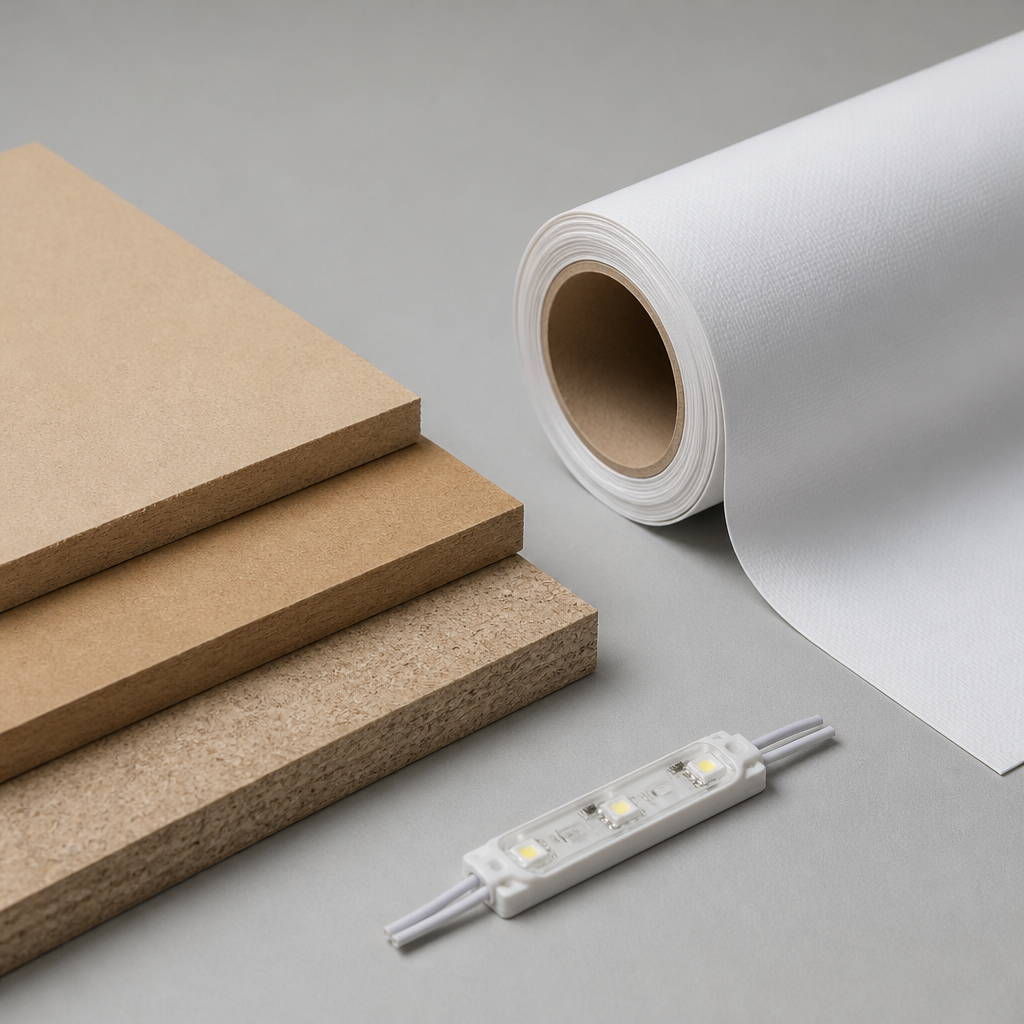
Specifying Efficient LED Modules
Specify quality LED modules with stable drivers and clear warranty terms. Cheap modules often fail early, and the failure usually means the whole face gets replaced. Ask your fabricator which module brand and driver they use, and whether the driver is accessible for service.
Timers, Photocells and Trading-Hour Schedules
Many businesses leave illuminated signs on all night because nobody owns the switch. A photocell or timer tied to trading hours cuts run time without affecting visibility when the business is open. We set the schedule at handover and place the controller where the client can actually reach it.
Be realistic about brand requirements. Some franchise standards require a sign to be lit during specific hours. Check your brand manual before you switch anything off, and write the schedule into the handover pack.
Pro tip: Ask for the controller to be mounted where the store manager can reach it without a ladder. A timer nobody can adjust usually ends up set to permanent on.
Designing Signs for Repair, Not Replacement
A sealed light box that needs full replacement when one module fails is a waste generator. We prefer cabinets with access panels, modular LED strips and replaceable power supplies. The build takes a little longer upfront, but a repair replaces parts, not the entire sign.
This also helps at the end of the contract. A sign built in separable parts can be dismantled, sorted for recycling and reused on a smaller site, instead of being broken up for skip disposal.
Comparing the Main Eco-Friendly Options
Use this table as a starting point when you brief a project. It compares three materials we specify most often, and the limitations are the part that matters most at approval stage.
| Material | Best Use | Main Limitation |
|---|---|---|
| Recycled aluminium | Outdoor monument and post signs, entrances, car parks | Heavier than board, so frames and fixings need engineering |
| FSC honeycomb board | Indoor reception walls, wayfinding, point-of-sale | Indoor use only, and unsuitable for direct sun or rain |
| Non-PVC polyethylene | Hanging banners, backdrops, temporary site signage | Best suited to campaign life, not permanent fixtures |
Read the table in the context of the site. A recycled aluminium sign is rarely the right answer for a lobby, and a board sign is the wrong choice for a forecourt. Most projects that get the material wrong made the decision on price or appearance before they checked the location.
For multi-site brands, consider a standard palette of two or three approved materials. It simplifies procurement, makes spec sheets comparable across regions and cuts the number of one-off decisions your team has to defend.
Checking Eco Claims Before You Approve a Sign
The word "eco" appears on a lot of signage quotes now, and it often means very little. Some suppliers offer a green label without naming the material or the adhesive. Your job at approval stage is to turn a general claim into something you can check.
Asking for Documentation Before the Mock-Up
Request a written spec sheet that lists the substrate, thickness, adhesive system, finish and recyclability status. For timber, ask for the certification number, not just a logo. If a supplier cannot answer these questions in writing, treat that as information too.
We also ask for a physical sample of the substrate, not just a screen mock-up. Colour on a monitor tells you nothing about how a board edge looks or how print sits on a textured surface.
Planning for Removal and End of Life
Most sign contracts cover installation and say nothing about removal. When the lease ends or the brand refreshes, somebody has to pay to take the sign down, and somebody has to decide where its parts go. Put removal, storage and recycling responsibilities into the contract before the sign goes up.
Ask who owns the sign, who is responsible for dismantling it and where the components will go. A sign that can be separated into aluminium, LED modules and acrylic is far more likely to be recycled than one fixed together with adhesive and sent to a skip.
Pro tip: Photograph the fixings and mounting points at installation. Your removal crew will thank you, and the photos show the next fabricator exactly how the sign can be reused or taken down without damage.
Outdoor Advertising Rules and Material Choice
Outdoor signage in South Africa is shaped by national guidance as well as local rules. The Department of Forestry, Fisheries and the Environment has published a revised South African Manual for Outdoor Advertising Control, known as SAMOAC. Its stated aim is to minimise the impacts of outdoor advertising while maximising its benefits, which is a useful lens when you choose materials.

Reading National Guidance Alongside Local By-laws
National guidance sets the principles, but municipalities apply their own by-laws to size, placement, illumination and approval. Eco-friendly materials do not exempt a sign from those rules. A recycled aluminium monument sign still needs the same permit as a steel one, and the approval conversation is easier when the material decision is documented early.
In practice, we run the permit check before the material is locked. Once a client has approved a design in a heavy substrate, switching to a lighter one often means revisiting structural details and sometimes the design itself.
Where Material Choice Meets Structural Approval
Weight, wind loading and fixing methods are the points where sustainable materials and approval requirements meet. Aluminium monument signs need footings and frames that match their weight, and that engineering is part of the environmental cost too. Lighter substrates can reduce transport and installation impact, but only if they still meet the structural requirements.
The advice is simple: involve your fabricator and, where needed, a structural engineer before the design is final. Changing the spec at approval stage costs more in time and materials than getting it right during the design phase.
Rental and Reuse for Events and Pop-Ups
Event signage has one of the worst waste profiles in the industry. Large banners get printed, used for a weekend and binned. Pop-up branding follows the same pattern. Rental and reuse models break that cycle, and SignShopper offers signage rental solutions for businesses running events across Africa.
Reusing Frames, Stands and Lightweight Structures
The frame is usually the durable, expensive part. Stands, pull-up systems and modular display frames can be reused across many events if the graphics are swapped. We keep rental stock of frames and stands so clients only print the graphic that changes.
The practical benefit is that the brand structure stays consistent across venues while the printed content does the work. For franchise groups running regional promotions, this cuts both cost and waste.
Printing Only What Changes
A common mistake is reprinting the whole sign for every event. Most brand elements stay the same. Design the core system so the logo, colours and frame are fixed, and only the event details change. That approach reduces substrate waste and speeds up approvals.
Event venue managers can also ask for a rental agreement that includes collection and reuse. A clear return process keeps frames in circulation and stops usable components from ending up in general waste.
Pro tip: Print short-life campaign banners on non-PVC polyethylene, and move to a sturdier frame system for anything that repeats. Matching the material to the number of uses is the simplest waste reduction most event teams can make.
Frequently Asked Questions
Is eco-friendly signage more expensive than standard signage?
It can carry a higher upfront cost for some materials, particularly recycled aluminium with a proper finish. The gap often narrows over the life of the sign, because durable and repairable builds need fewer replacements. Compare quotes on a total life basis, not the first invoice.
Which material is best for an outdoor sign in Gauteng?
For permanent exterior signs, recycled aluminium with a durable finish is our usual recommendation because it handles sun, rain and wind well. The structure, footings and permit requirements still need checking before you commit.
Can FSC honeycomb board be used outdoors?
No. The material we reviewed is rated for indoor use only. Keep it under cover and away from direct sun and moisture, and use a weather-rated material for any exposed sign.
How do I know if a supplier's eco claim is credible?
Ask for the substrate name, thickness, adhesive type, finish and recyclability status in writing. If the answers are vague, the claim is vague too.
Do eco-friendly signs need separate council approval?
Materials do not exempt a sign from local by-laws. Check the municipal requirements for size, placement and illumination, and run the permit check before the material is finalised.
Can LED signs be made more sustainable?
Yes. Use quality modules with accessible drivers, control run time with timers or photocells, and build the sign so individual parts can be replaced or recovered.
Tell us what worked, or what stalled, when you tried to make a sign more sustainable, and we will share what we learn with other readers.