


Signage Budget South Africa: Getting More Impact for Less
Building a signage budget in South Africa usually starts with the wrong question. Owners ask how little they can spend on a sign, when the real question is what the sign has to do for the business over the next three to five years. A large illuminated fascia that nobody can read from the road is a poor investment, and so is a cheap banner that fades by the first summer storm. This guide shows where a small business's signage money actually goes, where SMEs overspend, and how to get visibility from every rand you spend on signs without paying for the same job twice.
Table of Contents
- Quick Takeaways
- Where a Small Signage Budget Really Goes
- The Overspending Patterns We See Most
- Choosing the Right Format
- Spending Where Customers Actually Look
- Lighting and Running Costs
- Brand Standards Without Premium Rates
- Getting Comparable Quotes
- Frequently Asked Questions
- References
Quick Takeaways
| Key Insight | Explanation |
|---|---|
| Budget for the whole life of the sign | Design, production, installation, power, cleaning and replacement all belong in the same budget. A sign that is cheap to buy can cost more over three years than a mid-range sign built to last. |
| Test readability from the real viewing distance | Lettering height and contrast matter more than overall size. Check legibility from the road, the parking area or the corridor before you approve artwork. |
| Put the best materials on the sign people see first | Spend on the street-facing or entrance sign, where a premium finish and proper lighting earn their cost. Use printed or temporary options for secondary zones. |
| Write one brand sheet and reuse it | Fonts, colour references, logo clearances and mounting rules written down once cut design fees on every new sign or branch, especially in franchise rollouts. |
| Compare quotes line by line | Check materials, installation, electrical connection, delivery and whether VAT is included. Most price gaps between quotes come from differences in specification, not from honest pricing. |
| Plan for power and maintenance from day one | Know how the sign is powered, where the driver sits and who cleans it. A backlit sign that is dark for weeks loses most of its return. |
Where a Small Signage Budget Really Goes
Ask most owners what a sign costs and they will quote the production invoice. That number is usually the smallest part of what the sign costs across its working life. A realistic budget splits into at least four areas: design, production, installation and compliance, and running costs. Leaving any of them out is how a project that looked affordable on paper turns into a problem within a few months.
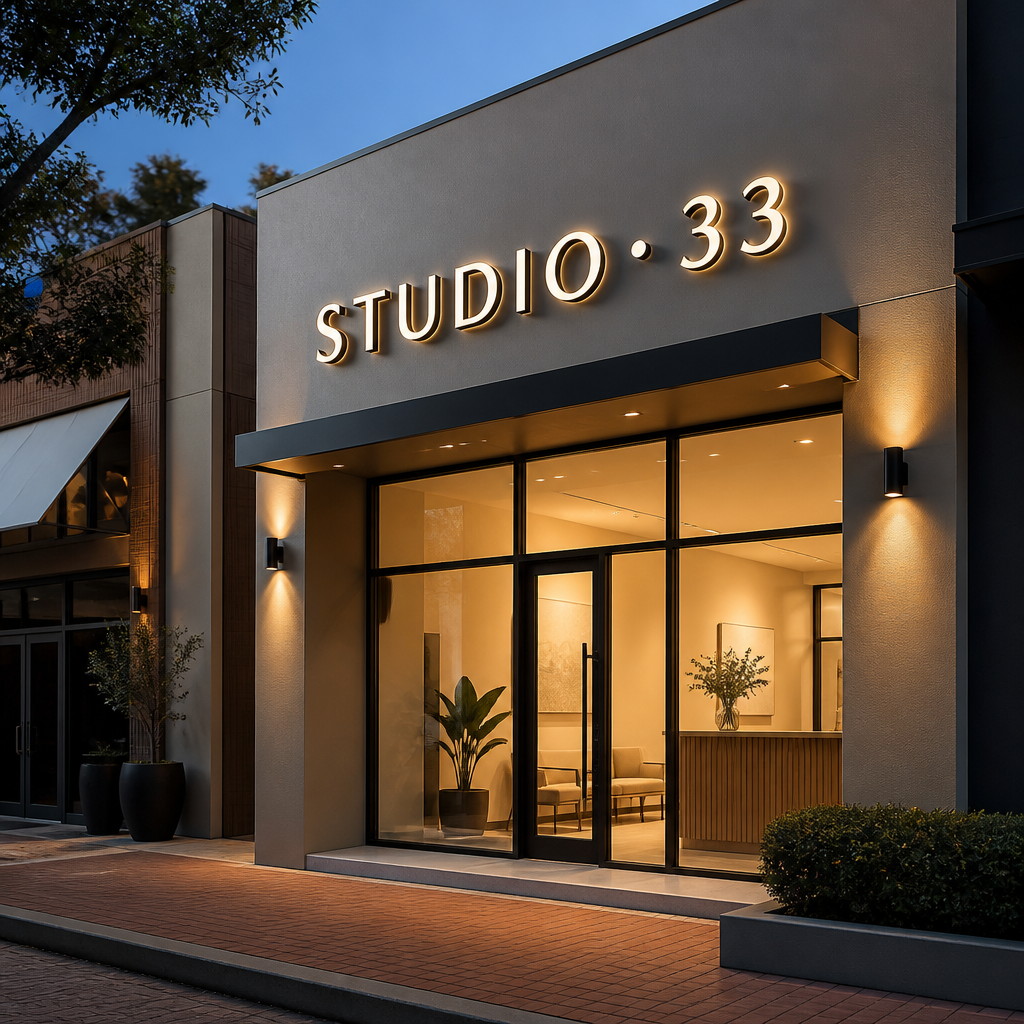
Design and Artwork
Design fees are where many SMEs lose control early. Artwork that has to be redrawn for every size, or a file that arrives without fonts or correct colour references, adds cost at each step. The cheapest route is a locked template built once from your corporate identity, then reused for every new sign or branch.
Ask whether the design fee includes file preparation for each production method. A logo that works on a printed vinyl banner may need a different file for backlit acrylic or routed aluminium. Clarifying this before approval stops you paying twice for the same artwork.
Production and Materials
Materials drive the production price more than most owners expect. Substrate thickness, the grade of printed vinyl, the type of LED module and the finish on aluminium all change the quote. A cheap sign built from thin materials will fade, warp or buckle under Gauteng summers, which means paying for it twice.
Ask for two specifications side by side. Quote the same sign in a standard and a premium material, then compare the price difference against the expected life. In practice, the premium option often costs a modest amount more and lasts noticeably longer, which makes it the cheaper choice over three years.
Installation and Compliance
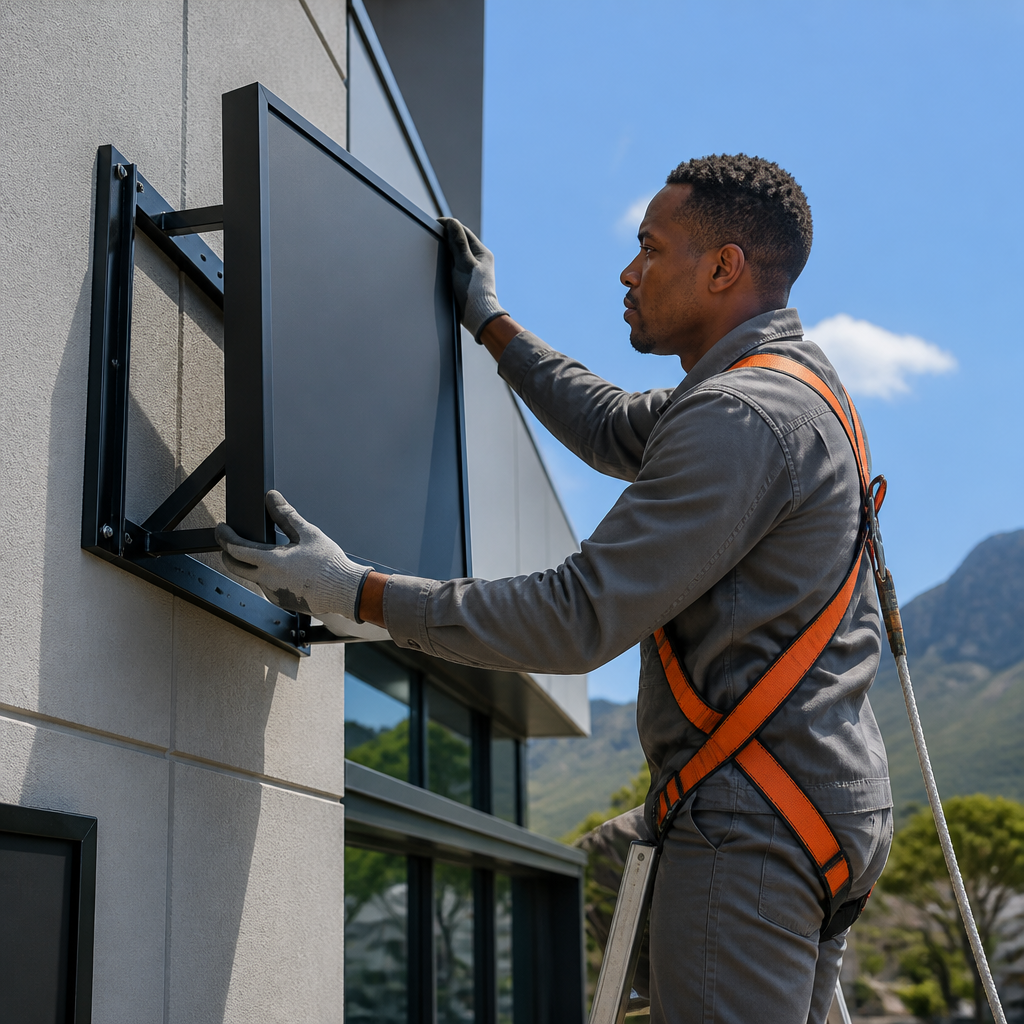
Installation is the line item owners underestimate most, especially for fascia signs, pylon bases and anything that needs a crane or roof access. Ask whether the quote includes scaffolding, electrical connection and making good the wall after removal. These are not small extras you can add later without a dispute.
Check your lease and building rules before you order. Landlords, body corporates and local authorities may have approval processes for illuminated or large signs. A sign that has to be removed after a complaint costs far more than the approval would have.
The Overspending Patterns We See Most
The expensive mistakes are rarely made by owners who are careless with money. They are made by owners who see a bigger sign as the safe choice. Size is the most common way SMEs spend more and get less visibility, and the pattern repeats across hotels, restaurants, gyms and retail shops.
Buying Size Instead of Readability
A sign that is three metres wide but uses thin, light lettering can be harder to read than a smaller sign with bold letters and strong contrast. Most people take in a sign in a glance, so the message has to be short. Three words in large type usually beat a paragraph of product lists.
Test readability by standing where the customer will be, not where the designer's mockup was viewed. Walk to the car park entrance and read the sign from the car. If it fails there, a bigger sign is not the fix. Clearer lettering is.
Ordering the Full Set at Once
Ordering every sign for every site in one go looks efficient, but it locks in the design before you know what works. A safer approach is to produce the primary sign first, live with it for a few weeks, watch how customers respond, and then order the secondary pieces. Even a simple change, such as moving a menu board or an offer banner, can improve results without new production costs.
Avoid over-engineering temporary pieces. A promotional banner for a campaign that ends after six weeks should be printed on a lighter, cheaper substrate, not on a permanent-grade material.
Choosing the Right Format
Not every location needs a permanent sign, and not every campaign needs a printed one. The right format depends on how long the message must run, how often it changes and whether the cost can be recovered. Treat each option as a different tool with its own budget logic.
When a Permanent Sign Pays Back
A permanent illuminated sign makes sense where the business will stay in the same location for years and the sign works as a daily salesperson. Hotels, restaurants and fitness centres often fit this profile. The upfront cost is higher, but the cost per day of visibility falls quickly when the sign runs for years without replacement.
When Printed Graphics Win
Printed banners, window graphics and display stands are the right choice when the message changes often or the venue is temporary. For events, pop-up stores and seasonal promotions, these options keep cash in the business and reduce waste. The mistake is leaving a cheap printed banner in the entrance for three years because the first price looked attractive.
Rental is a third route for businesses that want a professional look without owning the hardware. Some African providers describe consumer-grade hardware and low-cost software as a cost-effective entry point for small businesses, and leasing can spread the cost over time. The trade-off is that you do not own the asset, so read the exit terms before you sign.
| Approach | Best Used For | Main Budget Risk |
|---|---|---|
| Permanent illuminated sign | Fixed locations such as hotel entrances, restaurants and franchise storefronts | High upfront cost, plus maintenance if lighting or power fails |
| Printed banners and display stands | Campaigns, events, seasonal offers and temporary venues | Repeat production costs and waste if left up too long |
| Leased digital screen | Changing menus, rotating promotions and multi-message sites | Ongoing lease payments and time spent managing content |
Spending Where Customers Actually Look
The best place to put the largest share of your budget is the point where a passer-by or customer first decides whether to notice you. For most SMEs, that is the street-facing sign, the entrance or the first sign inside the door. Everything else should be planned around that anchor.

Map Your Viewing Distances
Walk the site with a tape measure and your phone before you approve any sizes. Note the distance from the road, the parking area and the main door. Design the lettering for the furthest point from which the sign must be read, not the closest, so it works for people driving past.
Entrance Versus Interior Signage
Interior signage has a different job. It guides, reassures and sells once someone is already inside. Menus, wayfinding and queue directions can use simpler, lower-cost materials, as long as they match the main brand. Spending heavily inside and skimping outside is a common error in retail and hospitality venues.
Lighting and Running Costs
Lighting is where a sign either earns its keep or quietly becomes a monthly cost. Illuminated signs draw power every night, so the lighting method should be chosen with running costs in mind before the design is finalised.
LED Backlighting Versus Neon
LED backlighting is usually the practical choice for everyday business signage. It draws less power than older lighting, performs well outdoors when specified correctly, and is easier to service. Neon has a distinct look that suits some restaurants and bars, but it is more fragile and more expensive to repair. Choose neon for the atmosphere it creates, not because it looks cheaper at quote stage.
Planning for Power Interruptions
South African businesses have to plan for power interruptions, and an illuminated sign that goes dark whenever the supply drops is wasted money. Ask whether the sign can be connected to a backup circuit, and whether the building's existing supply can carry the extra load. Also agree on a timer or photocell so the sign does not burn through daylight hours.
Pro tip: Ask your installer to record the location of the sign's isolator and LED driver in the handover pack. When a module fails in year three, that single note saves a call-out fee and a day of downtime.
Brand Standards Without Premium Rates
Corporate identity standards are where franchises and corporate clients lose money quietly. Every branch that drifts from the master specification means another design review, another approval cycle and sometimes a reprint. The answer is not more rules. It is fewer, clearer rules that suppliers can actually follow.
Build a Brand Sheet Once
A usable brand sheet is short. It lists approved fonts, logo clearance, colour references, mounting heights, minimum lettering sizes and the file formats each production method needs. Give it to every supplier, including your own in-house designers. Once the rules are written down, rolling out to a tenth location costs a fraction of the first.
Franchise Rollouts and Local Variations
Franchisees often need some local flexibility, such as a different opening-hours panel or a regional promotion. Decide in advance what can change and what cannot. A locked template for the core brand, with a defined area for local messages, keeps standards intact without a full redesign at every site.
The cheapest sign is the one you only have to order once. Every redesign, reprint and exception you allow turns a one-off cost into a recurring one.
Getting Comparable Quotes
Most budget overruns begin with a quote that looked comparable but was not. Two prices for the same sign can differ widely because one supplier included installation, power connection and cleaning, and the other did not. Before you accept any number, make sure every quote describes the same job.
What a Complete Quote Includes
A complete quote lists materials and thickness, production method, lighting type, design and file preparation, installation, electrical connection, any approvals needed, delivery and warranty terms. It should also state whether VAT is included. Ask for a line-item breakdown rather than a single lump sum, so you can see which part is driving the difference.
Red Flags in Suspiciously Low Quotes
A quote far below the others is rarely a bargain. It usually means one of three things: the materials are thinner, installation is excluded, or the supplier expects to add variations later. Ask what is excluded before you ask what is included. A supplier who answers clearly is usually one you can trust through the project.
Pro tip: Request a sample of the printed vinyl or a small LED test panel before committing to a large run. A sample is far cheaper than a reprint, and it shows colour and brightness under your actual light conditions.
Frequently Asked Questions
How much should a small business budget for signage in South Africa?
There is no single figure that fits every business, because a window graphic and an illuminated fascia are very different products. Start by listing the sign jobs you expect over the next 12 to 24 months, collect itemised quotes, and set aside a separate line for maintenance and replacement. Judge the budget against the foot traffic and sales a sign can realistically influence, not against the cheapest quote you can find.
Is it cheaper to rent signage than to buy it?
It depends on how long you need the sign and whether the rental includes maintenance. For venues that change often, or for businesses that want a professional look without a large capital outlay, renting is usually the better choice. For a fixed location you plan to occupy for years, owning the sign often costs less over time, provided it is maintained properly.
What is the most common signage mistake franchise owners make?
Allowing each branch to design its own signs. Without a brand sheet and approved templates, every site drifts away from the standard, and the franchisor ends up paying for reviews, reprints and corrections. Set the rules once and make them easy for suppliers to follow.
Do LED-backlit signs really save money?
They usually draw less electricity than older lighting technologies and need fewer replacements, so running costs tend to be lower. The saving only materialises if the sign is specified correctly, controlled by a timer or photocell, and serviced regularly. A poorly installed LED sign can still become an expensive problem.
How often should a business review or replace its signage?
There is no fixed schedule, but signs should be checked at least once a year for fading, damage, outdated information and lighting faults. Replace a sign when it no longer reads clearly or no longer represents the brand, not simply because it is old. Regular cleaning and minor repairs can extend the life of a sign considerably.
Should I pay for design upfront or per sign?
Paying once for a locked template that you reuse is usually better value than paying for fresh artwork every time. Confirm who owns the artwork files before you sign off, since you will need them for future reprints and for any other supplier you appoint.
Tell us which signage cost caught your business off guard and what you would do differently next time, because your experience will help other SME owners plan their budgets more realistically.
References
- Digital signage options and low-cost entry points for African businesses
- South African directory comparing digital signage software prices and reviews
- Guide to digital signage suppliers and configurations in South Africa