


Business Signage Upgrade South Africa: Why September Wins
September arrives and most South African business owners are still staring at the same faded fascia board they installed three years ago. Meanwhile, foot traffic is climbing, competitor spaces are being refreshed, and the summer trading season is roughly eight weeks away. If you have been quietly aware that your signage is overdue for an upgrade, there is no better month to act than September. A business signage upgrade in South Africa during spring is not just cosmetic timing; it is strategic timing rooted in weather, consumer behaviour, and the lead times that professional fabrication genuinely requires.
Table of Contents
- Quick Takeaways
- Why September Is the Right Moment for a Signage Upgrade
- What a Spring Signage Refresh Actually Means for Your Business
- Signage Types Worth Upgrading in September
- Corporate Identity and Franchise Compliance: Get It Right Before Year-End
- Comparing Signage Upgrade Approaches
- Common Mistakes Businesses Make When Upgrading Signage
- Frequently Asked Questions
- References
Quick Takeaways
| Key Insight | Explanation |
|---|---|
| September is the last practical window before the summer rush | Custom fabrication for pylon signs, LED-backlit units, and channel lettering typically takes two to four weeks. Ordering in September means installation is complete before October consumer traffic builds. |
| Gauteng spring weather makes outdoor installation safer and faster | September in Gauteng brings mild daytime temperatures and reduced frost risk compared to winter, reducing installation delays and adhesive curing problems common in cold months. |
| Signage directly influences whether new customers walk in | Research consistently shows that a significant share of new customers discover a business for the first time through its physical signage, making visibility a direct revenue variable. |
| Faded or damaged signs actively communicate the wrong message | Consumers interpret worn signage as a signal about product or service quality. Upgrading before peak season removes this silent objection at the point of first impression. |
| Rental signage options reduce upfront capital requirements | For seasonal campaigns, event activations, or franchise trial branches, renting display stands and banners rather than buying is a practical way to present professionally without full capital outlay. |
| Corporate identity adherence is non-negotiable for franchises | A spring audit of all branches ensures that colour, typography, and logo placement comply with franchisor standards before head office inspections that typically cluster around Q4. |
| New signs for 2026 planning should begin now | Businesses planning rebrands or new store openings in early 2026 should begin briefing signage providers in September to secure design, approval, and fabrication slots. |
Why September Is the Right Moment for a Signage Upgrade
Spring in South Africa begins officially in September, and in Gauteng the shift is tangible. Daytime temperatures in Johannesburg during September range from around 20 degrees Celsius to the low 27s, with morning conditions that are dry and mild compared to the cold snap of July and August. For signage installation, that matters more than most business owners realise.
Adhesive vinyls bond more reliably in moderate temperatures. Crane and scissor-lift work on pylon signs or rooftop fascia boards is safer when installers are not working in the biting cold or the sudden afternoon thunderstorms that arrive from October onward. September is essentially the installation sweet spot: warm enough for materials to perform correctly, and dry enough to avoid the electrical risks that come with working on illuminated signs in wet conditions.
There is also a lead-time reality that catches businesses off guard every year. A custom fabricated pylon sign or an internally-lit channel letter set is not a same-week product. From brief to installed, expect two to four weeks at minimum, sometimes longer if structural groundwork is needed. Businesses that wait until October to request signage upgrades find themselves mid-installation during the exact period when they need to look their best.
The most expensive signage mistake a business can make is finishing the upgrade after the season has already started. Timing fabrication to land before the customer traffic does is the entire point.
Pro tip: Book your site survey in the first two weeks of September. This gives your signage provider time to assess structural requirements, submit drawings for any permits needed, and begin fabrication without rushing the process.

What a Spring Signage Refresh Actually Means for Your Business
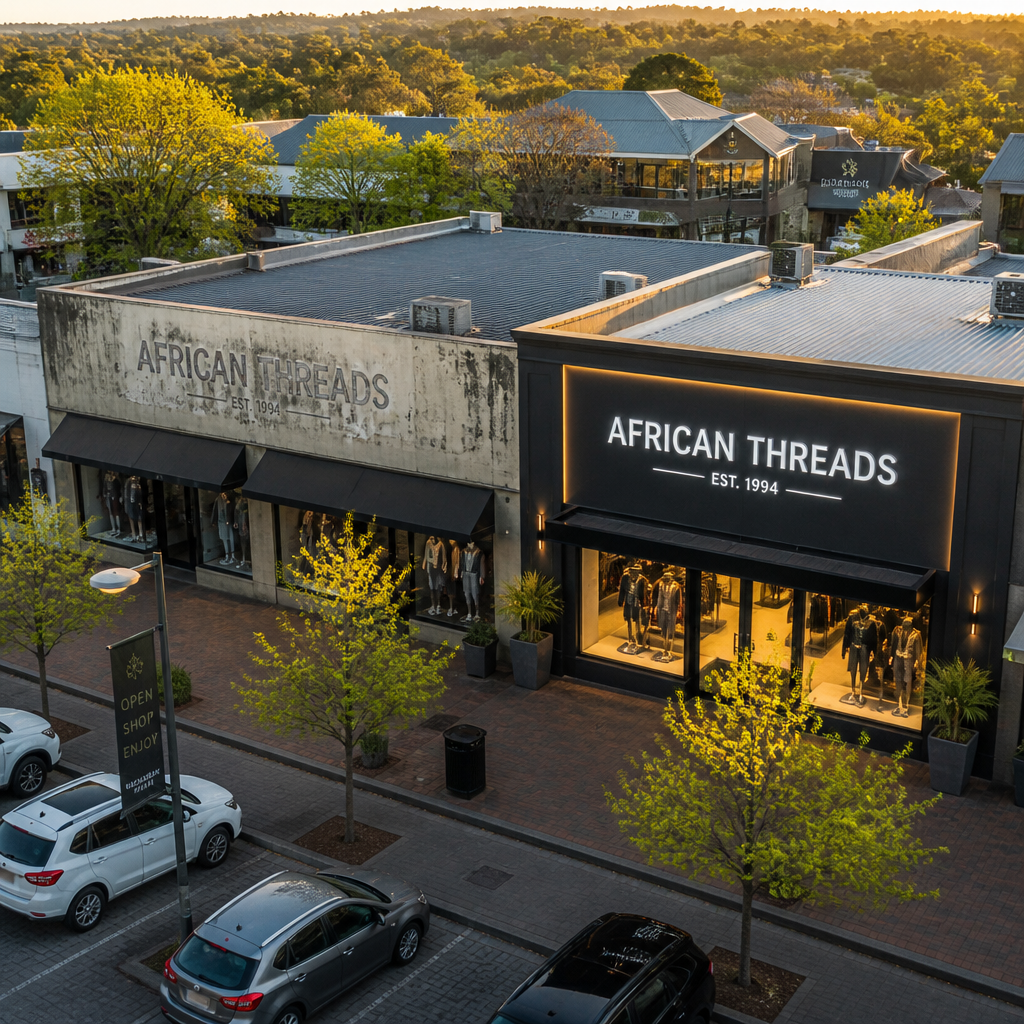
A signage refresh is not the same as a full rebrand. Most businesses in the retail, hospitality, and corporate sectors do not need to redesign their identity every year. What they do need is for the physical expression of that identity to remain sharp, readable, and aligned with current brand standards. That is what a spring refresh delivers.
In practice, a spring signage refresh typically involves one or more of the following actions: replacing UV-faded vinyl graphics on shopfront fascia boards, upgrading fluorescent-lit lightboxes to LED-backlit panels that cut electricity costs and produce more consistent colour rendering, adding new display stands and pull-up banners for in-store promotional areas, or installing outdoor banners and teardrop flags ahead of a seasonal campaign.
Why "Good Enough" Signage Is Costing You Customers
There is a measurable commercial cost to signage that has quietly degraded. Research conducted in the signage industry consistently finds that a large majority of consumers associate the quality of a business's signage with the quality of its products and services. A faded banner or a lightbox with a dead tube does not just look tired. It is communicating actively, and what it is communicating is not what your business intends.
For retail and hospitality businesses in Gauteng, where foot traffic along commercial strips and in shopping centres is intensely competitive, that first visual impression is often the only impression. A customer choosing between two restaurants or two retail stores in the same precinct will apply the same quality heuristic they apply to everything else: they judge the packaging before they buy the product.
The Consumer Spending Context That Makes September Urgent
South Africa's holiday spending season gains genuine momentum from October. Black Friday falls in November, and the broader December retail peak follows. Data on South African holiday retail behaviour shows that overall holiday spend has been growing year on year, with a significant share still driven by in-store physical experiences rather than online-only channels. Upgrading your spring signage in Gauteng in September positions your physical space to capture that spend from the moment foot traffic begins building, not after it peaks.
Signage Types Worth Upgrading in September
Not all signage has the same urgency, and a useful spring refresh starts with a triage exercise. Walk your own premises as a first-time customer would. Look at what is visible from the road, what guides people once they are inside, and what draws attention to specific products or offers. Then assess which elements are performing and which are failing.
Outdoor and Facade Signage
This is the highest-priority category for a September upgrade. Pylon signage at the street boundary, fascia signs above shop entrances, and rooftop signage all take the brunt of South Africa's intense UV exposure through summer and winter alike. After a Gauteng winter, any vinyl elements on exposed signs will show fading. LED modules inside backlit signs may have developed patchy illumination. September is the practical deadline for addressing these before summer sun exposure accelerates further deterioration.
Indoor Wayfinding and Reception Signage
For corporate offices, hotels, and large retail stores, interior signage often gets overlooked in favour of external visibility. Reception signs, directional wall graphics, and lift lobby branding all contribute to the impression a client or guest forms once they are inside your space. If your external signage upgrade brings more people through the door, make sure the interior experience sustains the same brand quality.
Event and Display Signage for the Season Ahead
September is also the time to audit your event signage inventory. Banners, display stands, pull-up rollers, and teardrop flags used through summer activations, trade shows, and in-store promotions accumulate physical wear. Replacing worn units now means you have a full set of presentation-quality event signage ready for the October to January period when it will be used most heavily.
Pro tip: For businesses that run seasonal campaigns but do not want to purchase display stands they will only use four times a year, rental signage options offer a practical middle ground. You get professional-grade presentation without committing capital to equipment that sits in a storeroom for eight months.
Corporate Identity and Franchise Compliance: Get It Right Before Year-End
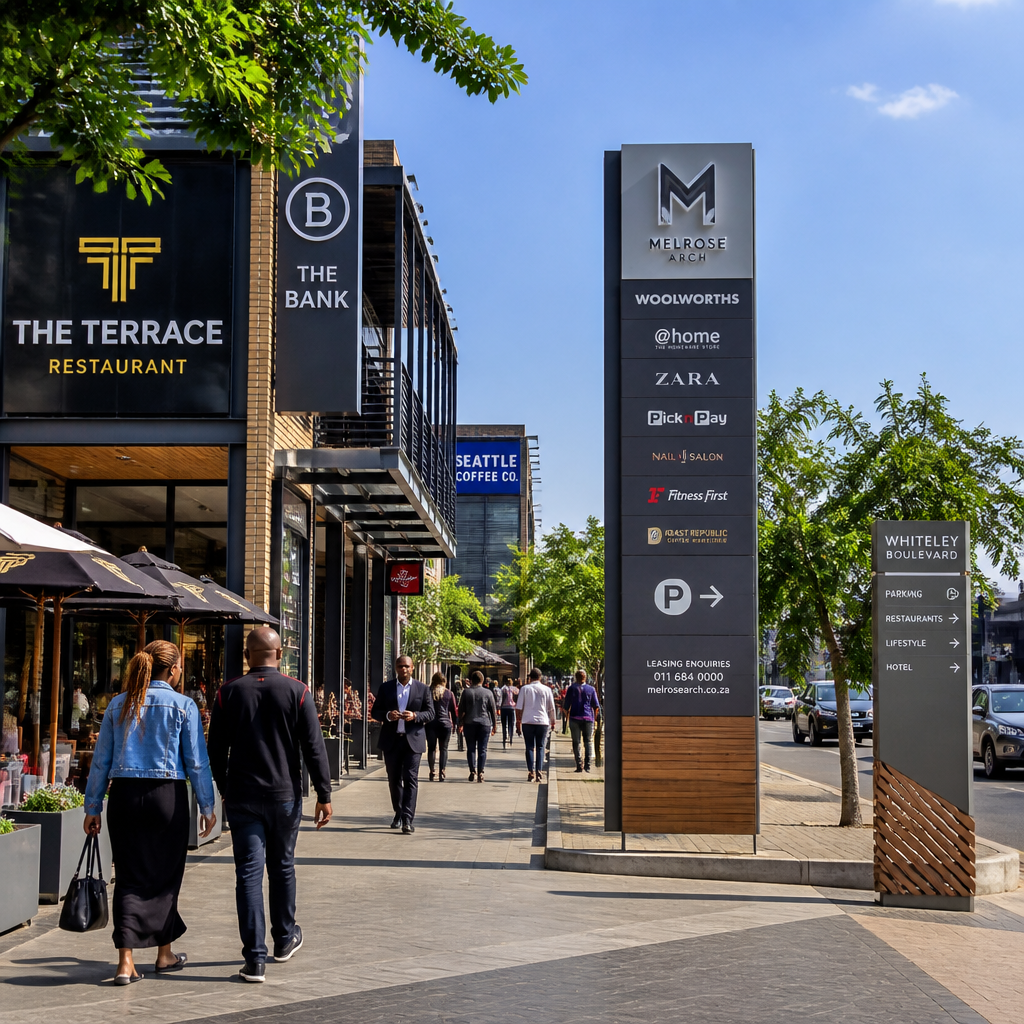
For franchises and corporate chains operating across multiple locations, a spring signage refresh in Gauteng carries an additional layer of necessity. Franchisors typically conduct compliance inspections of branch presentation in Q3 and Q4. Branches that have allowed signage to drift from the approved corporate identity standards, whether through colour fade, unauthorised substitutions, or simply aging materials, face compliance notices and mandatory corrective spend at the worst possible time.
Addressing signage compliance proactively in September puts your branch ahead of the inspection cycle rather than behind it. It also means the corrective work is done at your pace, with proper specification and quality control, rather than rushed under deadline pressure.
What Corporate Identity Compliance Actually Requires
CI compliance in signage is more specific than most branch managers appreciate. It is not sufficient to have the right logo in the right position. The approved Pantone or CMYK colour values must be matched correctly in the production process. Font weights must be reproduced at the specified scale. The substrate, finish (gloss, matte, brushed aluminium, etc.), and illumination type are often prescribed in the franchisor's signage manual. A provider that works regularly with franchise and corporate clients understands that the specification document governs the outcome, and that deviating from it, even slightly, is not acceptable.
For multi-branch operations planning new business signs for 2026, September is also the window to brief signage providers on rollout requirements. Scheduling fabrication and installation across multiple sites simultaneously requires advance planning. Providers who are already engaged in Q4 production work have limited capacity. Briefing in September secures your place in the production queue.
Comparing Signage Upgrade Approaches
Businesses approaching a signage upgrade have several broad approaches available, and the right one depends on their scale, timeline, and budget position. The table below compares the three most common approaches taken by Gauteng commercial businesses.
| Approach | Best Suited For | Key Considerations |
|---|---|---|
| Full Fabrication and Installation | Businesses opening new locations, rebranding, or replacing structurally failing signs (pylon bases, fascia frames, channel letter sets) | Longest lead time (3-6 weeks including permits and groundwork). Highest upfront cost. Delivers maximum brand impact and longevity. Best scheduled in September for pre-summer completion. |
| Partial Refresh (Graphics and Lighting Only) | Established businesses with sound signage structures but faded graphics or failed lighting components | Shorter lead time (1-2 weeks). More cost-efficient than full replacement. Upgrading from fluorescent to LED at this stage typically pays back through reduced electricity costs within 12-18 months. |
| Rental Signage for Seasonal Campaigns | Event venues, pop-up retail, franchise activations, hospitality businesses with peak seasons | No capital commitment. Fast deployment. Ideal for display stands, banners, and promotional signage needed for 3-6 months. Requires a provider with a managed rental and logistics capability. |
Common Mistakes Businesses Make When Upgrading Signage
After seeing many signage projects across the retail, hospitality, and corporate sectors in Gauteng, a clear pattern emerges in how upgrades go wrong. These are the most common mistakes, and each one is preventable.
Ordering on Price Without Specifying the Brief
The most consistently damaging decision is selecting a signage provider based on the lowest quote for an underspecified job. A quote for a "lightbox sign" covers a very wide range of material qualities, illumination uniformities, and finishing standards. If the brief does not specify the substrate, the LED module density, the face material and its UV rating, and the expected maintenance interval, then comparing quotes is comparing entirely different products. The result is typically a sign that looks acceptable in the first month and begins failing within a year.
Skipping the Site Survey
Ordering signage without a physical site survey by the fabricator is a reliable source of installation problems. Fascia dimensions that look straightforward on a photograph often have hidden structural members, services running through the wall cavity, or finish conditions that affect how a sign can be mounted. A site survey catches these constraints before fabrication begins, not after the sign has been made to the wrong specification.
Treating Signage as a One-Time Decision
A common mistake in the SME sector is viewing signage as a fixed asset with no maintenance requirement. In reality, LED modules need periodic inspection, vinyl graphics on high-UV external positions should be reviewed annually, and any illuminated sign needs its electrical connections checked as part of a routine maintenance schedule. Businesses that ignore this end up with the patchy, partially-lit signage that undercuts their brand silently every day.
Pro tip: Ask your signage provider for a maintenance schedule recommendation at the point of installation. A quality provider will specify how long each component is rated for and when it should next be serviced. Build that into your facilities calendar, not your emergency budget.
Leaving Neon and LED Flex Upgrades Too Late
Neon signs and LED flex signs are particularly popular in hospitality, fitness, and retail environments where atmosphere is part of the brand. These units require a mounting substrate, whether that is a wooden panel, acrylic sheet, mirror, or wall-fixed backing. If the mounting solution also needs to be designed or fabricated, that adds time to the project. Businesses that decide in December that they want a neon feature wall for the festive season discover quickly that lead times extend past Christmas. September is the right month to brief this category of signage.
Frequently Asked Questions
How long does a typical business signage upgrade take in South Africa?
It depends on the type of signage. Simple vinyl graphic replacements on existing structures can be completed in three to five working days. Custom fabricated pylon signs, illuminated channel lettering, or LED-backlit fascia boards typically take two to four weeks from approved artwork to installation. If the project requires a building permit or structural groundwork, add another one to two weeks. Starting in September gives most businesses comfortable completion before the October to November traffic surge.
What is the difference between a signage refresh and a full rebrand for my business premises?
A refresh retains your existing brand identity and simply renews the physical condition and specification of your signage. This means replacing faded graphics, upgrading lighting from fluorescent to LED, or adding new display elements without changing your logo, colours, or messaging. A full rebrand involves a new visual identity and requires all signage to be replaced to the new specification. Refreshes are faster, more cost-effective, and sufficient for most established businesses. Rebrands require more planning time and a coordinated rollout across all touchpoints.
Is September genuinely the best time for a signage upgrade in Gauteng, or is that just a sales argument?
The timing argument is practical, not promotional. Gauteng's September weather is mild and dry, which improves installation conditions for outdoor signage and adhesive-based graphics. The summer thunderstorm season, which creates genuine electrical safety risks for elevated sign installation, begins in earnest from October. Additionally, fabrication lead times mean that a September brief typically results in a late September to mid-October completion, which is exactly the window before South Africa's consumer activity peaks. Waiting until October is a decision to either miss that window or rush the installation.
Can I rent signage instead of purchasing it outright for a seasonal campaign?
Yes, and for many businesses it is the more sensible option. Rental signage works well for display stands, branded banners, teardrop flags, and promotional signage that you need for a defined period such as a summer campaign, a trade show, or a product launch. The advantage is professional-quality presentation without the capital commitment or the storage and maintenance cost between uses. SignShopper offers rental solutions for signage needs across South Africa, which is worth exploring if your requirement is seasonal rather than permanent.
How do I ensure my new signage meets my franchisor's corporate identity requirements?
Before briefing any signage provider, obtain your franchisor's current signage specification manual. This document will detail approved colours (usually specified as Pantone references or CMYK values), permitted fonts and their sizes, logo placement rules, required substrates, and approved illumination types. Provide this document to your provider at the briefing stage and confirm that they have experience producing signage to franchisor specifications. A provider familiar with franchise CI requirements will know how to match colours precisely in the production process and will flag any conflicts between your site conditions and the specification before fabrication begins.
What should a professional signage site survey include?
A thorough site survey should document the precise dimensions of all signage positions, the substrate conditions of the mounting surfaces, the location of any electrical supply points for illuminated signs, access constraints that will affect installation (height, proximity to traffic, neighbouring tenants), and any local authority restrictions on signage size or type in your precinct. The survey output should inform both the fabrication specification and the installation methodology. Businesses that skip this step frequently discover on installation day that something does not fit, does not align, or requires an approach that was not costed in the original quote.
We would love to hear from you: what is the one part of your business's signage that you know needs attention but keeps getting pushed down the priority list?
References
- How commercial signage drives customer engagement and sales in South Africa
- Key statistics on how effective signage influences consumer behaviour and business revenue
- How business signage supports brand presence and customer acquisition in South Africa
- South Africa holiday retail spend trends and what they mean for physical businesses
- September weather conditions across South Africa including Gauteng