


3D Fabricated Signs South Africa: Make Your Brand Stand Out
Walk past a building with flat, printed signage. Then walk past one with raised, dimensional lettering that catches the light and casts its own shadow. The difference is not subtle. 3D fabricated signs in South Africa have moved well past being a premium add-on for big-budget brands. They are now the standard expectation for any business that takes its physical presence seriously, from franchise-operated retail shops in Gauteng to hotel lobbies and corporate reception areas nationwide. The real question is not whether you need dimensional signage. It is whether you are getting it fabricated correctly, in the right material, to the right standard, by people who understand how corporate identity specifications translate into physical form.
Table of Contents
- What Is 3D Fabricated Signage?
- Quick Takeaways
- Materials That Define the Result
- Where 3D Fabricated Signs Work Hardest
- Fabrication vs. Flat Signage: A Direct Comparison
- Corporate Identity and Franchise Compliance
- The Fabrication and Installation Process
- Frequently Asked Questions
- References
What Is 3D Fabricated Signage?
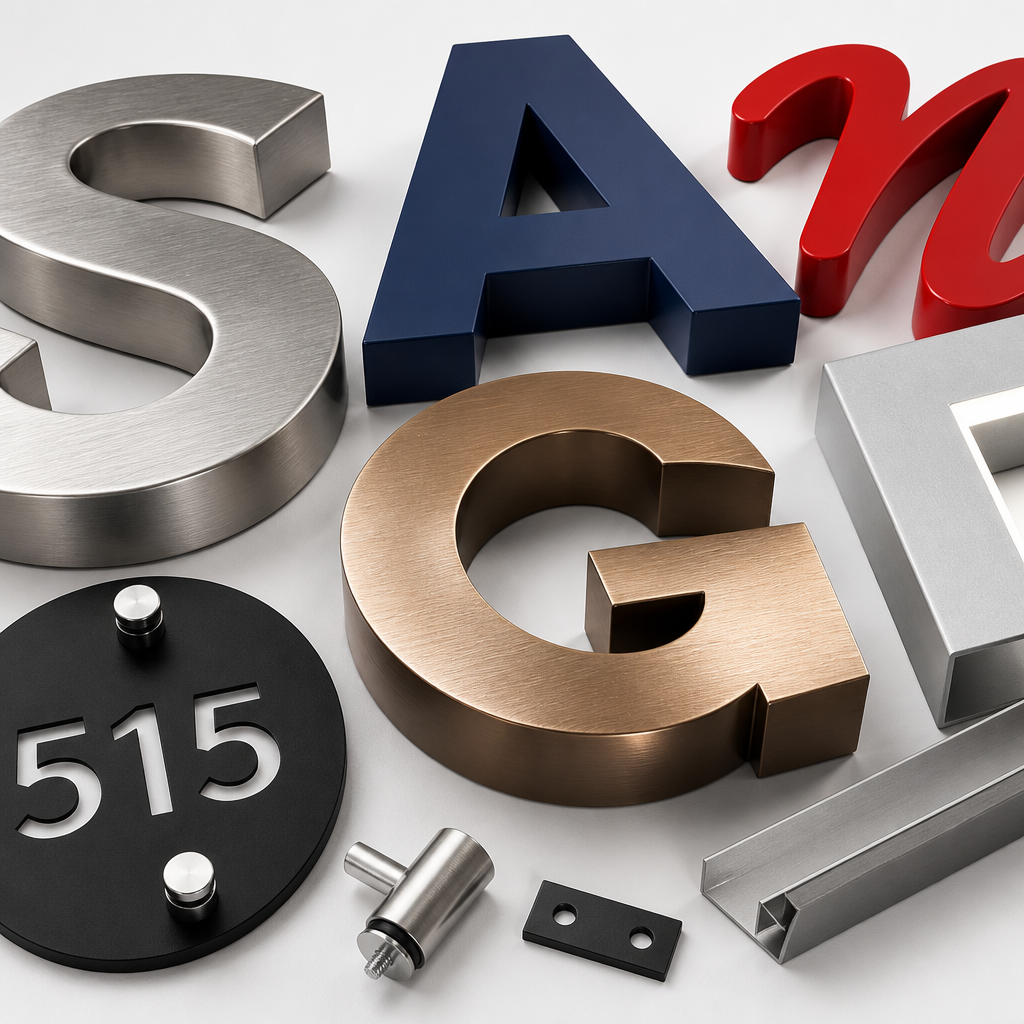
Fabricated signage is any sign built with physical depth, where letters, logos, or shapes are constructed individually and mounted to project away from a surface. Unlike a vinyl wrap or printed board, a fabricated sign occupies actual three-dimensional space. Each character or element is cut, bent, welded, or moulded from a solid material such as aluminium, stainless steel, acrylic, brass, copper, or composite sheeting, then finished to specification and fixed to a wall, fascia, pylon, or standalone structure.
The category includes channel lettering (hollow letters with illuminated faces or returns), solid cut-out letters mounted on standoffs, halo-lit letters that glow from behind, push-through acrylic faces, and full dimensional logo builds that replicate a brand mark in physical form. Dimensional signs in South Africa are specified by depth (return height), face material, finish, and whether illumination is required. Those variables determine everything from material cost to installation complexity.
Quick Takeaways
| Key Insight | Explanation |
|---|---|
| Material determines longevity, not just aesthetics | Stainless steel and aluminium fabricated letters outlast acrylic outdoors by a significant margin. Use acrylic for interior and short-term applications; metal for exterior fascia and pylons exposed to Gauteng's harsh UV and summer storms. |
| Illumination doubles the working hours of your sign | A halo-lit or face-lit 3D sign functions as both a daytime landmark and a night-time presence. For restaurants, hotels, and entertainment venues, this is not optional branding. It is lost revenue if absent. |
| Corporate identity specs must be followed precisely | Franchise and corporate clients carry brand manuals that specify Pantone colours, return depths, letter spacing, and approved materials. A fabricator who cannot work from a CI document will produce a sign that fails rollout approval. |
| Depth (return height) is a strategic choice | A 50mm return reads cleanly on a reception wall. A 150mm return on a pylon is visible from a moving vehicle. Specifying the wrong depth for the viewing distance is a common fabrication mistake that cannot be corrected after installation. |
| Standoff mounting changes the visual character completely | Mounting letters on standoff pins creates shadow play and depth even without illumination. This works well for boardrooms, lobbies, and lifestyle brands that want substance without neon brightness. |
| Custom fabricated signs require accurate site measurement | Letters fabricated to an incorrect wall dimension are expensive to remake. A thorough site survey before fabrication begins is not a courtesy. It is the single most important step in the process. |
| Rental fabricated signage is a real option for events and temporary installations | For exhibitions, pop-up retail, or staged launch events across Africa, renting dimensional signage removes capital cost while maintaining brand-grade visual quality. |
Materials That Define the Result
Material choice is where most signage briefs go wrong. Clients specify what they want the sign to look like without considering the environment it will occupy for the next five to ten years. The result is premature failure, colour drift, or a sign that looks wrong from day one.
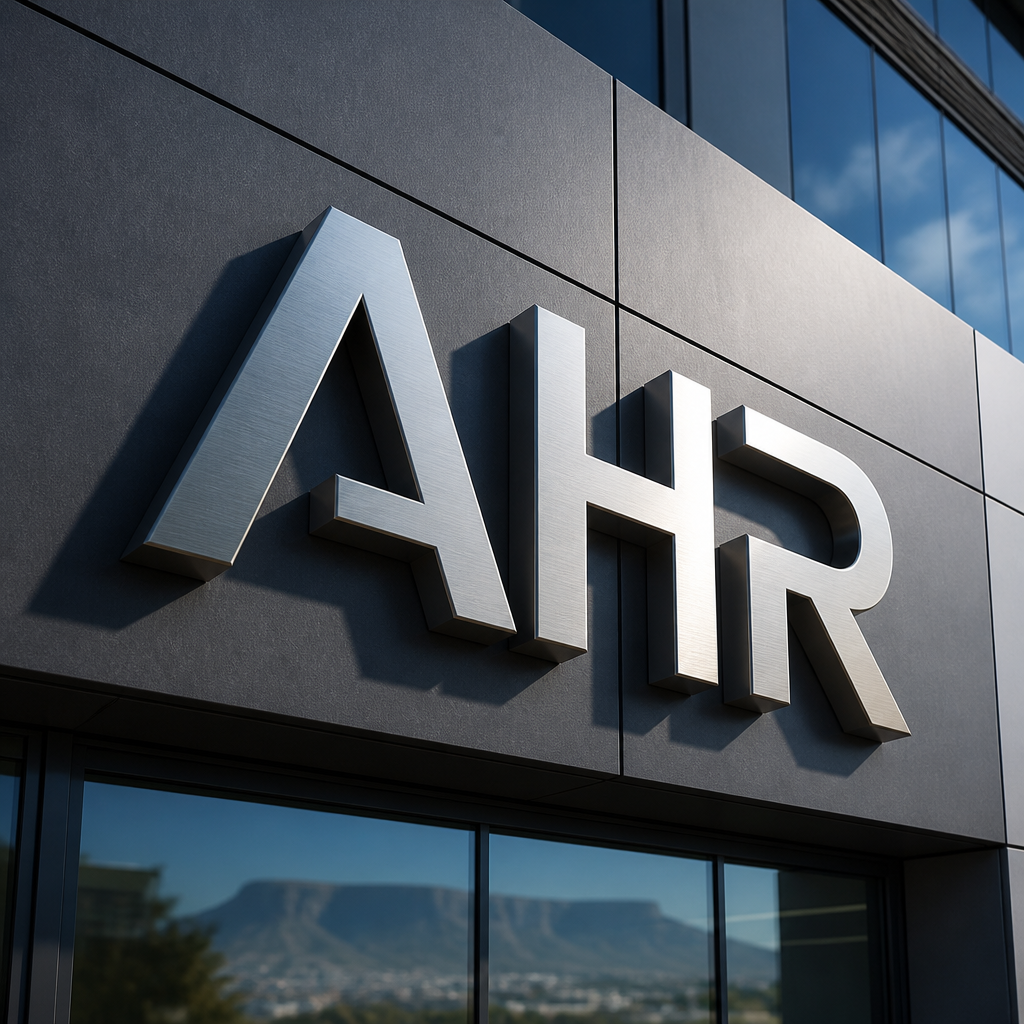
Stainless steel is the correct choice for exterior corporate fascia signage in South Africa. The combination of high UV exposure, seasonal temperature swings in Gauteng, and occasional severe hail makes anything less than brushed or polished 304-grade steel a compromise. Steel fabricated letters can be powder coated to any RAL or Pantone colour, or left as a brushed natural finish for a contemporary, high-end look. They are heavier than acrylic and require structural fixing, but they do not fade, crack, or warp.
Aluminium is the workhorse of the fabricated signage industry. It is lighter than steel, corrosion-resistant, easy to work, and suits both interior and exterior applications. Channel letters for retail fascia signage are overwhelmingly built from aluminium returns with acrylic or polycarbonate faces. The face takes the colour; the aluminium provides the structure and weather seal.
Acrylic (Perspex) is unbeatable for interior dimensional signs, particularly reception logos and boardroom lettering. It is available in a wide palette of opaque and translucent colours, edges cleanly under CNC routing, and can be back-lit for an elegant glow effect. Outdoors, unprotected acrylic yellows and becomes brittle under sustained UV. Use it inside; use metal outside.
Dimensional lettering adds depth, authority, and a premium finish that flat printed signage simply cannot replicate. The three-dimensional effect changes how a brand occupies space, and that change is immediately legible to anyone who walks past.
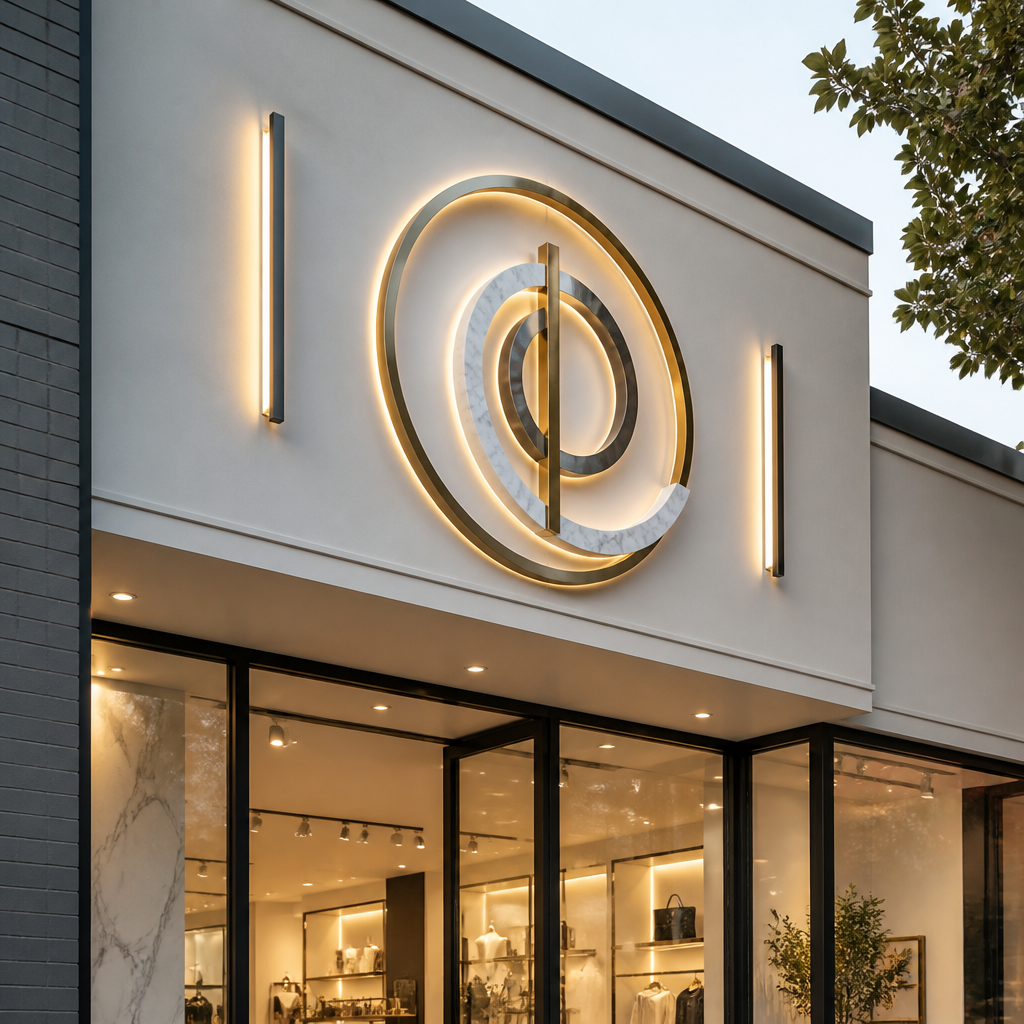
Brass, copper, and bronze are used for prestige applications: law firms, banks, boutique hotels, and heritage property developments. These metals age with character. A brushed brass reception sign gains a patina over time that reinforces the brand's sense of permanence. They are more expensive to fabricate and finish, but for the right environment, there is no substitute.
Composite materials, including ACM (aluminium composite material) panel backing, are frequently used as the mounting substrate for fabricated letter sets. A fabricated logo mounted on an ACM panel with a bespoke paint finish creates a self-contained sign module that can be installed as a single unit, which simplifies site work considerably.
Where 3D Fabricated Signs Work Hardest
Dimensional signage does not perform equally in every location. There are specific contexts where fabricated signs deliver returns that flat signage cannot match, and contexts where they are overkill or simply impractical.
Building Fascia and Shopfront Identification
This is the natural home of custom fabricated signs. A retail shopfront on a busy Johannesburg street or Pretoria commercial strip is competing with every other tenant in the same block for the same passing traffic. Raised, illuminated letters that project 80-100mm from the fascia create a depth that flat signage cannot produce, regardless of how large or brightly printed it is. The shadow play alone makes a dimensional sign more legible under direct sunlight than any printed board.
For franchise groups with multiple locations, fabricated fascia signage is also a consistency tool. Every location receives letters of identical depth, colour, and finish, which is exactly what a corporate identity rollout requires. Variation is eliminated by the fabrication spec, not managed location by location.
Reception Areas and Corporate Lobbies
Reception signage is where a visitor forms their first concrete impression of an organisation. A well-fabricated logo in brushed stainless steel or backlit acrylic on a reception wall communicates that the business is established, precise, and invested in its own identity. It tells clients they have arrived at a business that values credibility and design integrity. A printed PVC banner in the same space communicates the opposite, regardless of how good the rest of the office looks.
The design requirements for reception signs differ from exterior fascia. Interior environments allow for finer detail, lower return heights (50-75mm is standard for wall letters in a reception), and material finishes that would not survive outdoor weathering. Copper, brass, and mirror-polished acrylic are all appropriate here.
Pylon and Roadside Signage
Pylons are the large freestanding sign structures used to identify commercial developments, petrol stations, hotels, and roadside businesses to traffic moving at speed. The dimensional element in pylon signage comes from the cabinet depth, the sign module profile, and increasingly from 3D fabricated inserts or brand marks that break the flat plane of the sign face. A pylon sign with a flush printed face competes poorly with one that incorporates a fabricated brand mark or dimensional frame.
Pro tip: When specifying a pylon with a dimensional element, factor in the minimum viewing distance from the road. Letters that look substantial at 5 metres may disappear at 50 metres. A qualified signage fabricator will calculate the correct letter height and return depth for your site before producing any drawings.
Hotels, Restaurants, and Hospitality Venues
Hospitality environments benefit from dimensional signage at multiple touchpoints: the entrance sign, the restaurant name above the bar or entrance, directional waypointing through the property, and room number and category identification. In these contexts, fabricated signs are both functional and atmospheric. A neon-style or backlit channel letter sign above a bar creates an entirely different mood from a printed board, and for venues competing on experience, that mood is part of the product.
Fabrication vs. Flat Signage: A Direct Comparison
The choice between 3D fabricated signage and flat printed or routed signage is not always obvious, especially when budget pressure is involved. This comparison addresses the most common applications directly.
| Dimension | 3D Fabricated Signs | Flat Printed or Routed Signs |
|---|---|---|
| Visual impact at distance | High. Shadow depth and dimensional presence read clearly from a distance, even in direct sunlight. | Moderate to low. Relies entirely on colour contrast and size. Glare reduces legibility outdoors. |
| Longevity outdoors (South Africa) | Steel and aluminium: 10 to 15 or more years with basic maintenance. Acrylic: 3-5 years before UV degradation. | Vinyl print: 3-5 years maximum in high UV environments. ACM panel: longer, but face graphics still degrade. |
| Corporate identity compliance | Excellent. Return depths, colours, and finishes can be exactly matched to brand manual specifications. | Acceptable for colour, but cannot replicate the physical depth and material finish required by premium brand guidelines. |
| Illumination options | Extensive: face-lit, halo-lit, edge-lit, internal LED module, combined face and halo. | Limited: back-lit lightbox or applied film. Less design flexibility. |
| Installation complexity | Higher. Requires structural fixing, sometimes electrical, and precise levelling of individual elements. | Lower. Panel mounting or direct application is straightforward. |
| Cost profile | Higher upfront cost, significantly lower cost per year over service life for exterior applications. | Lower upfront cost, but higher replacement frequency erodes the saving over 5-10 years. |
The cost argument for flat signage only holds at short time horizons. Any exterior sign intended to remain in place for more than three years should be evaluated on total cost of ownership, not purchase price. Fabricated metal signage almost always wins that calculation, particularly in Gauteng's climate where UV intensity and summer hailstorms accelerate flat sign degradation.
Pro tip: If your building lease is under three years, fabricated rental signage or high-quality flat signage may be the more sensible commercial choice. If you own the property or hold a long-term lease, invest in fabricated metal. The per-year cost is lower and you will not be replacing it before your lease expires.
Corporate Identity and Franchise Compliance
For franchise operators and corporate rollout managers, fabricated signage compliance is not a matter of preference. Brand manuals issued by the franchisor or corporate brand team specify the exact parameters of every sign that goes up at every location. Colour values are specified in Pantone, CMYK, and sometimes RAL codes. Letter forms are specified by font and weight. Return depths are specified in millimetres. Approved materials are listed explicitly.
The failure mode in franchise signage is always the same: a local supplier who approximates the specification rather than meeting it exactly. The acrylic face is the wrong shade of red. The return depth is 70mm instead of 80mm. The font is redrawn rather than typeset from the approved file. Individually, these deviations look minor. Across fifteen locations, they make the brand look inconsistent and undermaintained.
Custom fabricated signs for franchise and corporate rollout programmes require a supplier with documented quality control processes, the ability to work from CI documents, and experience producing identical results across multiple simultaneous installations. This is not the same skill set as making a single sign for a single business. It is a production and logistics capability as much as a fabrication skill.
SignShopper's work across corporate and franchise clients in Gauteng and beyond is built precisely on this requirement. A brand manual is not an obstacle to getting started. It is the brief. Every material choice, finish, and mounting detail is resolved against that document before a single piece of aluminium is cut.
The Fabrication and Installation Process
Understanding what happens between brief and installation helps clients brief better and avoid the most common delays and errors in fabricated signage projects.
Site Survey and Measurement
Before any design work is finalised for fabrication, the installation site must be accurately measured. Wall material, fixing points, electrical access for illuminated signs, and the structural capacity of the fascia or substrate must all be assessed. A sign designed for a brick wall may require entirely different fixing hardware if the wall turns out to be hollow cladding. This step cannot be skipped and should not be delegated to someone who will not be involved in the fabrication.
Design Sign-Off and Material Specification
A fabrication drawing is not the same as a design concept. It is a technical document that specifies every dimension, material, finish, and fixing point. The client should review and sign off a fabrication drawing, not just a design visual, before production begins. Changes after fabrication has started are expensive. Changes after the sign has been delivered to site are almost always impossible without remaking components.
Fabrication and Finishing
For metal fabricated signs, the process involves CNC cutting of faces and returns, bending of returns to the correct depth, welding or riveting of joints, priming and painting or powder coating, LED module installation for illuminated signs, and quality checking of each finished letter or element before despatch. Acrylic fabrication replaces welding with solvent bonding. The finishing standard at this stage determines the finished quality of the sign on the wall. There is no on-site remedy for a poorly finished return or an uneven powder coat.
Installation
Installation of fabricated signage requires the correct fixings for the substrate, accurate levelling, and for illuminated signs, a qualified electrician for the final connection. In multi-storey applications or where access equipment is required, safety planning is part of the installation scope. A sign that is installed 2 degrees off-level looks wrong permanently. Attention at installation is as important as attention in the workshop.
SignShopper manages the full process from site survey through to installed and commissioned signage. For 3D lettering and dimensional sign projects, this end-to-end capability eliminates the coordination gaps that occur when design, fabrication, and installation are handled by separate contractors.
Frequently Asked Questions
What materials are used for 3D fabricated signs in South Africa?
The most common materials for fabricated signage in South Africa are aluminium, stainless steel, acrylic (Perspex), brass, copper, and composite sheet materials such as ACM. For exterior applications exposed to South Africa's high UV environment, aluminium and stainless steel are the most durable choices. Acrylic is excellent for interior applications. Prestige materials like brushed brass and copper are used for high-end reception and hospitality signage where longevity and aesthetics both matter.
How long does it take to fabricate and install a 3D sign?
Production lead times for custom fabricated signs typically range from one to three weeks depending on the complexity of the design, the materials specified, and whether illumination components are required. Large multi-site franchise rollouts require additional lead time for logistics coordination. Always factor in the site survey and design sign-off period before fabrication begins. Rushing any stage increases the risk of errors that cannot be fixed on site.
Can 3D fabricated signs be illuminated?
Yes. Illumination is one of the primary reasons businesses choose fabricated signage over flat alternatives. Channel letters can be face-lit (light shines through the acrylic face), halo-lit (LED modules behind the letters project light against the wall behind, creating a glow), or both simultaneously. Solid dimensional letters can be fitted with edge lighting. Modern fabricated signs use LED modules almost exclusively for illumination, which reduces energy consumption and extends the lifespan of the illumination system significantly compared to older fluorescent or neon tube options.
Do 3D fabricated signs comply with South African building and signage regulations?
Commercial signage in South Africa is subject to local municipal bylaws, which vary between municipalities and provinces. In Gauteng, applications for signage on building fascia or freestanding pylon structures typically require council approval and, in some cases, structural engineering sign-off for larger or heavier installations. A reputable fabricated signage supplier will advise on the required approvals for your specific sign type and location, and can assist with submission documentation. Do not assume approval is not required for a fascia sign simply because it is attached to a building you own or lease.
What is the difference between channel lettering and cut-out letter signage?
Channel letters are hollow, three-dimensional letter structures where the face and return (the side depth) form a closed unit. They are almost always illuminated. Cut-out letters are solid shapes cut from a flat material (aluminium, steel, acrylic) and mounted with standoff pins to create depth and shadow without a sealed internal cavity. Cut-out letters are typically used for non-illuminated dimensional signage and are common in reception, boardroom, and interior commercial applications. Both qualify as dimensional signs, but they have different construction methods, cost profiles, and suitable applications.
Does SignShopper supply fabricated signage outside of Gauteng?
SignShopper operates across South Africa and extends project support into neighbouring countries including Botswana, Zimbabwe, and Mozambique. While the business is based in Gauteng, the fabrication and installation capability covers national and cross-border corporate and franchise rollouts. For businesses operating across multiple provinces or regions, this national capacity means consistent sign quality and a single supplier relationship across the entire estate.
Is it possible to rent 3D fabricated signage rather than purchase it?
Yes. Signage rental is a practical solution for businesses with temporary installations, exhibition requirements, or event signage needs where purchasing a permanent fabricated sign is not commercially justified. Rental dimensional signage maintains the visual standard of purchased signs without the capital commitment. This option is particularly relevant for brand activations, product launches, trade expos, and pop-up retail formats operating across South Africa and into broader African markets.
If your signage brief involves dimensional fabrication, whether for a single reception installation or a multi-location franchise rollout, we would like to hear about the project. Share your requirements or ask a question in the comments and our team will respond directly.
We would love your feedback and any insights you would share with others. What perspective would you add?
References
- SignShopper 3D lettering and fabricated dimensional signage product overview
- Overview of 3D and LED signage trends shaping business visibility in South Africa
- How fabricated and illuminated 3D signage creates bold first impressions for commercial properties
- Fabricated signs: materials, features, and applications for Gauteng businesses