


Digital Signage South Africa: A Retail Buyer's Guide
Most retail managers in South Africa still treat signage as a once-off infrastructure cost, then wonder why their promotions feel stale two weeks after launch. Digital signage in South Africa has moved well past that model. The local market is valued at roughly $3.99 billion in 2026 and is projected to reach $6.34 billion by 2031, growing at an 8% compound annual rate. That growth is not driven by novelty. It is driven by measurable outcomes: retailers using digital display systems report sales lifts of up to 33% on featured products, and studies consistently show that 76% of viewers take a measurable action after exposure to digital signage content. This guide cuts through the jargon and tells you exactly what to buy, what to avoid, and how to get a real return on your investment.
Table of Contents
- Quick Takeaways
- Why Digital Signage Matters for South African Retail
- Types of Digital Signage Displays
- Hardware vs. Software: What Actually Drives Results
- Comparison of Display Approaches
- Key Buying Criteria for Gauteng Retailers
- Integrating Digital and Static Signage
- Common Mistakes and How to Avoid Them
- Frequently Asked Questions
- References
Quick Takeaways
| Key Insight | Explanation |
|---|---|
| South Africa's digital signage market is growing fast | Valued at approximately $3.99 billion in 2026, the local market is projected to reach $6.34 billion by 2031 at an 8% CAGR, making now the right time to build infrastructure rather than play catch-up. |
| Retail accounts for about 21% of all digital signage deployments globally | That makes retail the single largest vertical for digital display adoption. Your competitors are already buying in. |
| Content management software is not optional | Hardware without a reliable content management system (CMS) turns your screens into expensive static frames. Schedule your content just as carefully as you schedule your promotions. |
| Outdoor screens demand higher brightness ratings | South African sunlight regularly peaks above 100,000 lux. A screen rated below 2,500 nits will wash out completely in a Gauteng summer. Specify minimum brightness upfront. |
| Mixing digital and static signage is a deliberate strategy, not a compromise | Static channel lettering and LED-backlit fascia build brand permanence. Digital screens handle promotions and real-time messaging. Each format has a job. |
| Load-shedding resilience must be part of the spec | Any South African digital signage installation that does not account for power interruptions will fail during peak trading hours. Ask suppliers explicitly about battery backup and UPS compatibility. |
| Franchise and corporate identity compliance is non-negotiable | For franchise networks, digital content must adhere to the same brand standards as physical signage. Lock down templates and user permissions in your CMS from day one. |
Why Digital Signage Matters for South African Retail
The shift to digital displays is not about following a global trend. It is a direct response to the operating realities of South African retail: high competition within shopping centres, price-sensitive shoppers who respond to timely promotions, and a growing base of franchise networks that need consistent brand communication across dozens of locations simultaneously.
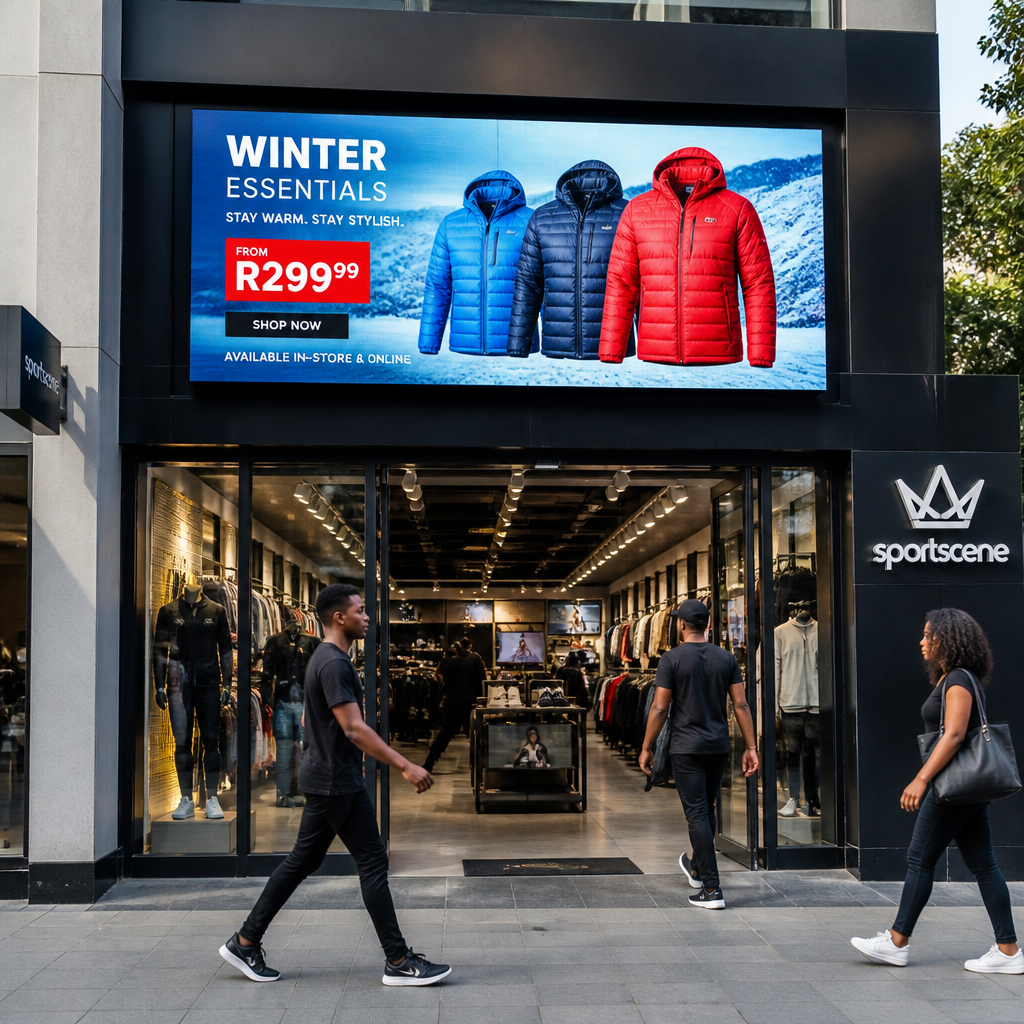
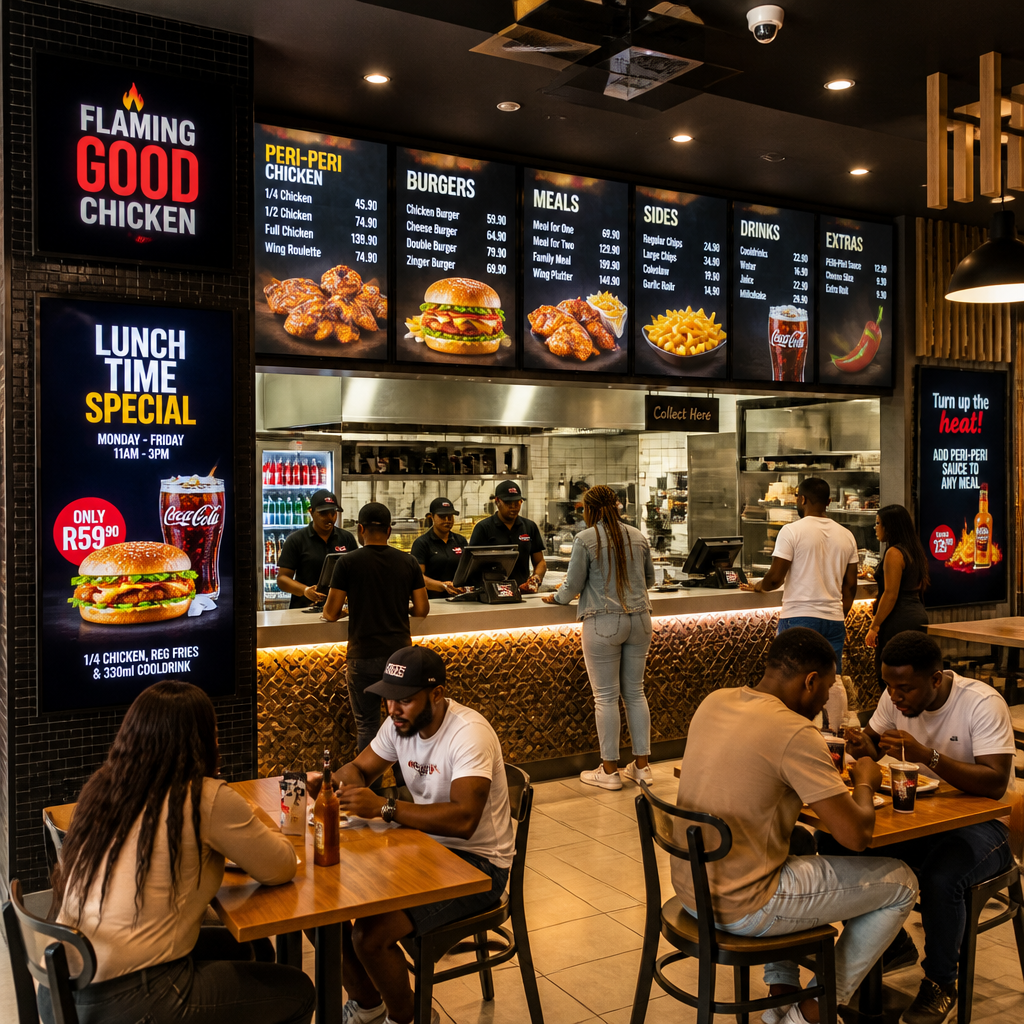
Research published across several retail and market intelligence sources points to a consistent finding: digital signage increases impulse purchases and dwell time in ways that static print simply cannot match. Printed posters cannot be updated at midnight when a price changes. A digital menu board in a restaurant can. A digital promotional display at a till point can show a different offer every 30 seconds based on time of day.
For Gauteng retailers in particular, the density of competing retail environments, whether in Sandton, Pretoria, or the East Rand mega-malls, makes it harder to hold attention. Shoppers are saturated with visual noise. Digital content that moves, changes, or responds to context cuts through that noise far more effectively than a static vinyl banner printed six weeks ago.
A static sign tells your customer what you are selling. A dynamic digital display tells them what to buy, right now, before they walk out the door.
Brand awareness gains from digital signage are also documented at scale. Studies tracked by industry analysts report brand awareness improvements of close to 48% when businesses transition from static to digital display formats. That is not a marginal uplift. It is the kind of number that justifies a capital line in a budget.
Types of Digital Signage Displays
Before you spend a rand on hardware, understand what you are actually buying and where it belongs. Every display type has a specific use case, and mismatching the display to the environment is the most expensive mistake in this category.
Indoor LCD and LED Screens
These are the workhorses of retail digital signage. Flat panel LCD and LED screens are appropriate for in-store promotions, digital menu boards, reception displays, and wayfinding. Brightness for indoor use typically ranges from 300 to 700 nits, which is adequate for controlled lighting environments. Portrait or landscape orientation depends on your content strategy, but portrait screens work particularly well at till points and corridor ends.
Outdoor LED Video Walls and Screens
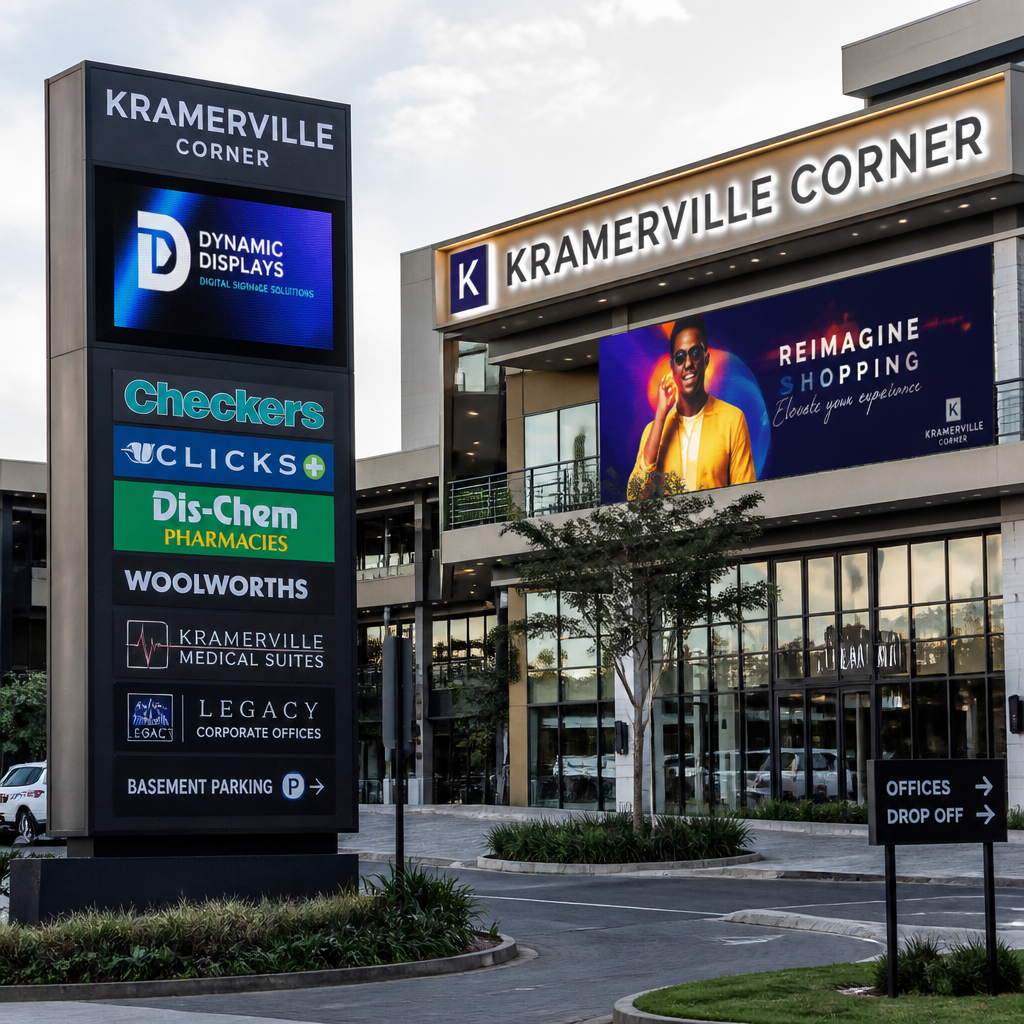
For fascia signage, pylon tops, and forecourt displays, you need outdoor-rated screens with a minimum brightness of 2,500 nits and an IP65 or higher weatherproof rating. South African outdoor conditions are harsh: high UV exposure, summer thunderstorms, and dust in Highveld environments. Never use an indoor-rated screen in an outdoor position, even partially covered. The failure rate is high and the warranty will not cover it.
Digital Shelf Displays and Shelf Talkers
These small-format screens are placed directly on shelving units, typically in supermarkets, pharmacies, and electronics retailers. They are exceptionally effective at the point of decision, showing price, product information, or promotional content exactly where the customer is already looking. Battery-operated versions are available for locations without easy access to mains power.
Freestanding Kiosks and Totems
Floor-standing digital totems are well-suited to shopping centre concourses, hotel lobbies, and exhibition floors. They command attention in open spaces without requiring wall mounting. Some are configured as interactive touchscreens for self-service or wayfinding applications. For events and trade exhibitions, rental options are often more cost-effective than outright purchase for single-use deployments.
Hardware vs. Software: What Actually Drives Results
The hardware is the vessel. The content management software is the engine. Most buyers spend 90% of their decision-making time on screen specs and almost none on the CMS that will determine whether those screens ever show the right content at the right time.
A capable CMS lets you schedule content by time of day, day of week, or even weather conditions. It lets a head office push a national promotion to 50 franchise locations simultaneously without anyone touching a USB drive. It gives you granular control over who can change what, which matters enormously for corporate identity compliance in franchise environments.
Pro tip: Before committing to any hardware vendor, ask for a live demonstration of the CMS with your own content. If the system is difficult to use in a demo setting, it will be abandoned by your team in a live environment within three months.
Connectivity is the other software-adjacent issue that South African buyers consistently underestimate. Cloud-based CMS platforms require a stable internet connection. If your retail location has unreliable connectivity (which is more common outside Johannesburg and Pretoria's major nodes), you need a CMS that supports offline playback with scheduled sync rather than relying on a live feed. Check this requirement before signing any contract.
The question of integrated media players versus smart displays with built-in processors also matters here. Dedicated external media players generally offer more processing power and easier replacement if they fail. Smart displays with built-in SoC (system-on-chip) processors reduce cable clutter and are easier to install. For single-screen installations, a smart display is usually sufficient. For complex multi-screen environments or video walls, a dedicated media player gives you more control and longevity.
Comparison of Display Approaches
Choosing between display approaches comes down to your environment, content volume, and the frequency with which your messaging needs to change. The table below compares the three most common retail digital signage configurations.
| Display Approach | Best Suited For | Key Considerations for South African Retail |
|---|---|---|
| Single Indoor Screen with Cloud CMS | Small retail stores, till point promotions, reception areas | Low entry cost. Requires stable internet. Ideal for a single location that updates promotions weekly. Content can be managed remotely from head office. |
| Multi-Screen Network with Central CMS | Franchise networks, shopping centre tenants with multiple zones, hotel properties | Higher upfront investment but delivers consistent brand messaging across all screens and locations. Requires proper network planning and a CMS that handles role-based user access. Most appropriate for corporate identity compliance requirements. |
| Outdoor LED Video Wall or Totem | Forecourts, pylon signage, shopping centre entrances, stadium perimeters | Highest hardware cost. Must meet minimum brightness, IP rating, and UV resistance specs for South African outdoor conditions. ROI is driven by high dwell traffic rather than per-store conversion. Often combined with static fascia signage for a layered brand presence. |
Key Buying Criteria for Gauteng Retailers
Gauteng is South Africa's economic centre, and its retail environment is as competitive as any in sub-Saharan Africa. The buying criteria below are not universal signage advice. They reflect the specific conditions that Gauteng-based retailers face.
Load-Shedding and Power Resilience
This is non-negotiable. Any digital signage system that goes dark during a stage 4 load-shedding period is worse than no screen at all, because it signals to customers that your operation is not prepared. Specify UPS (uninterruptible power supply) backup as a standard line item in your installation quote. For outdoor LED systems, discuss the draw requirements upfront. A large outdoor LED wall can draw significant power, and your backup must match the load.
Heat Management
The Highveld summer is brutal on electronics. Indoor screens installed in south-facing shop windows or poorly ventilated back rooms will overheat. Outdoor screens need active or passive cooling systems rated for ambient temperatures that routinely exceed 35°C in Gauteng's summer months. Ask your supplier for the operating temperature range of every screen in your quote, not just the headline specs.
Local Support and Service Agreements
A screen failure on a Friday afternoon before a long weekend is a real event, not a hypothetical. Your supplier's ability to respond within a defined service window matters more than the upfront price difference. Get a written SLA that specifies response times and covers both hardware replacement and software support. Suppliers with Gauteng-based technical teams can respond faster than those dispatching from another province.
Pro tip: When evaluating suppliers, ask specifically who replaces the screen if it fails within 12 months, and how quickly. Vague warranty language like "subject to assessment" is a red flag. You want a clear replacement or repair commitment in writing before you sign.
Scalability for Franchise Networks
If you are buying digital signage for a franchise or multi-location retail business, design for scale from the start. A system that works for three stores should be able to extend to 30 without a complete hardware and software overhaul. This means choosing a CMS platform that handles enterprise licensing, a media player standard that your field technicians can replace consistently, and a display brand with stock available locally rather than on 12-week lead times from overseas.
Integrating Digital and Static Signage
The most effective retail environments in South Africa do not use digital signage in isolation. They use it as part of a coherent signage system that combines the permanence of traditional signage with the agility of digital displays.
Static signage, specifically LED-backlit fascia, channel lettering, and pylon signs, performs a function that digital screens cannot replicate: it establishes brand presence that reads as permanent and authoritative. When a customer drives past your store, your illuminated channel letter sign signals that you are established, legitimate, and worth stopping for. That impression is built over months and years, not seconds.
Digital screens, by contrast, are at their best when the message needs to change. A daily lunch special. A weekend promotion. A new product launch. A loyalty programme reminder at the till point. These are jobs for digital content, not printed vinyl.
A common mistake is placing digital screens in positions where static signage would be more appropriate, then wondering why the ROI is hard to measure. Exterior fascia, entrance pylon signage, and directional wayfinding on a permanent site are almost always better served by high-quality static illuminated signage. Interior promotional zones, menu boards, and till point displays are where digital earns its keep.
For retail tenants in shopping centres across Gauteng, this distinction is especially important. Shopping centre landlords often restrict exterior digital signage due to visual pollution policies. Understanding what is permitted before you design your signage strategy avoids costly change orders.
Common Mistakes and How to Avoid Them
This section is not theoretical. These are the failure patterns that appear repeatedly in retail digital signage projects, and each one costs money that did not need to be spent.
Buying on Screen Size Alone
A 75-inch screen that cannot manage its own temperature in a warm retail environment will fail within 18 months. A 55-inch commercial-grade screen with proper heat management and a three-year on-site warranty will still be running in five years. Specify commercial-grade panels, not consumer televisions repurposed for retail use. Consumer TVs are not designed for the duty cycles that retail environments demand, often running 12 to 16 hours per day.
Ignoring Content from Day One
Retailers frequently invest in hardware, get it installed, and then realise they have no content workflow to keep the screens fresh. A screen showing a generic brand animation on loop for six months is not digital signage. It is expensive wallpaper. Before installation, establish who owns content creation, what the refresh cycle is, and which CMS user is responsible for scheduling. This is an operational question as much as a technical one.
Underestimating Connectivity Requirements
Cloud-based digital signage platforms assume reliable broadband. In South Africa, that assumption fails more often than suppliers based overseas will acknowledge. Confirm that your CMS supports local content caching and offline playback before committing to a platform. If your store's connectivity drops for four hours during load-shedding and your backup content plays correctly, your system is resilient. If the screens go blank, your system is not fit for purpose.
Not Aligning with Corporate Identity Standards
For corporate clients and franchise networks, digital content that deviates from approved brand guidelines causes real commercial harm. A franchisee who creates their own promotional graphic in a non-approved font, using a colour that is close but not exactly the brand Pantone, undermines years of brand building. Your CMS must have role-based permissions that restrict what individual store operators can edit, while head office retains control over templates, approved colours, and font usage.
Treating Rental as a Last Resort
Digital signage rental is strategically appropriate for events, product launches, trade exhibitions, and seasonal campaigns. It is not a sign of a budget too small to buy. For a three-day product activation at a shopping centre, owning the equipment makes no financial sense. Rental gives you access to current-generation hardware without depreciation risk, and a supplier with rental expertise will handle delivery, setup, and collection. Factor rental into your annual signage budget as a deliberate line item, not an emergency option.
Frequently Asked Questions
What is the difference between commercial-grade and consumer-grade digital signage screens?
Commercial-grade screens are designed to run continuously for 16 to 24 hours per day, seven days a week, with active cooling, higher brightness options, and warranties that cover extended operating hours. Consumer televisions are designed for intermittent home use, typically four to six hours per day. Using consumer TVs in a retail environment running 12 or more hours daily will result in premature failure and voided warranties. Always specify commercial-grade panels for any permanent retail installation.
How much should a South African retailer budget for a basic digital signage setup?
Costs vary significantly depending on screen size, display type, CMS licensing model, and installation complexity. A single indoor screen installation including hardware, mounting, media player, and basic CMS setup will cost considerably more than a consumer television of the same size, because the commercial components and professional installation justify the premium. For multi-screen or outdoor installations, budget planning should factor in infrastructure costs such as cabling, conduit, UPS backup, and potential structural work. Request itemised quotes that separate hardware, software, installation, and ongoing support costs so you can compare suppliers accurately.
Do I need professional installation or can my team handle it?
For single indoor screens on standard wall mounts, a competent in-house facilities team can often manage installation. For outdoor screens, video walls, high-ceiling cable runs, electrical integration, or any installation requiring permits, you need a professional installer with the relevant qualifications. Incorrect electrical work on outdoor LED signage in South Africa can result in both safety hazards and compliance issues with local municipal regulations. Do not cut costs on installation for anything above a basic indoor screen.
How do digital signage systems handle South Africa's load-shedding schedules?
A properly specified system includes a UPS (uninterruptible power supply) that keeps screens running through scheduled outages. The duration of backup depends on the UPS capacity and the power draw of your screens. Some cloud-based CMS platforms also support scheduled content downloading so that screens can play locally cached content without an internet connection during outages. Discuss both power resilience and connectivity resilience with your supplier before finalising any installation specification. Both matter equally in the South African operating context.
Can digital signage integrate with my existing retail management or POS system?
Many enterprise CMS platforms support integrations with retail management systems, allowing content to update dynamically based on inventory levels, pricing changes, or time-of-day rules. For example, a screen near a deli counter can automatically switch from breakfast specials to lunch specials at 11:00. These integrations require API compatibility between your POS or retail management software and your chosen CMS platform. Confirm integration capability with both your signage supplier and your software vendor before purchase, as this is not a standard feature on all CMS platforms.
What signage mix works best for a franchise with multiple Gauteng locations?
The most effective franchise signage approach combines permanent static signage, such as illuminated channel lettering and LED-backlit fascia, for consistent brand identity at each site, with a centrally managed digital signage network for promotional content. Head office controls the digital content templates and pushes promotions simultaneously to all locations. Individual store operators work within approved templates, which protects brand integrity while allowing local relevance where the franchisor permits it. This hybrid approach delivers the strongest combination of brand permanence and promotional agility.
If you are currently evaluating your retail signage strategy or planning a franchise network rollout, we would value hearing about your specific challenges and what you have found works in the South African context.
We would love your feedback and any insights you would share with others. What perspective would you add?
References
- South Africa digital signage market size and growth projections through 2031
- Digital signage industry statistics including retail sales lift, brand awareness, and AI deployment data
- Digital signage in retail: market adoption, conversion benefits, and interactive kiosk impact
- How retail digital signage drives dwell time, content agility, and in-store conversion
- Research on how digital signage boosts retail sales and improves customer satisfaction