


Illuminated Signage South Africa: Night Business Guide
A restaurant with no visible signage after 7 PM is invisible to the exact customer walking past it right now. That is not a hypothetical, it is what happens every night to businesses across Gauteng that rely on non-illuminated fascia boards and printed vinyl panels that disappear the moment the sun sets. Illuminated signage in South Africa is not a decorative upgrade - for nighttime economy businesses, it is the difference between being found and being skipped. This guide breaks down what works, what does not, and what corporate clients, franchise owners, and venue managers operating after dark should actually be specifying when they brief a signage provider.
Table of Contents
- Quick Takeaways
- Why Non-Illuminated Signage Fails After Dark
- The Types of Illuminated Signage That Matter for Night Businesses
- LED Backlit Signs in Gauteng: What the Energy Equation Actually Looks Like
- Corporate Identity Compliance at Night
- Comparing Illuminated Signage Formats for Nighttime Businesses
- Installation and Placement Decisions That Determine Night Visibility
- Frequently Asked Questions
- References
Quick Takeaways
| Key Insight | Explanation |
|---|---|
| Non-illuminated signage has zero nighttime value | Vinyl, print, and standard acrylic fascias become invisible after dark, cutting your brand exposure by the hours your venue is busiest. |
| LED backlighting is the baseline, not a premium option | For any business operating past 6 PM in Gauteng, LED-backlit signs are the minimum viable specification - not an upgrade tier. |
| Neon and LED neon serve a different brand function than backlit boxes | Neon-style signage creates atmosphere and social shareability; backlit channel letters create brand legibility. Both have a place, but they solve different problems. |
| Pylon signs extend your reach beyond your parking lot | Tall illuminated pylons catch drivers and pedestrians well before they reach your forecourt, giving you decision-making time before they pass. |
| South Africa's energy context makes LED efficiency a real cost argument | High electricity costs and intermittent supply pressure mean LED's lower draw and compatibility with battery backup systems is a direct operational advantage. |
| Corporate identity (CI) standards must be maintained in the illuminated version | Colour temperature and brightness choices affect whether your illuminated sign reads as the correct brand colour after dark. This is a common franchise failure point. |
| Rental signage options exist for event and seasonal nighttime needs | Short-term illuminated signage rental removes the capital barrier for events, pop-ups, and hospitality venue rebrands testing new looks. |
Why Non-Illuminated Signage Fails After Dark
The nighttime economy in South Africa - restaurants, bars, entertainment complexes, fitness studios with evening classes, hotels, and late-trading retail - operates during the exact hours when passive signage stops working. A printed banner or a vinyl-wrapped fascia relies entirely on ambient or street lighting to be readable, and in most commercial strips across Gauteng, that ambient light is inconsistent at best.
The problem compounds at decision points. A driver approaching an intersection has roughly three to five seconds to read, process, and react to a sign. Without internal or backlit illumination, your sign competes poorly against illuminated competitors nearby. The business that invested in LED signs for night business wins that moment every time.
A common mistake is treating illuminated signage as a phase-two investment - something to add "once the business is established." In practice, this means operating for months or years at reduced visibility precisely during peak revenue hours. For a restaurant doing dinner service, a gym running evening sessions, or a hotel relying on walk-in guests, every night without illuminated signage is a measurable lost opportunity.
Illuminated signs remain visible and effective around the clock - ensuring businesses continue promoting their brand identity even after dark, whether positioned outside storefronts, along highways, or atop buildings.
The Types of Illuminated Signage That Matter for Night Businesses
Not all illuminated signage performs the same function. Choosing the wrong format is expensive and often requires a complete redo - understanding what each type does before you brief a supplier saves both time and budget.
Backlit Channel Letters
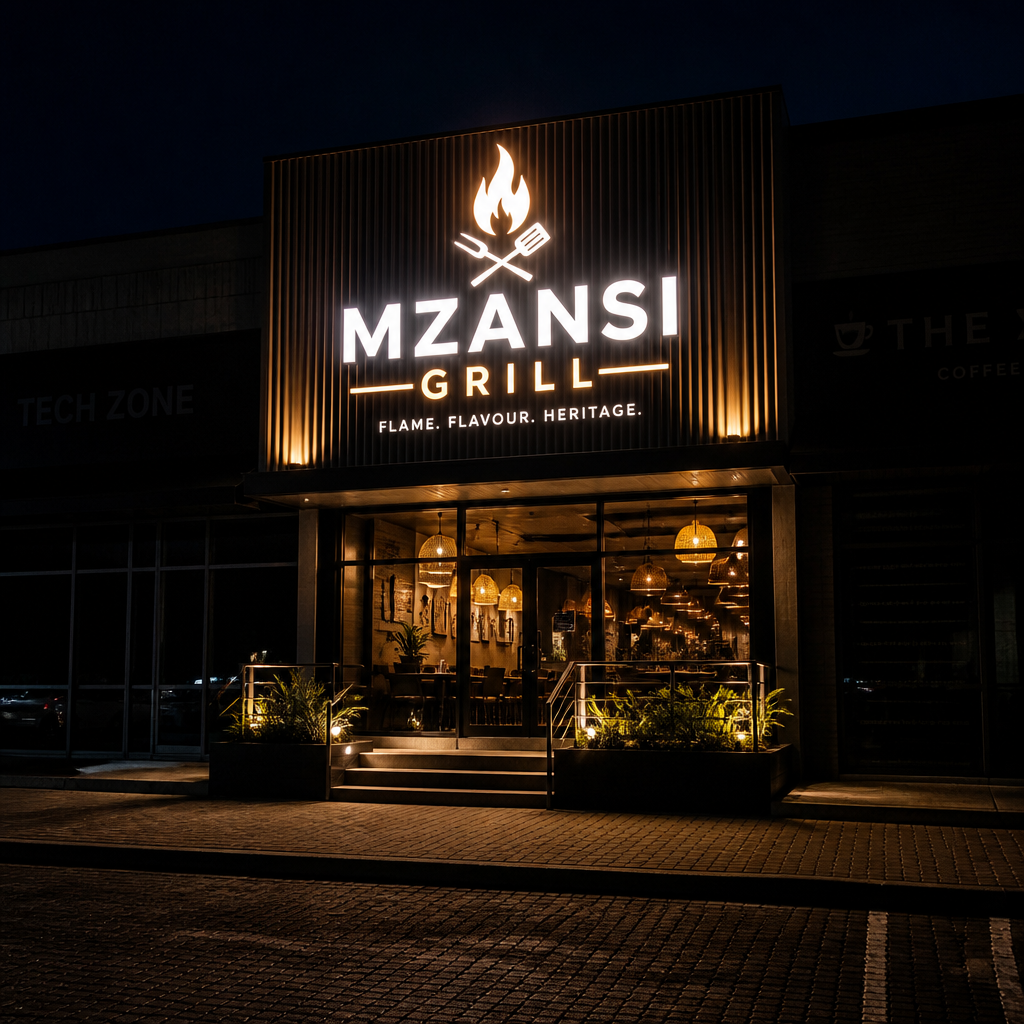
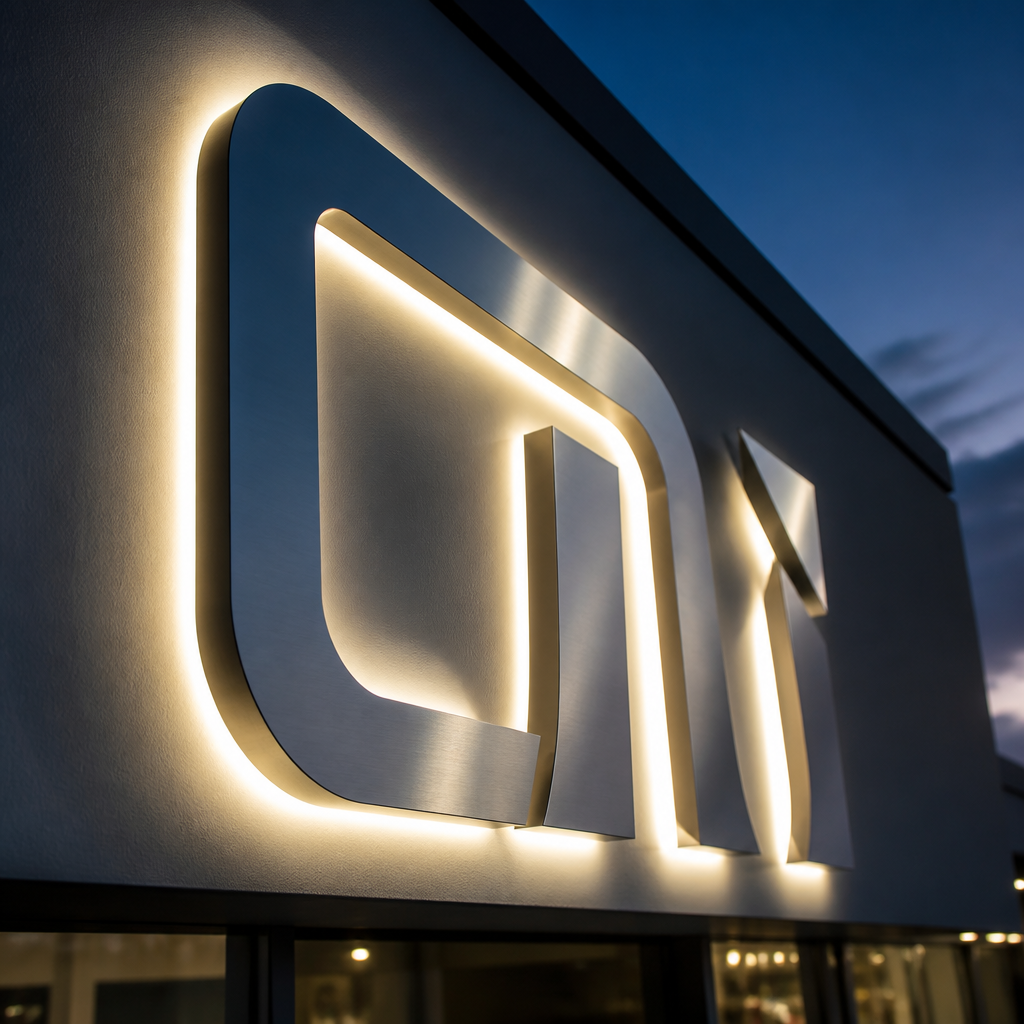
Backlit channel letters are individually fabricated three-dimensional letters with internal LED modules that push light forward through a coloured acrylic face. The result is crisp letter-by-letter legibility at night, with accurate colour rendering that matches corporate identity specifications. This is the workhorse format for retail fronts, restaurant fascias, hotel entrance signage, and corporate building identification. They work from across a car park and remain readable at street level.
LED Lightboxes and Backlit Panels
Lightboxes - aluminium frames with backlit printed or fabric faces - are the standard format for menu boards, promotional displays, and large-format brand walls. The light diffuses evenly across the face, which makes them excellent for displaying graphics and promotional content at night. For fitness centres running evening promotions or hotels displaying current rates and services, a backlit panel system is far more legible after dark than any printed alternative.
Neon and LED Neon Signs
Neon (both traditional glass tube and modern LED neon flex) occupies a distinct space in nighttime signage. It creates atmosphere, not just identification. Bars, restaurants, entertainment venues, and boutique hotels use neon elements to communicate personality and generate the kind of visual interest that photographs well and drives word-of-mouth. LED neon flex achieves a similar aesthetic to glass neon at lower energy draw and with greater durability - a practical advantage in South African conditions. This format is not a replacement for a legible fascia sign; it is an addition that shapes the customer experience once they are inside or approaching the entrance.
Pylon and Totem Signs
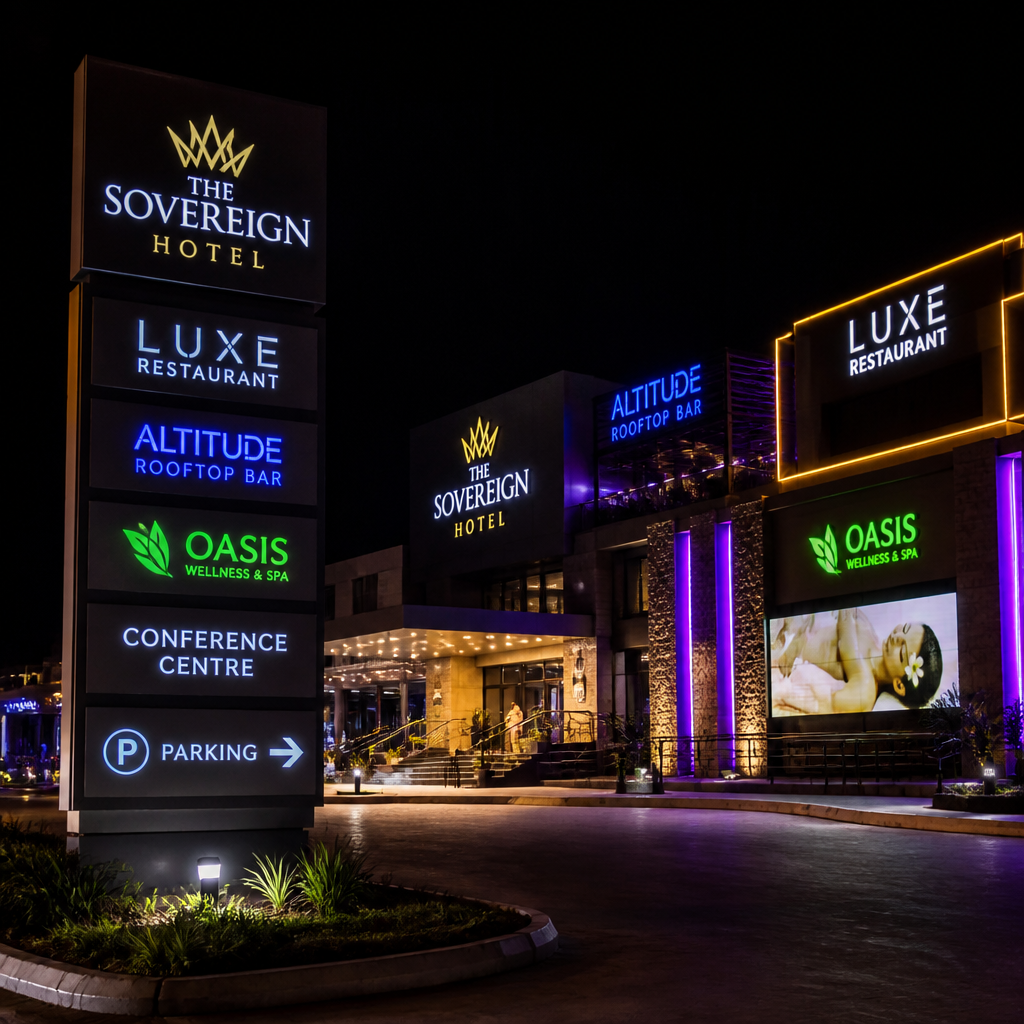
Pylon signs are tall, freestanding illuminated structures positioned at a property's perimeter. Their function is distance visibility - catching the attention of motorists and pedestrians before they reach the entrance. For petrol station forecourts, shopping centres, hotels set back from the road, and large restaurant complexes, an illuminated pylon is often the first brand touchpoint a customer encounters. At night, an unlit or under-lit pylon is nearly useless. Internally illuminated pylon cabinets with LED modules are the correct specification for any site that depends on late-evening drive-past traffic.
Pro tip: If your business has a parking area or sits more than 15 metres from the nearest pedestrian path, a pylon or totem sign with internal LED illumination should be your first signage investment, not your last. The fascia sign serves customers who have already found you. The pylon sign does the work of finding them first.
LED Backlit Signs in Gauteng: What the Energy Equation Actually Looks Like
For businesses in Gauteng, the electricity argument for LED illuminated signage is not abstract. Load shedding schedules, rising Eskom tariffs, and operational continuity during outages are real planning factors. Backlit signs in Gauteng that run on LED modules draw significantly less power than older fluorescent or neon tube systems, which translates to lower monthly running costs and simpler integration with UPS or battery backup systems for maintaining visibility during load shedding.
LED technology consumes substantially less power than traditional lighting sources, which directly lowers business operating costs. In a country where energy conservation is an operational necessity rather than a preference, this matters. A business that keeps its signage illuminated during a Stage 4 outage, while competitors go dark, has a material advantage in capturing passing trade during those hours.
LED modules also have a considerably longer operational lifespan than older light sources. Fewer maintenance callouts, no lamp replacement cycles, and reduced downtime all contribute to a lower total cost of ownership over the life of the sign. For franchise networks managing multiple sites across Gauteng or across South Africa, these savings multiply significantly at scale.
Pro tip: When specifying LED illuminated signage for a site subject to load shedding, ask your signage provider explicitly about LED module compatibility with standard UPS systems. A small inverter-and-battery setup can keep a channel letter or pylon sign lit through most scheduled outage windows at minimal additional cost - and the visibility advantage during those hours is disproportionately high precisely because competitors are dark.
Corporate Identity Compliance at Night
Franchise owners and corporate clients face a specific illuminated signage challenge that independent businesses do not: the illuminated version of their sign must match the brand's corporate identity (CI) standards as accurately as the printed version does by day. This is harder than it sounds, and it is where a lot of multi-site franchise rollouts go wrong.
Colour Temperature and Brand Accuracy
A brand colour that looks correct on a vinyl-faced fascia in daylight will not automatically look correct when backlit with white LEDs at night. The colour temperature of the LED modules, the thickness and opacity of the acrylic face material, and the brightness output all interact to shift perceived colour. A red that looks sharp on a print can appear washed-out pink or deep crimson depending on how the backlit panel is manufactured. For franchises and corporates with strict Pantone or RGB colour standards, this requires testing and calibration, not just specification on paper.
Consistency Across Multiple Sites
A national or regional franchise brand can have twenty sites all with illuminated signage that was manufactured separately by different suppliers, and they will all look slightly different at night. This is not a hypothetical - it is a common outcome when CI sign schedules are not enforced with the same rigour for illuminated formats as for print. Working with a single signage partner who understands corporate identity sign schedules and can manufacture consistently across multiple sites is a specific operational advantage for franchise networks.
For corporate clients managing hotel groups, restaurant chains, or retail franchises, illuminated signage must be treated as a CI-controlled asset with the same rigour as any other branded material. That means documented specifications for LED module type, acrylic face colour and opacity, brightness settings, and installation standards - not just a logo file handed to a local sign shop.
Comparing Illuminated Signage Formats for Nighttime Businesses
| Signage Format | Best Application | Key Nighttime Advantage |
|---|---|---|
| LED-Backlit Channel Letters | Retail storefronts, restaurants, hotel fascias, gym entrances | Crisp brand name legibility at distance; accurate CI colour rendering; premium finish |
| Illuminated Pylon / Totem Sign | Road-facing perimeters, shopping centres, petrol stations, standalone venues | High-height visibility for approaching motorists; lit from inside so effective even without street lighting |
| Neon / LED Neon Flex Signs | Bars, entertainment venues, boutique restaurants, event spaces, gym interiors | Atmosphere and personality; social media-friendly visual appeal; distinctive at night when all other signs are uniform boxes |
The comparison above is not an either/or choice. Effective nighttime signage for most hospitality or entertainment venues involves at least two of these formats working together. A hotel might have an illuminated pylon at the entrance road, backlit channel letters on the building fascia, and LED neon elements inside the reception area and bar. Each format solves a different visibility problem at a different point in the customer journey.
Installation and Placement Decisions That Determine Night Visibility
The best-specified illuminated sign installed in the wrong position delivers poor results. Placement decisions - height, angle, setback from the road, and relationship to other light sources - determine how effective illuminated signage actually is after dark.
Height and Sightline Calculations
Channel letters on a ground-floor fascia are read by pedestrians. For drive-past visibility, the sign needs to be high enough to clear parked vehicles and competing signage. The general rule for road-facing signage is that the bottom of the sign should be at a minimum height that clears the roofline of a standard SUV or light delivery vehicle in the nearest lane. For pylon signs, height is determined by the distance from which you need the sign to be readable, accounting for the approach speed of traffic on that road.
Light Pollution and Contrast
Counterintuitively, an extremely bright illuminated sign in a high-ambient-light environment (a busy commercial strip already lit by streetlights and competing signs) may be less effective than a well-positioned sign in a lower-light area. Contrast drives attention. A moderately bright backlit sign in a dark parking lot commands more visual attention than a very bright sign in a setting where everything else is equally lit. Understanding the ambient light environment of your specific site before specifying brightness levels is worth doing - your signage provider should assess this as part of the site survey.
Signage for Events and Temporary Nighttime Installations
Not all nighttime signage needs are permanent. Event venues, corporate functions, product launches, and seasonal activations require illuminated signage that can be installed, used, and removed without a permanent structure. Rental solutions for illuminated display stands, backlit banner frames, and LED sign panels make this category practical without capital expenditure. For event managers and hospitality venues running short-season promotions, rental illuminated signage is often the operationally correct choice - providing high visual impact for the duration of the event without a long-term commitment.
Pro tip: For event signage in outdoor nighttime settings, always specify illuminated options even when a daytime audit suggests that ambient lighting will be adequate. Event lighting setups change significantly when sponsors pull branded gazebos, temporary structures create shadow zones, and crowd density reduces the reach of overhead lights. A backlit banner or LED display stand performs consistently regardless of what the ambient event lighting does.
Frequently Asked Questions
What is the difference between backlit and front-lit illuminated signage for night use?
Backlit signs have their light source behind the sign face, pushing light through a translucent material - this creates an even, glowing appearance that reads well at night with no shadows. Front-lit signs have an external light source aimed at the face of the sign, which works well in darkness but can produce uneven illumination and glare. For most nighttime economy businesses, backlit formats - including backlit channel letters and lightbox panels - outperform front-lit options in visibility and brand accuracy after dark.
How do LED illuminated signs hold up during South Africa's load shedding?
LED modules run on low DC voltage, which makes them straightforward to connect to UPS or battery backup systems. A well-specified illuminated sign - whether a channel letter set or a backlit pylon - can typically be kept operational during most scheduled load shedding stages with a modestly sized inverter and battery bank. The key is specifying this requirement upfront with your signage provider, so the electrical design accounts for backup compatibility from the start.
Are neon signs practical for outdoor use in South African conditions?
Modern LED neon flex is the practical choice for outdoor applications in South Africa. It handles heat, UV exposure, and humidity better than traditional glass neon tubing and draws significantly less power. Glass neon has a crafted aesthetic that LED neon flex approximates closely but does not perfectly replicate - for interior atmosphere applications in restaurants and bars, glass neon is still chosen for its distinctive light quality. For outdoor fascia use, LED neon flex or backlit channel letters are generally the more durable and cost-effective specifications.
How important is illuminated signage for franchise CI compliance at night?
Extremely important, and often underestimated. A franchise brand that maintains perfect CI compliance on its printed materials can still fail the CI test at night if its illuminated signage is specified or manufactured without proper attention to colour temperature, face material opacity, and LED brightness. Franchise owners should request a sample illuminated panel in the correct brand colours before approving production, and franchise development managers should include illuminated signage specifications in the CI sign schedule alongside print standards.
What types of South African nighttime businesses benefit most from pylon signage?
Any business where the first decision point for a customer is at distance - approaching by car or from a main road - benefits from an illuminated pylon or totem sign. This includes hotels set back from main roads, drive-through restaurants, petrol station forecourts, fitness centres in mixed-use commercial zones, and entertainment complexes with large parking areas. The pylon sign does the job of pulling people off the road before they pass; the fascia sign confirms their decision once they have arrived.
Can illuminated signage be rented rather than purchased outright?
Yes, and for certain business categories this is the operationally correct choice. Event venues, corporate functions, exhibition spaces, and hospitality businesses testing a seasonal rebrand can use rental illuminated signage - including backlit display stands, LED sign panels, and banner frame systems - without capital expenditure or a permanent installation. Rental solutions make professional-grade illuminated signage accessible for short-duration needs while preserving the option to convert to a permanent installation if the application proves its value.
Have you encountered a specific nighttime visibility challenge with your business signage in Gauteng or elsewhere in South Africa? Share your experience in the comments - what worked, what did not, and what you wish you had known before specifying your current setup.
References
- Overview of illuminated sign benefits, visibility, and energy efficiency for South African businesses
- Comparison of LED signs versus traditional advertising options in the South African market
- LED signage applications for Johannesburg businesses across retail, hospitality, and corporate environments
- Custom illuminated signage options for Gauteng businesses including backlit, halo-lit, and edge-lit formats