


How to Choose a Signage Company in Gauteng: 8 Questions
Picking the wrong signage company in Gauteng can cost you far more than the invoice. A poorly fabricated pylon sign, channel lettering that fades within a year, or an installation done without the correct municipal permits can unravel your entire brand presence overnight. If you are a corporate procurement manager, a franchise owner, or a hospitality venue operator about to sign a contract with a signage supplier, the eight questions in this guide will protect your budget, your brand, and your deadline before a single bolt is drilled into a wall.
Table of Contents
- Quick Takeaways
- Why This Decision Matters More Than Most
- Signage Supplier Comparison: How to Score Your Shortlist
- Frequently Asked Questions
- References
Quick Takeaways
| Key Insight | Explanation |
|---|---|
| In-house manufacturing beats outsourcing | A supplier that fabricates on-site controls quality, lead times, and revision cycles. Outsourced production adds unknown variables. |
| Permit handling is non-negotiable | Gauteng municipalities require approvals for most permanent outdoor signage. A competent company navigates this for you. |
| CI compliance must be proven, not promised | Ask for documented examples of franchise or corporate rollouts where brand guidelines were enforced across multiple sites. |
| Material specs belong in the contract | Generic terms like "quality aluminium" mean nothing. The contract should specify grade, coating, and UV resistance rating. |
| Subcontracted installation is a red flag | If the company outsources installation, ask for the subcontractor's credentials, insurance, and track record. |
| Warranty should cover workmanship separately from materials | Material warranties from manufacturers do not automatically cover poor workmanship. You need both in writing. |
| Rental solutions reduce capital risk for events and pop-ups | Short-term or event signage does not need to be purchased outright. Rental options free up budget for permanent brand assets. |
Why This Decision Matters More Than Most
Signage is not a once-off marketing expense you can quietly delete from a spreadsheet if it goes wrong. It is a physical asset attached to your building, visible to every customer, partner, and competitor who walks past. When you choose a signage company in Gauteng, you are choosing a partner whose quality of work will represent your brand every day for the next five to ten years.
The Gauteng market is large and competitive, which means there are many suppliers willing to quote cheaply. The gap between a low quote and a professional outcome is usually filled by compromises you only discover after installation: the wrong Pantone shade, a flickering LED module, or a structure that violates your landlord's building regulations. None of those are recoverable without extra cost.
The eight questions below give you a structured way to separate capable, experienced suppliers from those who will quote low and deliver accordingly. They are not trick questions. Any professional signage company worth contracting should answer every single one without hesitation.
Do You Manufacture In-House or Outsource?
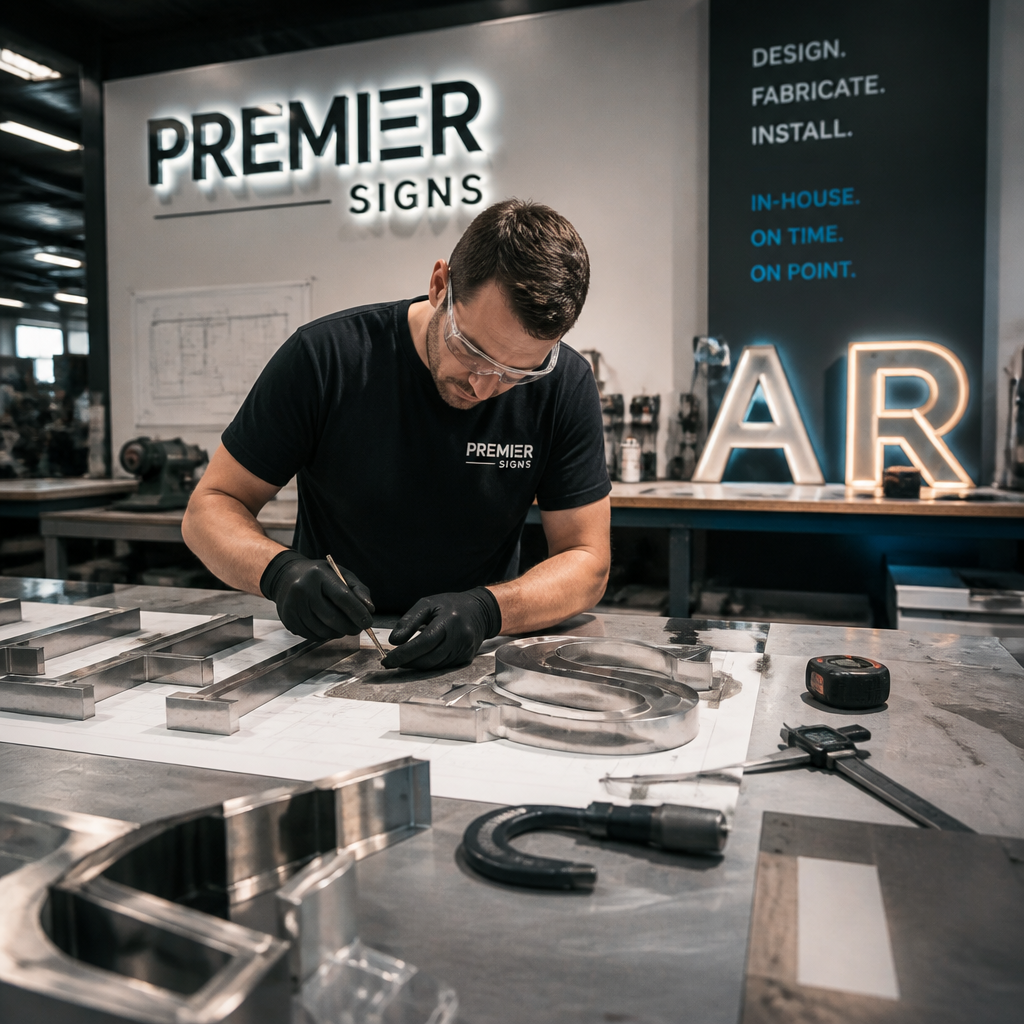
This is the single most revealing question you can ask. A supplier with an in-house fabrication facility owns the process from cutting and welding to painting and wiring. That ownership means they can control quality at every stage, respond to change requests without renegotiating with a third party, and give you accurate lead times they can actually meet.
Some suppliers function purely as brokers. They take your order, mark it up, and hand it to a manufacturer they have no direct control over. There is nothing inherently wrong with that model for commodity print runs, but for complex signage such as illuminated pylon signs, custom LED-backlit lettering, or multi-site franchise rollouts, it introduces delays, quality inconsistencies, and accountability gaps that are genuinely difficult to resolve.
What a good answer looks like
The supplier should be able to tell you exactly where fabrication happens, what equipment they use, and who signs off on quality before dispatch. If they hedge or redirect to "our trusted partners," push for specifics. A tour of the production facility, even a short one, tells you more than any brochure.
Pro tip: Ask to see a sample of a recently completed sign before you see the polished portfolio images. The physical sample reveals finish quality, edge work, and build precision in a way that photographs simply cannot.
Can You Handle Municipal Permit Applications?
Outdoor advertising in Gauteng is governed by municipal by-laws and by the South African Manual for Outdoor Advertising Control (SAMOAC). Most permanent structures, including pylon signs, illuminated fascia boards, and large outdoor banners, require a formal application and approval before installation. Installing without the correct permit exposes you to removal orders and fines.
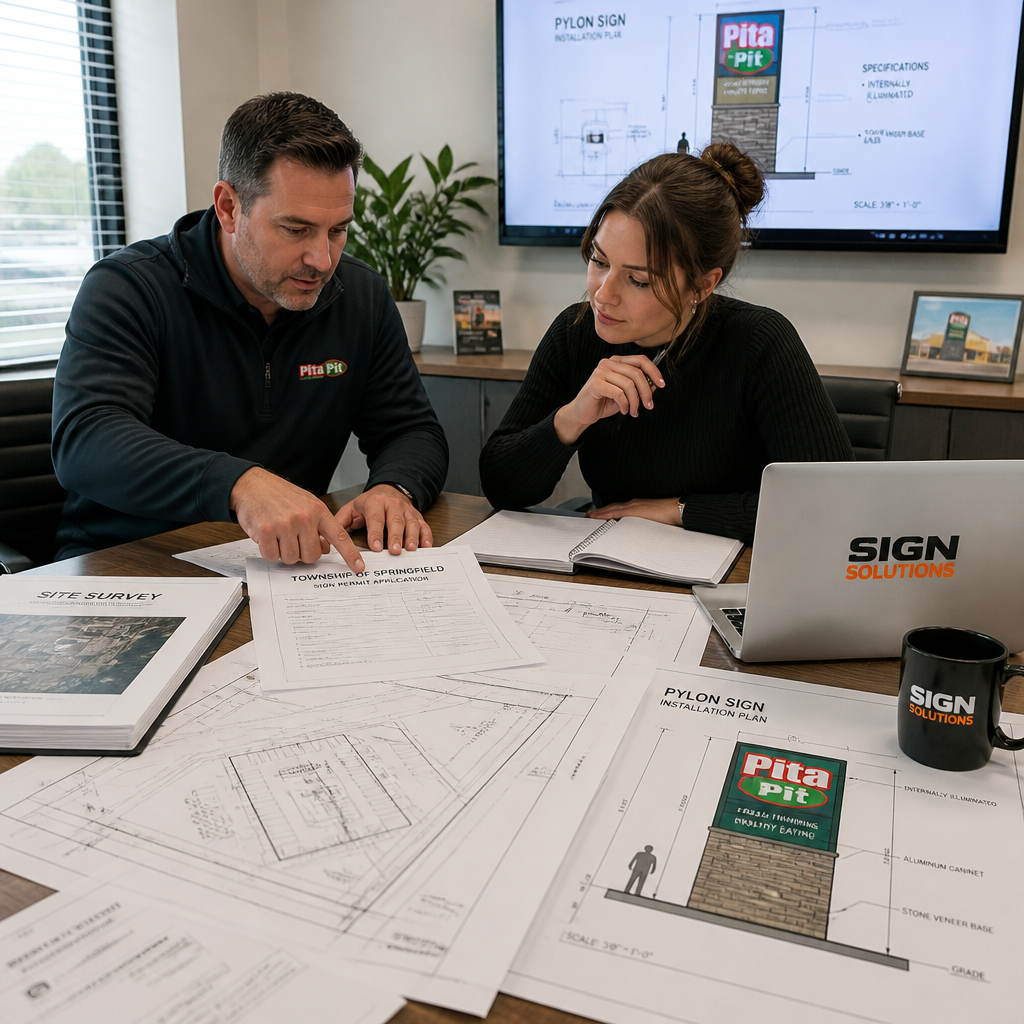
A professional signage company operating in Gauteng should know which sign types require permit applications, what documentation the municipality needs, and how long the process typically takes. If a supplier proposes to install first and sort out the paperwork later, that is a firm reason to walk away.
The franchise angle
Franchise operators face this challenge multiplied across every new site. If you are rolling out five new locations across Tshwane and Johannesburg, you need a supplier who can manage multiple concurrent permit applications without that workload landing on your desk. Ask directly: "Do you manage the permit application on our behalf, and is that included in your quoted scope?"
Pro tip: Request a copy of a permit approval the company obtained for a previous client (with sensitive details redacted if needed). It confirms they have done this before and know what a compliant application looks like.
Have You Worked With Corporate Identity Standards Before?
Corporate identity (CI) compliance is a specialised discipline within signage. It means producing a sign that matches the brand's approved Pantone references, uses the correct typeface at the correct size, and replicates the exact material finish specified in the brand manual. On a franchise rollout, it also means achieving that result consistently across dozens or hundreds of sites.
Not every signage company is equipped for this. Many are skilled at producing attractive, well-built signs, but they work from customer briefs rather than from brand manuals with strict tolerances. If your business operates under a franchisor's brand guidelines, or if you are a corporate with a design team that will audit finished installations, you need a supplier who understands what CI compliance actually requires.
Ask for specific examples: which franchise brands have they worked with, how many sites did the rollout cover, and how was compliance verified? A competent answer will include references to brand manuals, colour verification processes, and sign-off procedures with the client's marketing or brand team.
What Materials Do You Use and Why?
Gauteng's climate is not forgiving. The combination of intense UV radiation, summer hailstorms, and temperature swings between winter nights and summer afternoons puts serious mechanical stress on outdoor signage. The material choices a supplier makes determine whether your sign looks good at the five-year mark or whether it is chalking, cracking, and peeling by year two.
For illuminated signs, ask about the LED modules: what brand, what rated lifespan, what is the IP rating for outdoor use? For substrate materials, ask whether they use aluminium composite panels or solid aluminium, and whether the coating is powder-coated or wet-spray, because the two have very different durability profiles in outdoor conditions. For vinyl graphics, ask about the vinyl brand and its rated outdoor durability.
What belongs in the contract
The material specifications should not stay verbal. Before you sign anything, the contract should list the specific materials and components by name and grade. A clause that says "quality materials as selected by the supplier" gives you no protection when a dispute arises. Named materials with known specs give you something enforceable.
A sign built with the right materials in Gauteng's climate is a five-to-ten-year asset. A sign built with the wrong ones is a three-year liability with an expensive replacement cycle attached.
Who Performs the Installation?
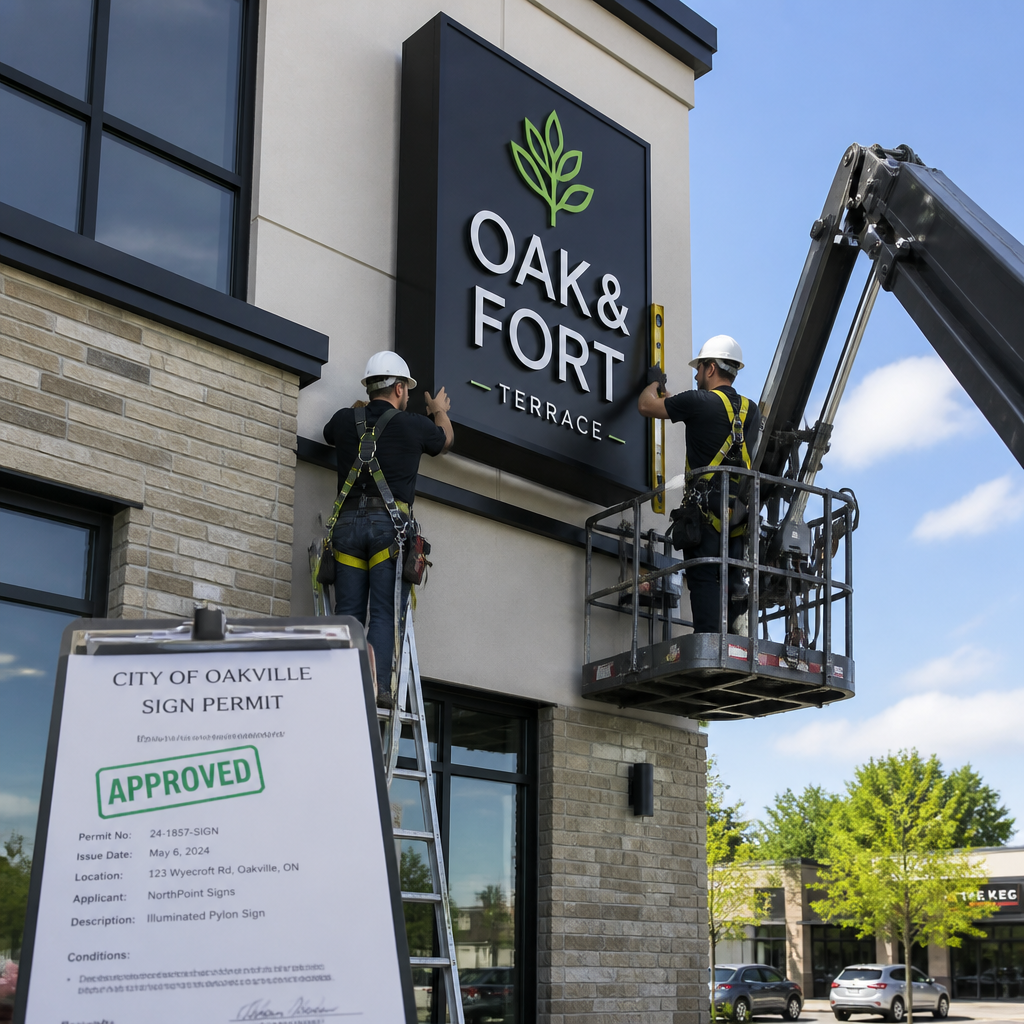
Installation quality determines whether a well-built sign actually looks good on the wall. Poor installation introduces visible misalignment, improper fixings that allow water ingress, exposed wiring, and structural issues that can become safety hazards on large format or elevated signage.
Ask directly: are the people doing the installation employees of the company, or subcontractors? If they use subcontractors, ask for the subcontractor's details, proof of insurance, and health and safety compliance documentation. For work at height, which covers any sign installed above ground level, this is not a checkbox formality. It is a genuine liability issue.
The multi-site consideration
For franchise operators or corporate clients with multiple premises, the installation team also needs to be able to work consistently across sites. A single experienced crew that does all of your locations will produce a far more uniform result than a patchwork of regional subcontractors each doing things slightly differently. Ask how the company handles geographic spread if your sites are in different Gauteng municipalities or in other provinces.
What Is Your Warranty and After-Sales Process?
Warranties in the signage industry vary enormously and the differences matter. A material warranty from the LED or vinyl manufacturer covers product defects but says nothing about what happens if the installer drilled the fixings in the wrong place or used the wrong sealant around an electrical housing. Workmanship and materials are two separate warranty categories, and you need both addressed in writing.
Ask specifically: what is the warranty period for workmanship, what does it cover, and what is the response time if something fails? For business-critical signage such as a restaurant's illuminated exterior sign or a hotel's entrance pylon, a slow warranty response is a brand problem every day it goes unresolved. Ideally, the supplier should offer a clear process: who to contact, what information to provide, and what the resolution timeline is.
Also ask about maintenance: does the company offer scheduled maintenance visits? For complex illuminated signs, an annual check of electrical connections, LED module condition, and structural fixings is worthwhile, and some suppliers offer this as a service agreement separate from the warranty.
Can You Provide a Site Survey Before Quoting?
A quote built on photographs and verbal descriptions of the site is rarely accurate. Surface material, substrate condition, structural load-bearing capacity, access for installation equipment, existing electrical supply locations, and landlord or body corporate restrictions all affect the scope and cost of a signage project. A professional supplier should visit the site before issuing a final quote on any project of meaningful scale.
In practice, some suppliers skip the site visit to move faster through the quoting process. The result is a quote that looks attractive until the installation team arrives and discovers the wall is not what was assumed, or that cherry-picker access requires road closure permits that add time and cost. These surprises disappear when a proper site survey is done upfront.
The site survey also gives you useful information about the supplier's approach. A surveyor who asks about peak circulation patterns, landlord constraints, neighbouring signage, and viewer distance is thinking about the effectiveness of the sign, not just the mechanics of hanging it. That level of thinking is worth paying for.
Do You Offer Rental or Short-Term Signage Solutions?
Not every signage need is a permanent one. Events, product launches, seasonal promotions, pop-up retail spaces, and exhibition stands all require high-quality branded signage for a defined period. Purchasing signage for these occasions is often a poor capital allocation, especially when the same professional result is available through a rental model.
This question also reveals how broadly the supplier can serve you over time. A company that offers rental alongside permanent signage can become a single supplier for your full signage requirement, from the entrance pylon that stays up for a decade to the pull-up banners you need for a regional expo next month. That consolidation simplifies procurement, ensures brand consistency across permanent and temporary applications, and removes the need to manage multiple supplier relationships.
For hospitality businesses, corporate event venues, and fitness centres that run seasonal member drives or product launches, rental signage is particularly practical. Ask what the rental catalogue includes, what the minimum rental period is, and whether setup and takedown are included in the rental fee.
Signage Supplier Comparison: How to Score Your Shortlist
Once you have asked the eight questions above, use the framework below to compare your shortlisted suppliers against the criteria that matter most for commercial and corporate signage projects in Gauteng. Weight each criterion according to your specific project requirements.
| Evaluation Criterion | Full-Service Turnkey Supplier | Print and Fabrication Only (No Install) | Design-Led Boutique |
|---|---|---|---|
| In-house manufacturing | Yes, full control | Yes, but no installation | Often outsourced |
| Permit management | Handled as part of scope | Not included | Rarely included |
| CI and franchise compliance | Documented process | Dependent on brief quality | Strong on design, weaker on rollout scale |
| Site survey capability | Standard practice | Limited or not offered | Variable |
| Workmanship warranty | Clearly documented | Materials only | Variable |
| Multi-site rollout capacity | Designed for this | Possible but complex | Not typically |
| Rental or short-term solutions | Available | Rarely | Sometimes for events |
| Best suited for | Corporate, franchise, hospitality | Simple one-off requirements | Brand-new identity launches |
The full-service, turnkey supplier model wins for the vast majority of commercial signage projects because it places accountability for design, fabrication, permitting, and installation with a single entity. When something goes wrong, there is no gap between parties to fall into.
Frequently Asked Questions
How long does it typically take to get signage made and installed in Gauteng?
Lead times vary by sign type and complexity. Simple printed banners and display stands can be ready within a few days. Fabricated signs such as channel lettering, LED-backlit lightboxes, or pylon structures typically take two to four weeks from approved artwork to installation, depending on the fabrication queue and material availability. Projects requiring municipal permits should add the permit approval timeline, which varies by municipality and sign type. Build this timeline into your project plan and confirm it with your supplier in writing before placing an order.
Do I need a permit for every type of outdoor sign in Gauteng?
Not every sign requires a permit, but most permanent, externally visible structures do. Smaller signage within your property boundary, window graphics, and portable display stands typically fall outside permit requirements. Large fascia signs, pylon structures, pole signs, and illuminated signs generally require a formal application under the relevant municipal by-law and must comply with the South African Manual for Outdoor Advertising Control (SAMOAC). Your signage company should assess permit requirements as part of the quoting process, not as an afterthought.
What should I do if my franchisor has specific signage requirements I need met?
Start by sharing the full brand manual or CI guide with prospective suppliers before they quote. Any supplier worth considering should be able to review the specifications and confirm in writing which elements they can meet and to what tolerances. Ask for a colour proof against the specified Pantone reference before approving full production. For large rollouts, a pilot site is worth building into the contract so the franchisor's brand team can sign off before the same approach is replicated across all locations.
Is it worth paying more for a signage company that offers after-sales maintenance?
For illuminated signage, yes. LED modules, driver units, and electrical connections are components that can develop faults over time, and a non-illuminating sign on your building facade is a visible brand problem. A maintenance agreement that includes an annual inspection and a defined response time for faults is generally good value relative to the cost of a reactive repair call-out, particularly for hospitality or retail venues where exterior presentation directly affects customer perception.
What is the difference between a signage company and a print shop for business signage needs?
A print shop handles flat, printed outputs: banners, posters, vinyl graphics, stickers. A professional signage company offers the full scope: design, fabrication of three-dimensional structures, structural and electrical engineering for illuminated signs, permit management, installation, and after-sales support. For basic printed materials a print shop is adequate. For any fabricated, installed, or structurally complex sign, you need a signage company with fabrication and installation capability, not a print shop that happens to offer "signage."
How do I evaluate the portfolio of a signage company I have not worked with before?
Look beyond the headline images and ask for close-up photographs of finished work. Examine edges, seams, letter spacing, colour consistency, and mounting hardware. Ask the supplier to walk you through specific projects: what was the client's brief, what material challenges arose, and how were they resolved? Also request references from clients whose projects are similar in type and scale to yours. A company experienced with retail fascia signs may not be the right choice for a complex freestanding pylon or a franchise rollout with fifty locations, even if the portfolio images look polished.
If you are currently evaluating signage suppliers for a corporate, franchise, or hospitality project in Gauteng, we would like to hear what question proved most useful in separating the capable suppliers from the rest.
References
- Key questions to ask a sign shop before committing to a contract
- What to ask before hiring a sign company: experience, permits, installation, and warranties
- Signage installer evaluation guide: warranties, service-level agreements, and pricing structures
- South African municipal by-law framework for outdoor advertising and signage control