



Pylon Signage Gauteng: Boost Retail Park Visibility
If your retail park or commercial complex sits behind a row of traffic or off a busy Gauteng arterial, a customer who does not see you from the road is a customer you have already lost. That is not a visibility problem you can solve with digital marketing alone. Pylon signage in Gauteng is the single most effective tool for announcing your location to passing motorists before they have already driven past your entrance. Yet too many property managers treat it as an afterthought, choosing a structure that is either too short, poorly lit, or so cluttered with tenant panels that nobody reads it. This article explains exactly how to get pylon signage right for retail parks and commercial complexes in Gauteng, and what decisions will cost you visibility if you get them wrong.
Table of Contents
- Quick Takeaways
- What Pylon Signage Actually Does for a Retail Park
- Types of Pylon Signs and Which One Fits Your Property
- Why Twin-Pole Pylon Signs Are the Workhorse of Commercial Complexes
- Multi-Tenant Pylon Strategy: Making It Work for All Your Tenants
- Illumination and Night Visibility in Gauteng's Trading Hours
- Corporate Identity Compliance for Franchise and Corporate Tenants
- Comparing Pylon Signage Types for Gauteng Retail and Commercial Sites
- Frequently Asked Questions
- References
Quick Takeaways
| Key Insight | Explanation |
|---|---|
| Height determines reach, not just aesthetics | A pylon must clear surrounding buildings, trees, and competing signage to create genuine road-level visibility. A structure that is too short is nearly as useless as no sign at all. |
| Twin-pole pylons suit large-format commercial structures | The double-pole configuration distributes load more effectively on tall, wide sign cabinets, making it the preferred choice for retail parks with multiple anchor tenants. |
| Multi-tenant pylons can generate rental income | Panel space on a well-positioned multi-tenant pylon can be leased to tenants, turning a capital investment into a long-term revenue stream for the property owner. |
| LED illumination extends trading visibility beyond sunset | A significant share of consumer traffic on commercial streets occurs after dark. An unlit pylon is invisible to this segment of potential customers. |
| Franchise tenants have non-negotiable CI requirements | National franchise brands require exact colour matching, logo proportions, and material specifications on any shared signage structure. A pylon supplier without franchise experience will cause costly rework. |
| Pylon placement is not just a design decision | Johannesburg municipal by-laws govern pylon dimensions, setbacks, and structural self-support requirements. Non-compliant structures face removal orders. |
| Retail signage works as a layered customer journey | The pylon catches attention from the road, but fascia branding, directional signs, and entry markers must carry the customer all the way to the shop door. A pylon without supporting signage underperforms. |
What Pylon Signage Actually Does for a Retail Park
A pylon sign is a tall, freestanding structure engineered to be concreted into the ground and to stand entirely without external support. Its job is one thing: make your location identifiable from a distance and at speed. In a Gauteng context, where retail parks are frequently set back from N-roads and arterials by parking lots or service roads, this elevation is not decorative. It is functional.
Retail signage in South Africa works as a layered customer journey. A person may first see a pylon sign from the road, then identify the store through fascia branding, then follow internal directional signs. The pylon is the first point of contact in that chain, and if it fails, the rest of the chain is never activated. A retail park on a busy Gauteng arterial with a low, unlit, or overcrowded pylon is effectively invisible to a driver doing 80 km/h who has four seconds to decide whether to turn in.
The most common mistake property managers make is treating pylon signage as a one-time installation decision with no ongoing thinking attached. In practice, a pylon that was adequate at launch often becomes ineffective as surrounding development grows and new structures block sightlines. Build in a review of your pylon's effective visibility range every few years, especially in fast-developing nodes like those found across Midrand, Centurion, and the East Rand.

Types of Pylon Signs and Which One Fits Your Property
Not all pylons are the same structure, and selecting the wrong type for your site is an expensive mistake. The four types used most commonly in Gauteng's commercial sector each serve a distinct purpose.
Single-Pole Pylons
A single-pole pylon uses one central column to support the sign cabinet. It is the more minimalist of the freestanding options, commonly chosen by standalone businesses, fuel stations, or smaller commercial properties where one brand identity needs to read from the road. The structure is clean, relatively easier to permit, and suits smaller sign cabinets at medium heights.
Twin-Pole Pylons
Twin-pole pylon signs use two columns and are the preferred format for larger retail parks and commercial complexes. The dual-column configuration provides greater structural stability for wide, tall sign cabinets and creates a grounded, symmetrical visual presence that reads as authoritative from the road. For any structure carrying multiple tenant panels above five metres, a twin-pole design is almost always the right call.
Multi-Tenant Pylons
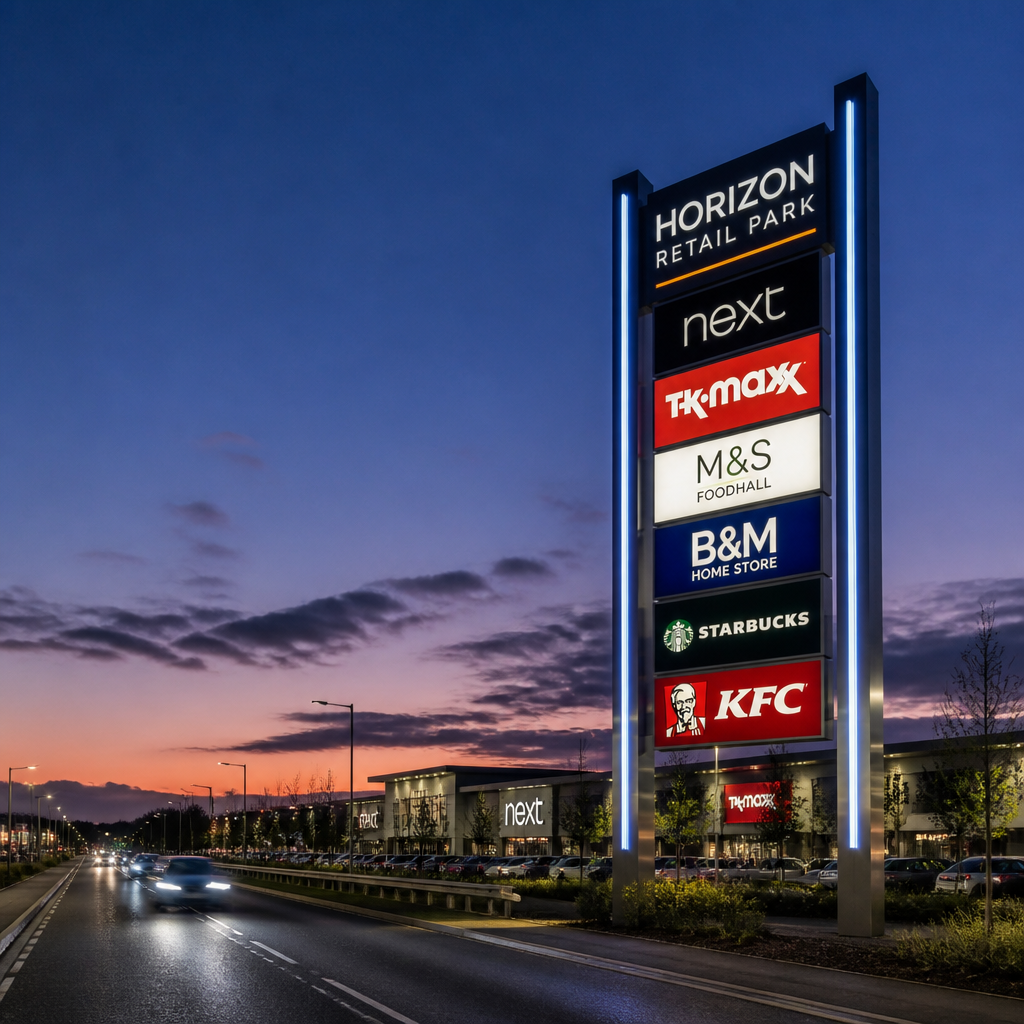
These are large freestanding structures built specifically for shopping centres, malls, office buildings, and complexes where more than one tenant requires road-facing visibility. Each tenant receives a dedicated panel within the overall structure. They function as landmarks that distinguish a property in the streetscape and are especially effective in high-competition retail corridors.
Digital Display Pylons
Digital display pylons use LED screen technology to cycle through multiple messages, tenant promotions, or brand images on one structure. They are particularly effective for retail parks where tenants run weekly promotions and need to update messaging without reprinting static panels. The trade-off is higher initial cost and ongoing management requirements compared to static structures.
Pro tip: If your retail park has anchor tenants from national franchise chains, confirm the franchise's signage specifications before finalising your pylon dimensions. Franchises often have fixed panel proportions and minimum brand logo sizes that must be accommodated, and discovering this after fabrication begins is costly.
Why Twin-Pole Pylon Signs Are the Workhorse of Commercial Complexes
If you manage a retail park or commercial complex in Gauteng with more than two tenants and a frontage on a road carrying meaningful traffic volume, a twin-pole pylon is almost certainly the right structure. Here is why practitioners consistently recommend it over single-pole alternatives for this use case.
The engineering case is straightforward. A double-pole structure distributes lateral wind loads across two foundation points rather than one. In Gauteng, where late-afternoon thunderstorms can drive strong gusts through open commercial areas, this matters for both safety certification and long-term structural integrity. A sign that moves or vibrates noticeably in wind is not just a maintenance issue. It is a liability.
The visual case is equally clear. Twin-pole pylons present a balanced, grounded aesthetic that is associated with established commercial properties. A single-pole structure at the same height often reads as less permanent, which is a subtle but real signal to potential tenants evaluating your retail park as a location. Property owners report that a well-designed multi-tenant twin-pole pylon is a genuine selling point when pitching retail space to prospective tenants, precisely because it signals maximum road-facing exposure.
There is also a practical panel-capacity benefit. The space between twin poles allows for sign mounts that can carry more panel area without the structure appearing top-heavy. For a retail park with six to ten tenants all requiring panel presence, this matters significantly in the design phase.
Pro tip: Do not try to fit every tenant onto a single pylon structure if the result will be panels so small they cannot be read from the road at traffic speed. A cluttered pylon is worse than a selective one. Prioritise anchor tenants and category leaders, and use fascia and directional signage to handle the rest.
Multi-Tenant Pylon Strategy: Making It Work for All Your Tenants
The most contentious conversation in retail park signage management is always about tenant hierarchy on the pylon. Every tenant wants the top panel. The reality is that the structure's effectiveness depends on a rational hierarchy being maintained, and that hierarchy should be set in the lease agreement, not negotiated panel-by-panel after installation.
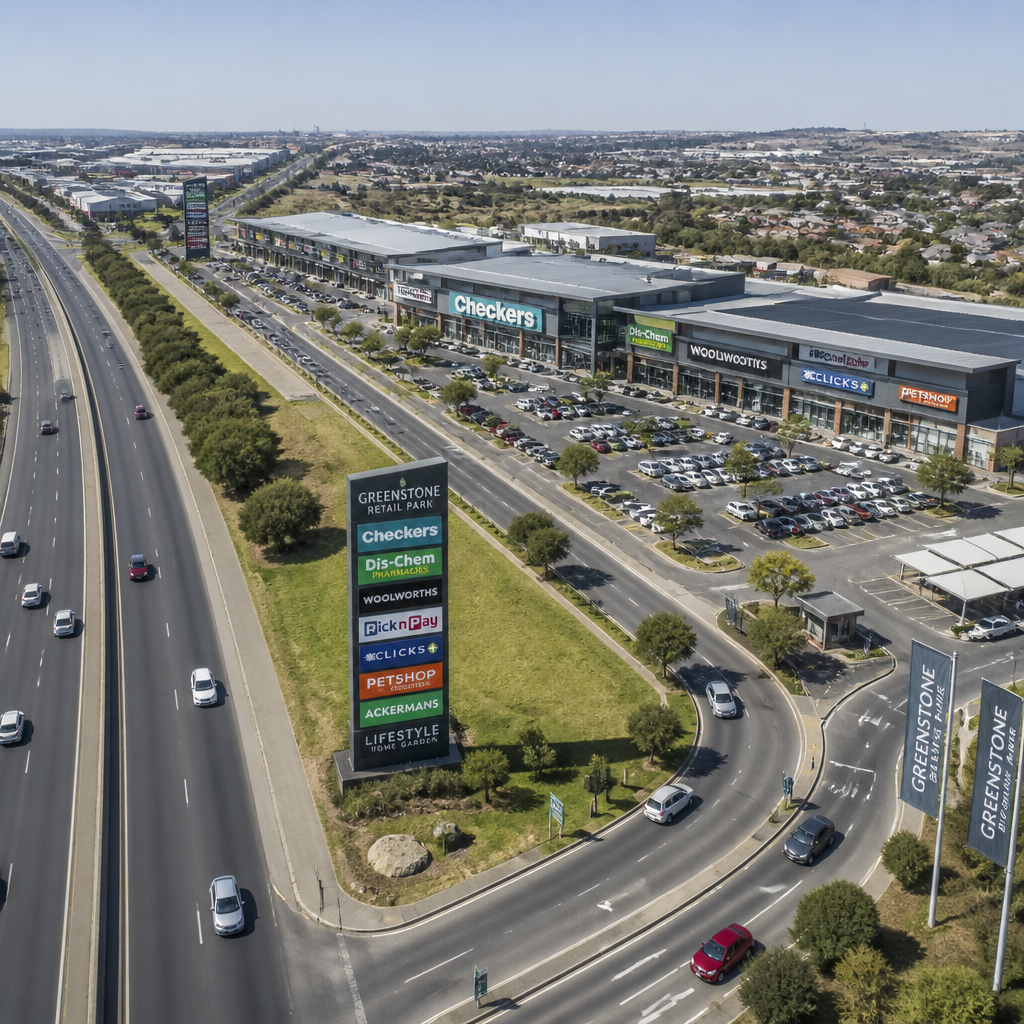
Multi-tenant pylon panels can be leased to individual tenants, which means the structure can pay for itself over time as a revenue stream for the property owner. This changes the financial logic of a pylon investment significantly. What looks like a high upfront cost becomes recoverable capital when panel rental is built into commercial lease terms from the outset.
From a design perspective, the most effective multi-tenant pylons follow a clear hierarchy. The centre or complex name appears at the top of the structure, establishing the location identity before any individual tenant is visible. Anchor tenants occupy the next tier. Smaller tenants fill lower panels. This is not about status. It is about readability from a moving vehicle, where a driver's eye moves top to bottom in the half-second they engage with a roadside structure.
For franchise tenants specifically, corporate identity standards govern how their brand appears on any shared signage. Colours must match exactly. Logo proportions must be preserved. Material choices, from polycarbonate face panels to vinyl application, must meet the franchise's approved specifications. Working with a signage provider experienced in franchise CI compliance means the pylon structure accommodates these requirements from the design phase, not as an afterthought during installation.
Illumination and Night Visibility in Gauteng's Trading Hours
A significant share of traffic on commercial streets occurs after dark. An unlit pylon is functionally invisible during this period. For any retail park or commercial complex that trades beyond 17h00, illuminated pylon signage is not a premium option. It is the baseline requirement.
LED illumination is the current standard for commercial pylon signs in South Africa for good reason. LED cabinets consume substantially less power than fluorescent alternatives, deliver consistent brightness across the full face of the sign, and have a far longer operational lifespan that reduces maintenance callouts. In a Gauteng summer, where ambient temperatures inside a sign cabinet can climb significantly, LED's lower heat output also reduces the rate of material degradation over time.
The illumination approach matters as much as the technology. Front-lit pylons use external light sources to illuminate the sign face. Back-lit (internally illuminated) pylons push light through a translucent face panel from inside the cabinet, creating a consistent glow that is highly visible from distance and in rain. For Gauteng's frequent summer evening thunderstorms, internally illuminated pylons maintain their visibility under conditions where external spotlighting is compromised by rain and glare.
Digital display pylons take this further by delivering full-colour dynamic content that is visible in all ambient conditions. For retail parks where tenants promote time-sensitive offers or events, the ability to update messaging remotely without any physical intervention at the sign is a practical advantage that static illuminated panels cannot match.
A pylon that is dark at 19h00 on a Friday evening is not just a visibility failure. It is a missed opportunity at precisely the peak retail traffic moment of the week.
Corporate Identity Compliance for Franchise and Corporate Tenants
This is the section that property managers who work with franchise tenants need to read carefully. Franchise brands in South Africa, whether in food and beverage, fashion retail, fitness, or financial services, operate under corporate identity (CI) guidelines that are not negotiable. These guidelines specify exact Pantone or RAL colour references, minimum logo dimensions, approved material types, and in some cases the exact manufacturing method required for the sign face.
When a retail park installs a pylon that does not meet a franchise tenant's CI standards, the franchise's regional or national operations team will reject the installation. This triggers rework, additional cost, and project delays that damage the relationship between the property and the tenant. The right signage provider works with franchise CI documentation from the first design consultation, not after fabrication is underway.
Corporate clients who are not franchises but operate under strict brand governance face the same challenge. A bank, insurance company, or national retailer with their own brand standards manual will audit any signage installation against those standards before signing off. The cost of getting this wrong is not just the rework. It is the delay in the tenant's trading start date, which affects the property owner's rental income timeline.
SignShopper's specialisation in franchise signage across Gauteng and broader Africa means that CI compliance is built into the project workflow, from initial measurement and design through to final installation sign-off. For property managers and franchise owners who cannot afford to have a sign redone twice, this is the practical reason to work with a provider that already knows how franchise approval processes work.
Comparing Pylon Signage Types for Gauteng Retail and Commercial Sites
| Pylon Type | Best Suited For | Key Advantage for Gauteng Commercial Properties |
|---|---|---|
| Single-Pole Pylon (Illuminated) | Standalone businesses, fuel forecourts, smaller commercial properties with one or two tenants | Lower structural cost, cleaner visual profile, faster permitting for single-brand applications |
| Twin-Pole Pylon (Multi-Tenant) | Retail parks, shopping centres, office parks, mixed-use commercial complexes with multiple tenants | Superior structural stability for large cabinets, high panel capacity, strong road presence, supports franchise CI requirements across multiple brands simultaneously |
| Digital Display Pylon | High-traffic retail nodes, properties with tenants running regular promotions or event-based advertising | Dynamic content without reprinting, remote update capability, maximum visual impact in competitive corridors, suitable for leasing digital panel time to tenants |
In practice, the most effective retail parks in Gauteng use a combination approach: a twin-pole multi-tenant pylon at the road boundary for distance visibility, supported by dedicated pylons or totem signs at access points for wayfinding. The road-facing structure announces the location. The access-point structures navigate the customer to the right entrance or tenant area. Neither replaces the other.
Frequently Asked Questions
What is the typical height range for pylon signage at a Gauteng retail park?
Pylon signs can range from 2 metres to 25 metres in height and are customised to suit the specific application. The right height depends on the setback distance from the road, surrounding tree and building heights, and any applicable municipal outdoor advertising by-laws. In Gauteng, the City of Johannesburg's outdoor advertising by-laws impose dimensional requirements on freestanding signs, including self-support requirements and panel area limits relative to height. Always confirm the applicable by-law constraints for your specific municipality before finalising height specifications.
Can a multi-tenant pylon accommodate franchise brands with strict corporate identity requirements?
Yes, but only if the signage provider works from the franchise's CI documentation from the design phase. Each franchise brand will specify exact colour references, logo proportions, approved materials, and minimum face dimensions for their panel. A competent signage provider captures these requirements before fabrication and builds the overall pylon structure to accommodate all tenant CI specs simultaneously. Attempting to retrofit a pylon after installation to meet a franchise's requirements is significantly more expensive than getting it right the first time.
How does twin-pole pylon signage differ from a single-pole pylon in structural terms?
A twin-pole pylon uses two vertical columns anchored in separate concrete foundations to support the sign cabinet. This distributes wind and lateral loads across two points rather than one, which makes twin-pole structures significantly more stable for large, heavy sign cabinets at height. For commercial complexes with wide multi-tenant panels, the twin-pole configuration is the engineering-preferred choice, and it also creates a visually balanced, grounded appearance that reads as a permanent commercial landmark.
Is LED illumination worth the additional cost for a retail park pylon in Gauteng?
For any retail park trading beyond late afternoon, yes, without qualification. LED illumination extends your pylon's effective trading hours into the evening, when a significant share of consumer traffic occurs. LED technology also delivers lower running costs, longer operational lifespan, and better heat management inside the sign cabinet compared to older fluorescent alternatives. The additional upfront cost is recovered over time through lower electricity consumption and reduced maintenance callouts.
What happens if a pylon sign is installed without the correct municipal approvals in Gauteng?
A pylon structure installed without the required outdoor advertising approvals from the relevant Gauteng municipality is non-compliant and subject to a removal order. This is not a theoretical risk. Municipal inspectors do enforce outdoor advertising by-laws in Gauteng's commercial areas. The cost of removal, structural reinstatement, and reapplication far exceeds the cost of obtaining proper approvals from the outset. Always confirm whether your signage provider handles the approvals process on your behalf or whether you need to manage this separately.
Can pylon panel space be rented to tenants to offset the installation cost?
Yes, and for property owners with high-footfall retail parks, this is a commercially sensible approach. Multi-tenant pylon panel space is commonly leased to tenants as part of their occupancy terms or as a separate commercial arrangement. Over the operational life of a well-maintained pylon structure, panel rental income can recover a significant portion of the initial capital investment. Build this into your commercial lease framework from the outset rather than trying to negotiate it retrospectively with established tenants.
Have you recently upgraded or installed pylon signage at your retail park or commercial complex in Gauteng? Share what worked, what surprised you, or what you wish you had known before the project started.
References
- Pylon signage in Johannesburg: visibility, strength, and long-term brand impact explained
- Why pylon signage is essential for high-traffic Johannesburg businesses
- Overview of pylon signage types, illumination requirements, and commercial applications in South Africa
- Multi-tenant pylon signs for shopping centres, malls, and multi-occupancy commercial properties
- City of Johannesburg outdoor advertising by-laws governing freestanding pylon sign structures