


SABS Approved Safety Signs: What SA Businesses Must Know
Most South African business owners assume that putting up a few signs is enough to satisfy an OHS inspector. It is not. The moment your signage cannot demonstrate compliance with SABS approved safety signs standards under SANS 1186, you are exposed to enforcement action under the Occupational Health and Safety Act 85 of 1993. Whether you operate a retail store in a Gauteng mall, a hotel in Johannesburg, or a franchise with sites spread across the country, getting your safety signage right is a legal obligation, not an optional upgrade.
Table of Contents
- What "SABS Approved" Actually Means for Safety Signs
- The Legal Framework: OHS Act and SANS 1186
- The Five SANS 1186 Sign Categories Explained
- Placement, Sizing, and Viewing Distance Requirements
- Common Compliance Failures South African Businesses Make
- Comparing Sign Types: Which Format Works Where
- Corporate Identity vs. Safety Compliance: Getting Both Right
- Frequently Asked Questions
- References
What "SABS Approved" Actually Means for Safety Signs
The term SABS approved is widely used but frequently misunderstood. The South African Bureau of Standards (SABS) is the body that publishes and maintains the South African National Standards (SANS). When a safety sign is described as SABS approved, it means the sign has been manufactured in accordance with SANS 1186, which is the governing standard for symbolic safety signs in South Africa, and carries the appropriate SABS approval mark.
Buying a sign that simply looks like a safety sign is not sufficient. A compliant sign must use the correct standardised symbols, the correct colours, the correct geometric shapes, and be made from materials that meet the durability requirements of the standard. Signs that lack the SABS approval mark may fail an OHS inspection even if they visually resemble compliant versions.
In practice, the safest approach for any business is to source all safety signage South Africa requirements from a supplier who can confirm that every sign in their range carries formal SANS 1186 compliance. This protects you if your premises are inspected and the inspector requests proof of compliance.
The Legal Framework: OHS Act and SANS 1186
The Occupational Health and Safety Act 85 of 1993 is the primary legislation that creates the employer's obligation to display safety signage. Regulation 9 of the OHS Act General Safety Regulations requires employers to indicate all hazards, prohibited activities, mandatory actions, and safe conditions by means of SANS 1186-compliant safety signs. This obligation applies to every workplace in South Africa, regardless of size or industry sector.
SANS 1186 sits underneath the OHS Act as the technical standard that defines exactly how a sign must look, what it must communicate, and where it must be placed. SANS 1186-1 covers standard signs and general requirements, covering the five main sign categories. SANS 1186-3 and SANS 1186-5 address specific applications including photoluminescent signs and escape route signage, while SANS 1464-22 and SANS 10114-2 govern illuminated signs and viewing distance calculations respectively.
Understanding this two-layer structure matters because inspectors cite both layers. A business can be found non-compliant because its signs do not meet the OHS Act General Safety Regulations, and also because those signs do not conform to the technical specifications in SANS 1186. Both layers must be satisfied simultaneously.
Compliance with safety signage is not satisfied by displaying any sign near a hazard. It is satisfied only when the correct sign category, correct colour coding, correct shape, and correct placement together communicate the required information to every person in the workplace, regardless of language.
South Africa's 11 official languages make the pictogram-based approach of SANS 1186 particularly important. Signs that communicate through standardised symbols and colours rather than text alone reach every worker and visitor on your premises, which is both a legal requirement and a practical safety imperative.
The Five SANS 1186 Sign Categories Explained
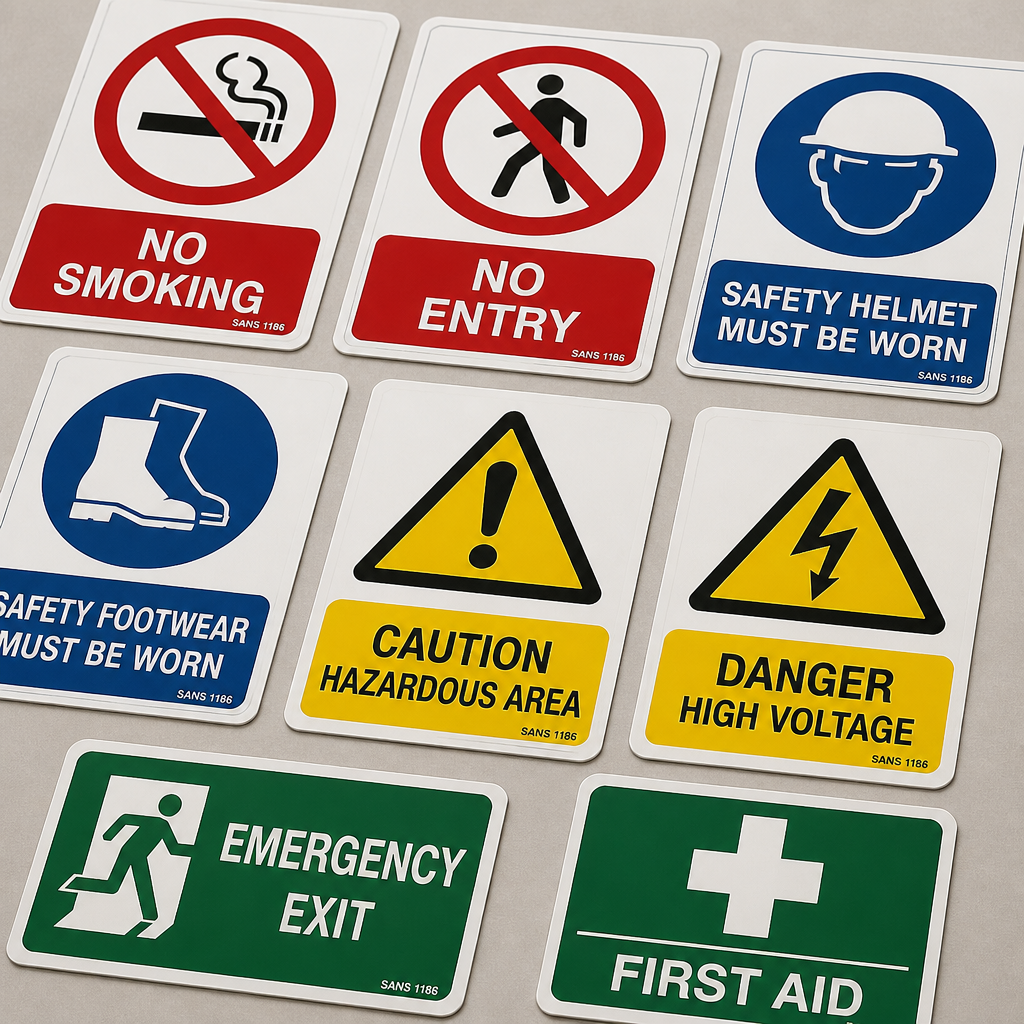
SANS 1186 defines five distinct sign categories, each with its own prescribed colour, geometric shape, and function. Using the wrong category for a given hazard is a compliance failure, even if the sign itself is well-made.
Warning Signs
Warning signs use a yellow triangle with a black border and black symbol. They indicate the presence of a hazard that could cause injury or illness if the person does not take precautions. Examples include "Electrical hazard", "Slippery floor", and "Overhead hazard". These are among the most commonly required signs in retail, hospitality, and warehouse environments.
Prohibition Signs
Prohibition signs use a red circle with a diagonal red bar over a black symbol on a white background. They communicate actions that are not permitted in a given area. "No smoking", "No open flame", and "No unauthorised entry" are typical examples. Hotels, restaurants, and fitness centres frequently require these at multiple access points.
Mandatory Signs
Mandatory signs use a blue circle with a white symbol. They prescribe an action that must be taken in a specific area. "Safety footwear required", "Hard hat required", and "Hand washing required" fall into this category. For corporate offices these are less common, but for any premises with a plant room, loading bay, or back-of-house operational area, mandatory signs are non-negotiable.
Safe Condition Signs
Safe condition signs use a green rectangle with a white symbol. They indicate emergency exits, first aid facilities, and evacuation routes. Every commercial building is legally required to clearly mark its escape routes using these signs, and they must comply with SANS 1186-1 at minimum. Illuminated or photoluminescent versions are required where visibility could be compromised during a power failure.
Fire Equipment Signs
Fire equipment signs use a red rectangle with a white symbol. They indicate the location of fire extinguishers, fire hose reels, fire alarm call points, and other firefighting equipment. SANS 1186 requires that fire equipment signs be square or rectangular in shape and, in many environments, photoluminescent. Standard size is 190mm x 190mm for most commercial premises, though larger formats are required in warehouses and open-plan spaces.
Pro tip: Never mix non-compliant generic signs with SABS-approved signs on the same premises. An inspector who finds one non-compliant sign has grounds to review every sign in the building. A single sourcing decision made to save a few hundred rand can result in a full audit and remediation cost that is orders of magnitude higher.
Placement, Sizing, and Viewing Distance Requirements
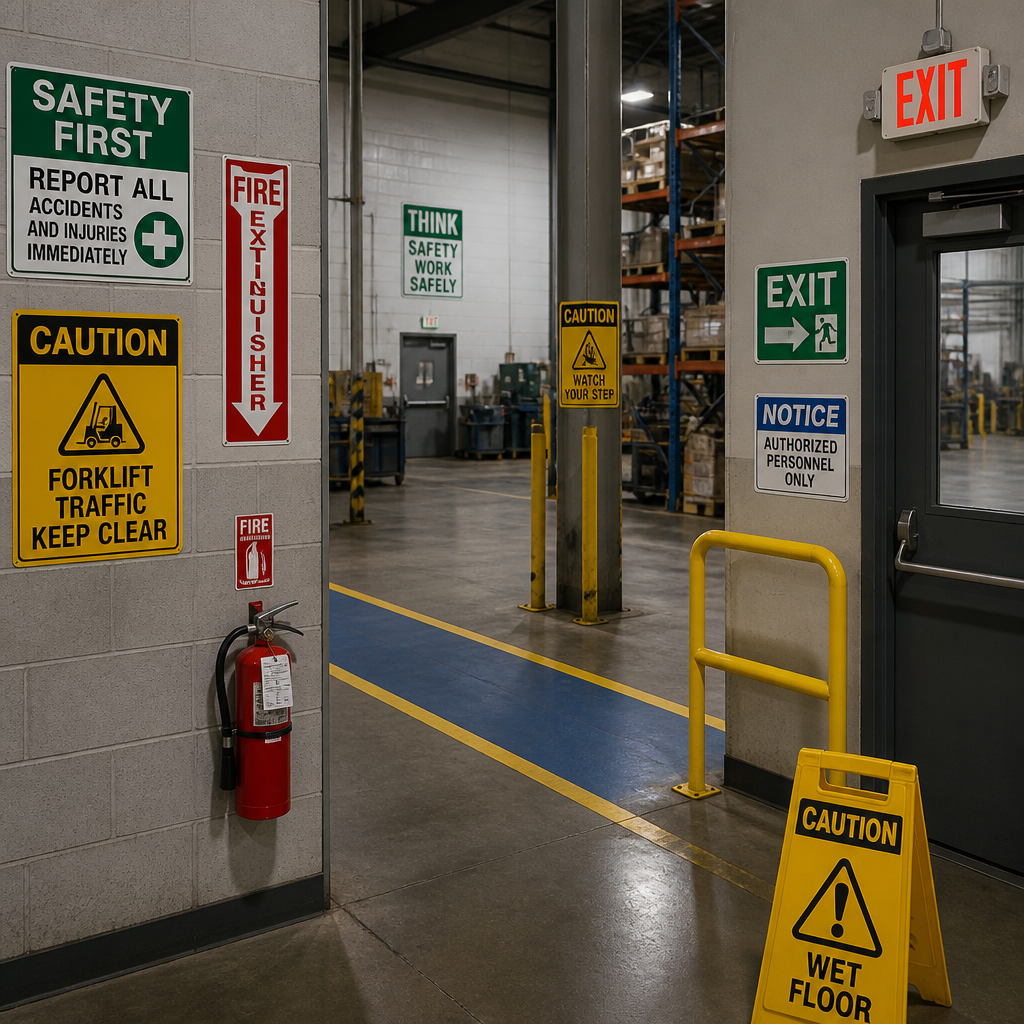
Producing a compliant sign and then placing it incorrectly is one of the most common and costly compliance mistakes South African businesses make. SANS 1186 and related standards specify not only what a sign must look like, but where it must be positioned and how large it must be relative to the distance from which it will be read.
Viewing Distance and Sign Size
SANS 10114-2 governs the relationship between the maximum viewing distance of a sign and the vertical dimension of the sign. In plain terms: the further away a person might be when they need to read the sign, the larger the sign must be. A sign that is adequate for a small office corridor will be non-compliant if placed at the far end of a 30-metre warehouse aisle. Businesses that operate across large floor plates, such as big-box retail stores, event venues, and distribution centres, need to calculate viewing distances before specifying sign sizes.
Escape Route Signage Placement
Any building with escape routes must clearly mark and signpost those routes with directional information. Signage must comply with SANS 1186-1, SANS 1186-3, and SANS 1186-5 as applicable. Where signage needs to remain visible during a power failure or fire, photoluminescent or illuminated signs are required. The standard specifies that the exit door of a room accommodating fewer than 25 persons is not required to be marked, but any room above that threshold must have clearly marked exit signage.
Height and Positioning
Signs must be placed in high-traffic and hazardous areas where workers and visitors will actually see them. Positioning a mandatory PPE sign behind a storage rack, or placing a fire equipment sign at floor level, defeats the legal purpose of the sign. Signs should be at eye level or above, unobstructed, and regularly inspected to ensure they have not been covered by stock, equipment, or building modifications.
Pro tip: When a business undergoes a fit-out, renovation, or layout change, the safety signage plan must be reviewed and updated. Many compliance failures happen not because the original signage was wrong, but because a layout change made existing signs incorrect or obscured. Build a signage review into your project handover checklist for any premises change.
Common Compliance Failures South African Businesses Make
After years of working with corporate clients, franchise groups, and commercial premises across Gauteng, certain compliance failures come up repeatedly. None of them are technically complex. All of them are avoidable.
Purchasing Non-SABS-Approved Signs
The South African market includes a significant volume of safety signs that look correct but carry no SABS approval mark and have not been manufactured to SANS 1186 tolerances. These signs are often cheaper, but they expose the business to liability during an inspection and, more importantly, during an actual emergency when inadequate signage contributes to injury or a failure to evacuate.
Using the Wrong Category for a Hazard
Placing a warning sign where a prohibition sign is required, or a mandatory sign where a safe condition sign belongs, is a category error that inspectors identify immediately. The five-category system exists precisely so that workers can interpret a sign's intent at a glance from the shape and colour alone. A red circle means stop or do not do this. A yellow triangle means there is a hazard nearby. These distinctions are not interchangeable.
Outdated or Faded Signs
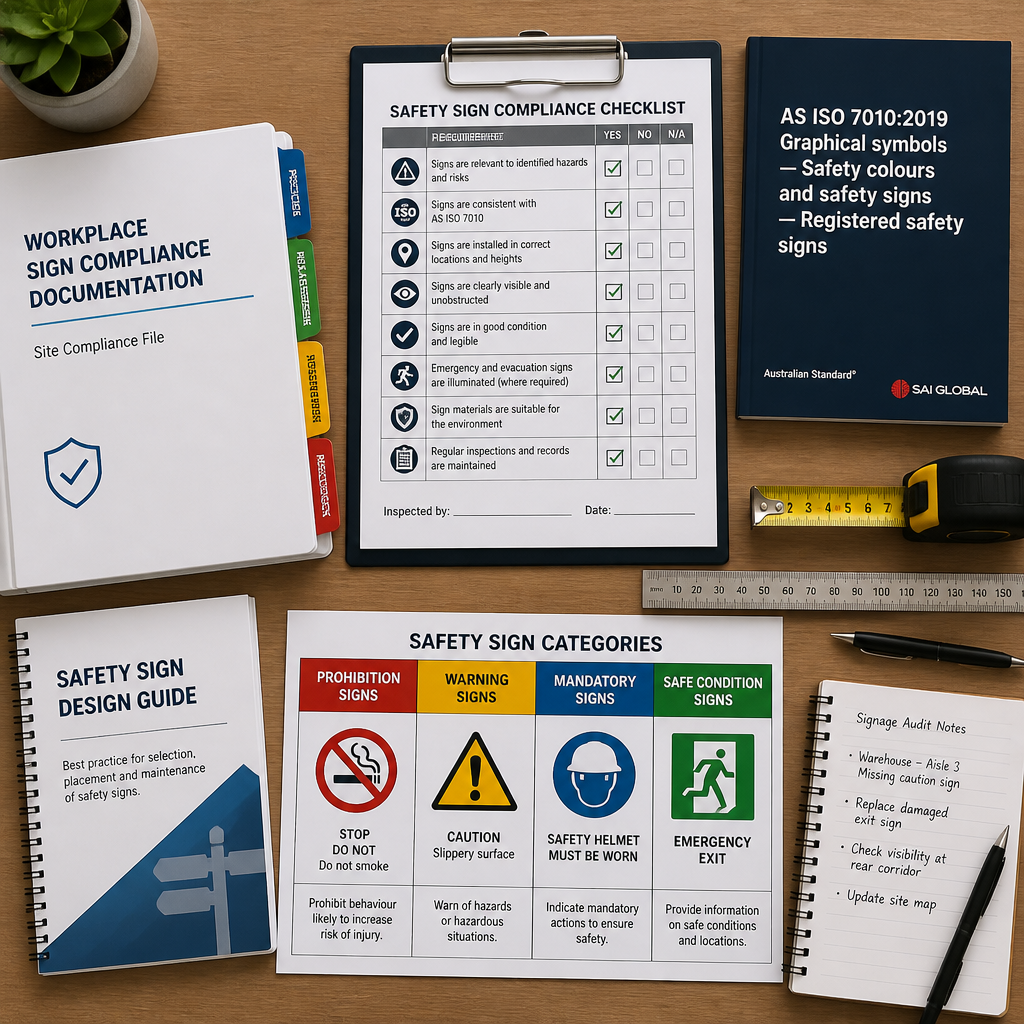
SANS 1186 requires that signs be maintained in good condition. Faded, cracked, or illegible signs do not meet the standard, even if they were SABS approved at the time of purchase. Regular inspection and replacement are part of the employer's ongoing obligation, not a one-time installation exercise.
Missing Photoluminescent Signs Where Required
Many businesses install standard printed signs on escape routes without assessing whether photoluminescent or illuminated versions are required by their building type or occupancy. This is especially common in hotels, restaurants, and entertainment venues where ambient lighting may be deliberately low. A photoluminescent sign that glows in darkness is not an upgrade, it is a mandatory requirement in certain environments under SANS 1186-3.
Comparing Sign Types: Which Format Works Where
Not all SABS-approved workplace safety signs are made equal. The material and finish you choose affects durability, visibility, and suitability for the environment. The table below compares the three most common sign formats used by South African commercial premises.
| Sign Format | Best Environment | Key Considerations |
|---|---|---|
| ABS Rigid Plastic (standard) | Indoor office, retail, hospitality (dry areas) | Durable, cost-effective, easy to mount. Not suitable for outdoor or wet environments without protective housing. |
| Chromadek Steel / Aluminium | Outdoor areas, loading bays, industrial premises | Weather-resistant, longer lifespan outdoors. Heavier and requires secure fixing. Resists warping in high-heat environments. |
| Photoluminescent (glow-in-dark) | Escape routes, stairwells, entertainment venues, hotels | Mandatory in many building types for emergency egress. Charges from ambient light. Must meet SANS 1186-3 glow duration requirements. |
Vinyl signs on adhesive backing are sometimes used for temporary or promotional applications but are generally not suitable as the primary SANS 1186 compliant sign in a permanent location. They degrade faster, can peel, and may not meet minimum material thickness requirements for certain sign categories.
Corporate Identity vs. Safety Compliance: Getting Both Right
For corporates and franchise owners, there is a real tension between maintaining strict brand identity guidelines and meeting the prescriptive colour and symbol requirements of SANS 1186. This tension is manageable, but it requires deliberate planning at the design stage.
SANS 1186 does not allow customisation of the core sign elements. The yellow triangle of a warning sign cannot be made blue to match a brand's colour palette. The red circle of a prohibition sign cannot be substituted with a brand's primary colour. The shape, colour, and symbol of each sign category are fixed by the standard, and any deviation renders the sign non-compliant.
What brands can control is the framing, mounting, and positioning of signs within their overall interior design. A well-designed retail environment can integrate compliant safety signage into the space without it feeling like an afterthought, by choosing sign holders, mounting styles, and positioning that complement the brand environment while meeting every SANS 1186 requirement.
For franchise groups managing multiple sites, the most effective approach is a centralised signage schedule, a document that lists every sign required by type and location for a standard site layout. This schedule is prepared once, verified against SANS 1186, and then applied consistently across the network. Site managers do not make compliance decisions individually, they execute the schedule. This approach eliminates the variation that inevitably produces non-compliant sites when each franchise owner sources their own signs independently.
SignShopper works with corporate and franchise clients across South Africa to develop exactly this kind of centralised signage programme, combining SABS-compliant workplace safety signs with corporate identity materials into a single coherent site package. From initial design to installation and ongoing maintenance, a single supplier relationship removes the coordination burden that multi-site businesses typically find most frustrating about compliance signage.
Frequently Asked Questions
What is the difference between SABS approved and SANS 1186 compliant?
SANS 1186 is the technical standard that defines what a safety sign must look like and how it must perform. SABS is the body that publishes and administers that standard. When a sign is described as SABS approved, it means the sign has been manufactured to meet the requirements of SANS 1186 and carries the SABS approval mark. Both terms refer to the same compliance outcome: a sign that meets South Africa's legal requirements for workplace safety signage.
Are safety signs legally required for all South African businesses?
Yes. Regulation 9 of the OHS Act General Safety Regulations requires every employer to indicate all hazards, prohibited activities, mandatory actions, and safe conditions using SANS 1186-compliant safety signs. This obligation applies to all workplaces regardless of size, sector, or number of employees. There is no exemption threshold below which a business does not need to comply.
How many safety sign categories are defined under SANS 1186?
SANS 1186 defines five sign categories: warning signs (yellow triangle), prohibition signs (red circle), mandatory signs (blue circle), safe condition signs (green rectangle), and fire equipment signs (red rectangle). Each category has a fixed colour, shape, and symbol set that cannot be modified without rendering the sign non-compliant.
Do I need photoluminescent safety signs in my business?
It depends on your building type and occupancy. Any premises where ambient lighting may be compromised during an emergency, including hotels, restaurants, entertainment venues, and buildings with internal stairwells, typically requires photoluminescent or illuminated escape route signage under SANS 1186-3. The safest approach is to have a qualified safety officer or signage specialist assess your premises and specify the correct sign type for each location.
Can I design custom safety signs that incorporate my brand colours?
No, not for the core sign elements. SANS 1186 fixes the colour, shape, and symbol of each sign category, and those elements cannot be changed to match brand guidelines. What you can customise is the mounting, framing, and overall integration of compliant signs into your interior design. A professional signage supplier can help you achieve a consistent brand environment that still meets every SANS 1186 requirement.
What happens if my business is found to have non-compliant safety signs?
A Department of Employment and Labour inspector can issue a contravention notice, order that non-compliant signs be replaced within a specified timeframe, and in serious cases issue fines or prohibition notices. Beyond direct enforcement, non-compliant signage creates liability exposure if an employee or visitor is injured in circumstances where compliant signage might have prevented the incident. The cost of replacement is always significantly lower than the cost of enforcement or litigation.
How often should safety signs be inspected and replaced?
SANS 1186 requires that signs be maintained in a legible and effective condition. In practice, a quarterly visual inspection is a reasonable minimum. Signs that are faded, cracked, partially obscured, or peeling should be replaced immediately. After any building renovation, layout change, or new hazard introduction, the entire signage plan for the affected area should be reviewed and updated before the area is reopened to staff or customers.
Have you recently had an OHS inspection, or are you currently reviewing your business's safety signage for compliance? Share your experience or questions below so we can help address the specific challenges your premises face.
References
- Fire safety signage requirements under the OHS Act and SANS 1186 for South African workplaces
- SANS 1186 sign categories and OHS Act Regulation 9 obligations for South African warehouses
- SANS 1186-1 sign colour and shape requirements for fire safety signage in South Africa
- SABS-approved safety sign materials, formats, and standards in South Africa
- Escape route signage and viewing distance requirements under SANS 1186 and SANS 10114-2