


LED Backlit vs Neon Signs: Best Choice for SA Business
Your business signage works around the clock, and in South Africa, every watt it consumes and every rand spent maintaining it matters. When clients ask us about LED backlit signs South Africa versus traditional neon signs, the answer is rarely just about aesthetics. It involves electricity costs in a country where load shedding is a daily operational reality, maintenance access in Gauteng versus a remote franchise site in Limpopo, and whether your brand needs the polish of a corporate lightbox or the warmth of a glowing neon flex installation. This guide cuts through the noise and gives you a direct, practical comparison built for South African business conditions.
Table of Contents
- Quick Takeaways
- How Each Sign Type Works
- Energy Costs and Load Shedding: The South African Reality
- Lifespan and Maintenance: What You Actually Pay Over Time
- Visual Impact and Brand Fit
- Side-by-Side Comparison: LED backlit vs Neon vs LED Neon Flex
- Which South African Businesses Suit Each Sign Type
- Corporate Identity and Franchise Compliance
- Frequently Asked Questions
- References
Quick Takeaways
Key Insight | Explanation |
|---|---|
LED backlit signs last significantly longer than glass neon | LED technology is rated at 50,000 to 100,000 hours of operation, while traditional glass neon typically delivers 8,000 to 15,000 hours before requiring service or replacement. |
LED consumes far less electricity per sign | A typical LED-backlit sign draws 5 to 15 watts for the same visual footprint that a glass neon sign covers at 50 to 100 watts. Over a year, that gap becomes significant on your electricity bill. |
Load shedding makes low-draw LED signs the smarter backup candidate | In South Africa, pairing a low-wattage LED sign with a UPS or battery backup is far more practical than running high-voltage neon transformers off an inverter. |
Neon glass signs require specialist repair; LED signs allow modular replacement | When a neon tube cracks or gas leaks, you need a skilled glass bender. LED signs use modular components that can be partially replaced without taking the whole unit down. |
Neon flex (LED neon) gives you the look without the fragility | Modern LED neon flex replicates the warm, curved glow of glass neon using silicone-coated LEDs running on low-voltage DC, making it safer to mount, transport, and service. |
Corporate and franchise brands almost always choose LED backlit signage | Strict corporate identity standards demand colour consistency across multiple sites. LED backlighting delivers uniform illumination that glass neon tubes simply cannot replicate at scale. |
Neon still has a legitimate role in hospitality and experience-led venues | Restaurants, bars, boutique hotels, and gyms can use neon or LED neon flex as an intentional design element to create atmosphere, not just to display a brand name. |
How Each Sign Type Works
Understanding the technology behind each sign type prevents costly mistakes at the specification stage. The two products are fundamentally different in how they generate and distribute light, and those differences have downstream consequences for installation, running costs, and maintenance.
LED backlit Signs
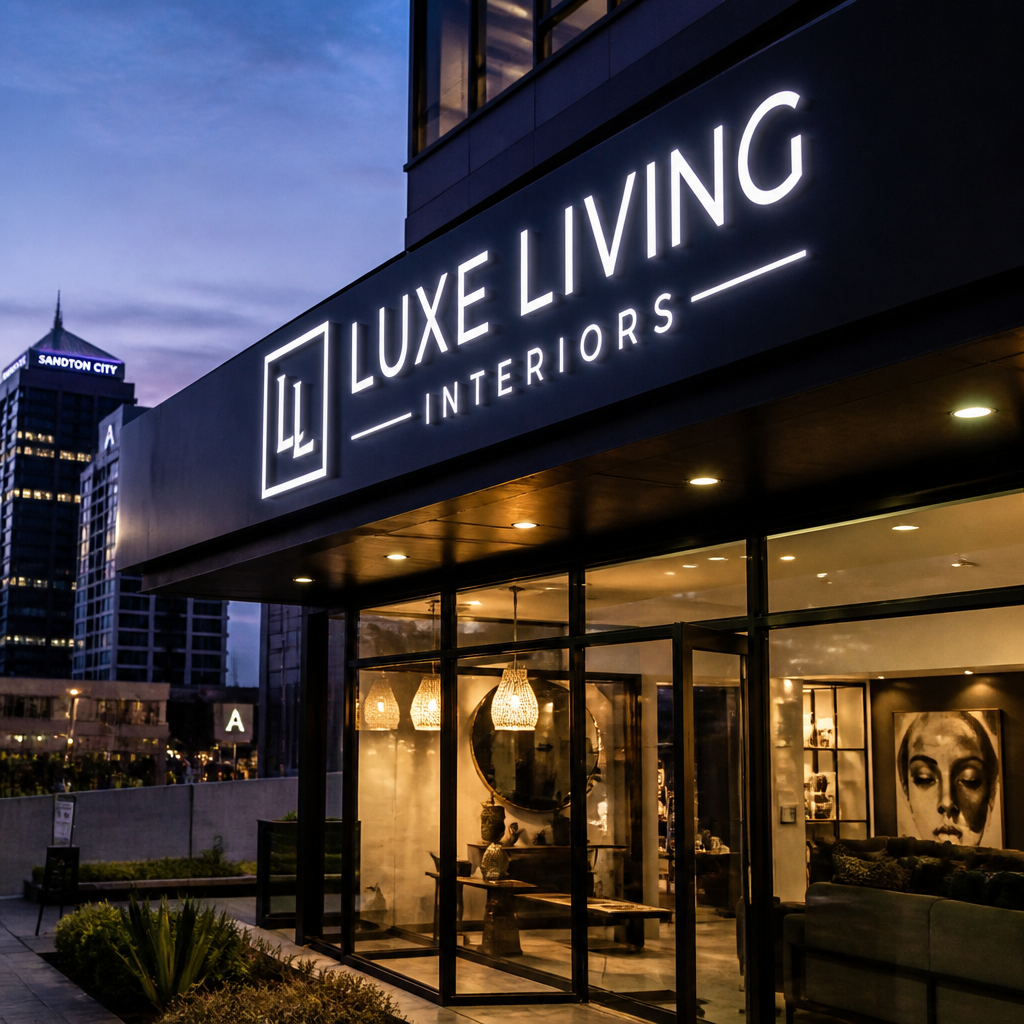
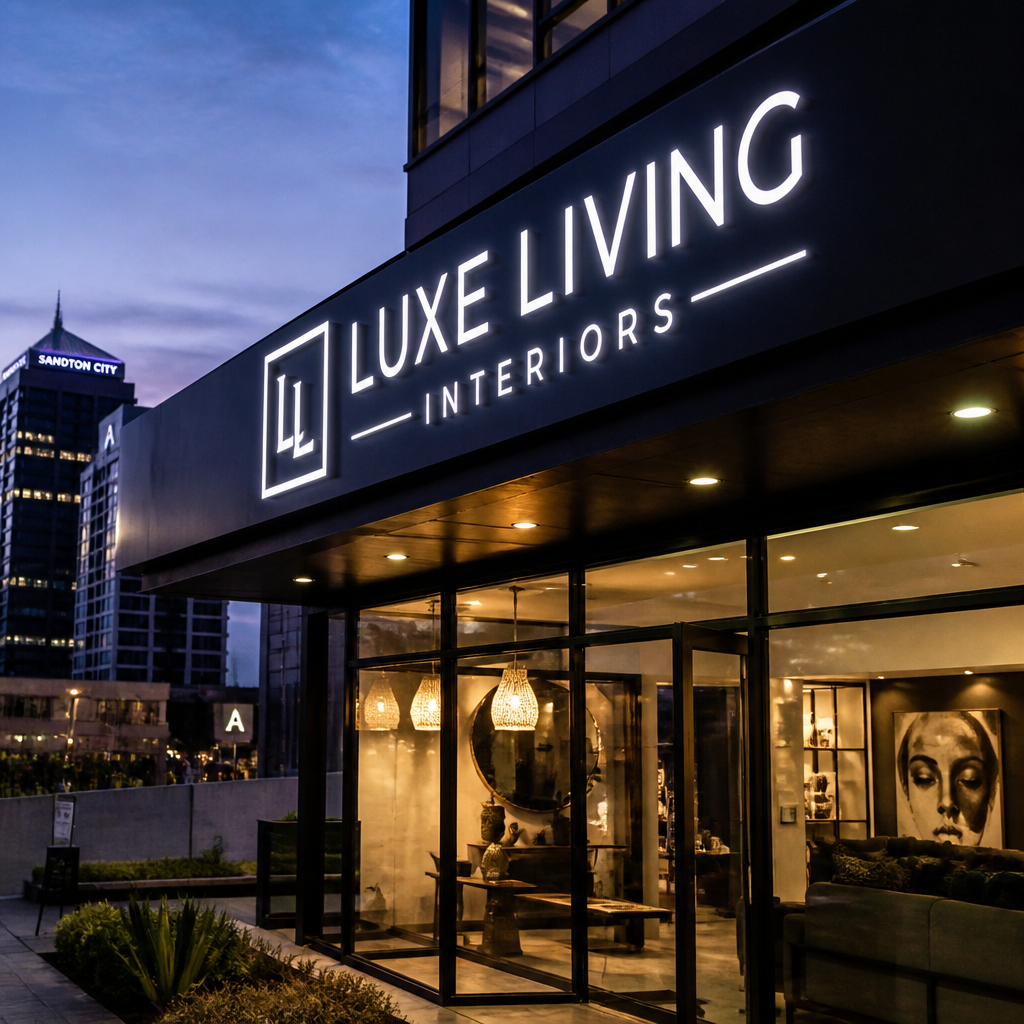
LED backlit signs use small light-emitting diodes mounted behind a face material, typically an acrylic or aluminium-framed panel, a channel letter, or a lightbox cabinet. The LEDs illuminate the face from behind or from the sides, producing a clean, even glow across the entire surface. Because the diodes are solid-state components with no gas, no glass tubes, and no high-voltage transformers, they are inherently robust and suitable for both indoor and outdoor environments across South Africa's varied climate conditions.
At SignShopper, this category includes LED backlit cut-out letters, aluminium-cut logos with LED halo illumination, and full lightbox panels. These are the products most commonly specified for corporate shopfronts, franchise roll-outs, and hotel entrance signage where a consistent, professional finish is non-negotiable.
Traditional Glass neon signs
Glass neon signs are hand-crafted from lead-free glass tubing bent by a skilled artisan, filled with noble gases such as neon or argon, and connected to a high-voltage transformer. The gas excites when voltage is applied and emits a continuous, warm, distinctive glow. The result is genuinely beautiful and unmistakably analogue. That charm, however, comes with real operational trade-offs that South African business owners need to weigh honestly.
LED Neon Flex
A third option sits between the two. LED neon flex uses silicone-coated strips of LEDs to mimic the curved, glowing appearance of glass neon, but runs on low-voltage DC power and requires no glass bending or specialist gas work. SignShopper mounts neon flex on backing boards in various materials including acrylic, mirror, and wood, giving clients the visual warmth of neon with the reliability of LED technology. For most hospitality and retail clients who want a neon aesthetic, this is the most practical specification.
 LED backlit business sign on storefront at dusk in South African city">
 LED backlit sign brightness">
Energy Costs and Load Shedding: The South African Reality
South Africa's electricity supply is unpredictable, and the cost of power from Eskom continues to rise. For any business that keeps signage illuminated through trading hours and into the evening, the energy draw of your sign is a legitimate operational cost, not a footnote.
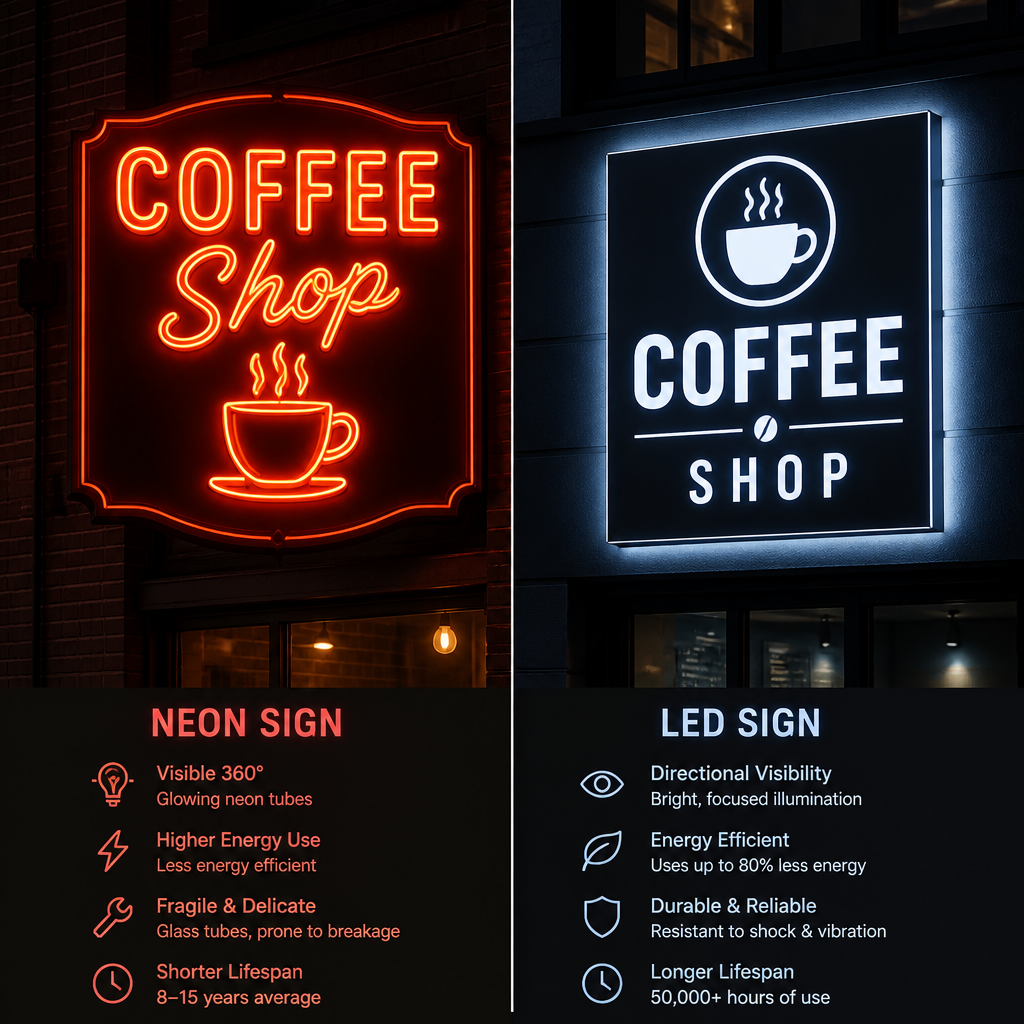
The numbers are stark. A typical glass neon sign runs high-voltage transformers drawing roughly 50 to 100 watts per sign. An equivalent LED backlit or LED neon flex sign draws approximately 5 to 15 watts for the same visual size. Over a year of evening and overnight operation, that difference accumulates into a meaningful line on your electricity account.
Research from Samsung Insights confirms that LED technology consumes between 50 and 70 percent less electricity compared to older lighting alternatives, with some LED-versus-neon comparisons showing energy savings of 70 to 80 percent in favour of LED. At current South African electricity tariffs, that kind of reduction has a real rand value.
In a market where electricity is both expensive and unreliable, choosing the lower-draw technology is not a minor preference. It is a sound business decision that compounds every month you operate.
Load shedding adds another dimension. A UPS or battery backup capable of running a 10-watt LED sign for several hours during a Stage 4 outage is an affordable and practical investment. Running a 100-watt neon transformer off the same backup system is a different calculation entirely, and in most cases it simply is not viable. For businesses in Gauteng's shopping centres and retail strips where trading through load shedding matters, LED backlit signage is the only sensible choice.
Pro tip: If your business operates during load shedding, specify LED backlit signs with a low-voltage DC driver and pair them with a small UPS. Your signage stays visible when competitors' neon signs go dark, which is a free advertising advantage every time the power drops.
Lifespan and Maintenance: What You Actually Pay Over Time
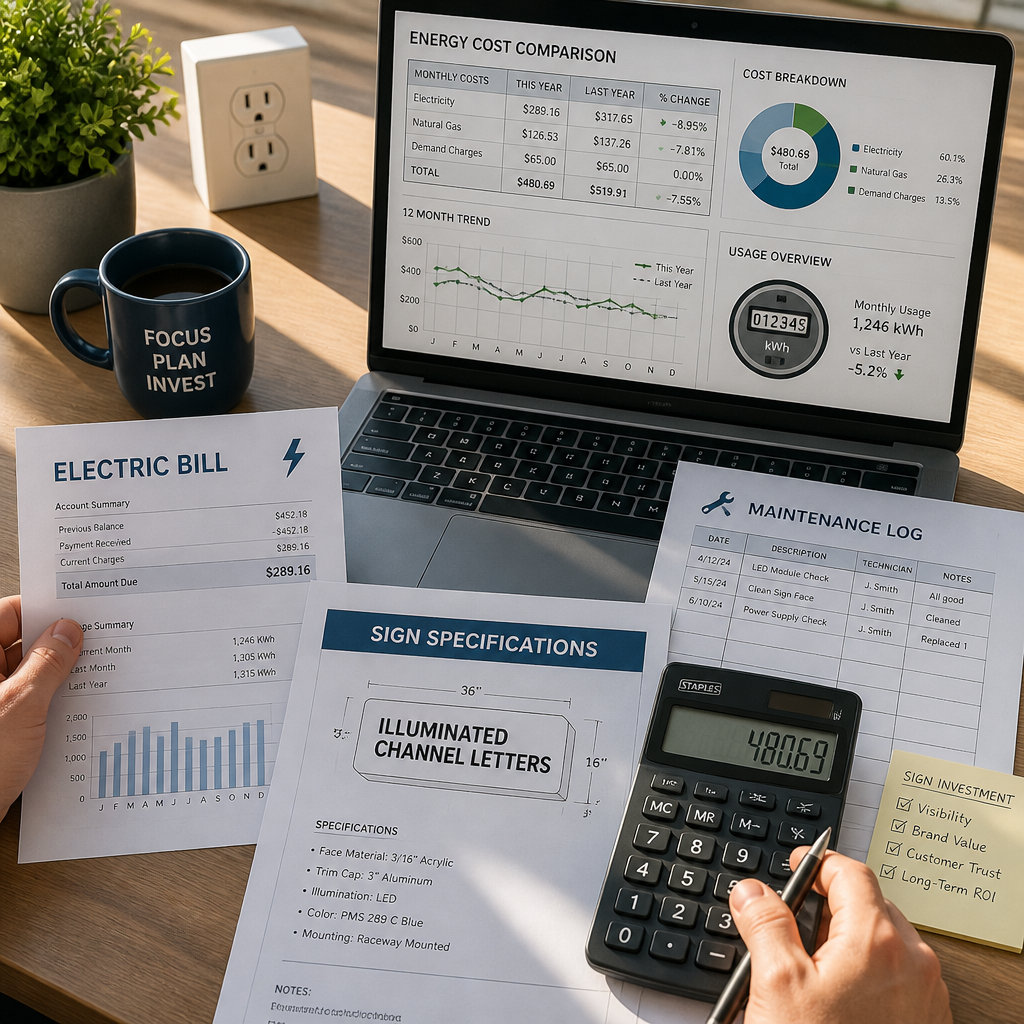
Purchase price is only one part of the cost of a sign. The total cost of ownership includes maintenance callouts, replacement parts, and the lost revenue that comes with a sign that is dark, flickering, or missing letters.
LED backlit Sign Lifespan
A well-specified LED backlit sign is rated for 50,000 to 100,000 hours of operation. At eight hours of daily use, that represents well over fifteen years of reliable service. LED signs use a modular design, meaning if a section fails, that section can be replaced without dismantling the entire installation. For a franchise with sites across South Africa, this translates directly into lower maintenance call-out costs and faster turnaround when a repair is needed.
Glass Neon Sign Lifespan and Failure Modes
Traditional glass neon has a rated lifespan of roughly 8,000 to 15,000 hours, which is a fraction of LED. More importantly, the failure modes are expensive. Neon tubes can crack. Gas leaks over time, causing the sign to dim unevenly. High-voltage transformers burn out. Each of these failures requires a specialist glass neon technician, who is an increasingly rare and expensive resource in South Africa. A single tube repair is not cheap, and sourcing the right artisan outside of Johannesburg or Cape Town can add significant lead time to a repair.
Pro tip: When budgeting for a glass neon sign, add at least one maintenance callout per year to your cost model. For a multi-site franchise, the cumulative maintenance cost of glass neon across the estate will almost always exceed the higher initial investment in LED backlit alternatives.
LED Neon Flex: A Middle Ground
LED neon flex lasts considerably longer than glass neon, with silicone-coated LEDs offering protection against dust and moisture that glass tubes simply cannot match. In coastal environments like Durban, where SignShopper also operates, or in high-traffic kitchens and gym spaces where steam and humidity are factors, the durability advantage of LED neon flex over glass neon is material.
Visual Impact and Brand Fit
Neither sign type wins on every aesthetic dimension. The right choice depends on what your brand is trying to communicate and where the sign will be viewed.
Where LED backlit Signs Excel Visually
LED backlit signs deliver a clean, consistent, and professional appearance. They provide even illumination across the entire sign face, which is critical for corporate logos where colour accuracy and uniformity matter. In daylight conditions, LED backlit signs maintain excellent visibility because the light source is strong, directional, and controllable. For banks, professional services firms, franchise chains, and upmarket retail, the polished finish of an LED backlit lightbox or channel letter is the correct specification.
Where Neon Wins on Atmosphere
Glass neon and LED neon flex produce a warm, organic glow that no LED panel fully replicates. The light is softer, slightly diffused, and carries a handcrafted quality that resonates in hospitality, entertainment, and lifestyle settings. Neon works particularly well in darker interior environments: a cocktail bar in Sandton, a boutique fitness studio in Bryanston, or a specialty coffee shop where the ambience is as much a product as the food. In these settings, the sign is not just communicating a name. It is contributing to the experience.
In daylight or brightly lit interiors, neon loses much of its visual power. LED backlit signs hold their visibility across all lighting conditions, making them the default choice for exterior shopfront applications.
Side-by-Side Comparison: LED backlit vs Neon vs LED Neon Flex
The table below compares the three main illuminated sign options available from SignShopper across the criteria that matter most to South African business owners and franchise managers.
Criterion | LED backlit Signs | Traditional Glass Neon | LED Neon Flex |
|---|---|---|---|
Typical power draw | 5 to 30W depending on size | 50 to 100W per sign | 5 to 20W depending on size |
Operational lifespan | 50,000 to 100,000 hours | 8,000 to 15,000 hours | 30,000 to 50,000 hours |
Maintenance complexity | Low. Modular LED replacement. | High. Requires specialist glass artisan. | Low. Silicone-coated, modular strips. |
Outdoor suitability | Excellent. Weather-rated enclosures available. | Limited. Glass is fragile; high-voltage transformers need protection. | Good. Silicone casing provides moisture resistance. |
Corporate identity compliance | Excellent. Precise colour matching and uniform illumination. | Poor. Colour consistency across multiple sites is unreliable. | Good. Colour options wide, but variation possible across production batches. |
Aesthetic character | Clean, professional, modern. | Warm, handcrafted, nostalgic. | Warm, flexible, contemporary neon-style. |
Load shedding compatibility | Excellent. Easy to run on UPS backup. | Poor. High-voltage draw makes battery backup impractical. | Good. Low-voltage DC runs on modest backup power. |
Best use case in SA | Corporate shopfronts, franchise roll-outs, pylon signage. | Boutique interiors, bars, art-led brand installations. | Restaurants, gyms, hotels, retail feature walls. |
Which South African Businesses Suit Each Sign Type
The comparison table answers the technical questions. This section answers the strategic one: given your business type, which sign is the right starting point?
Franchise and Corporate Multi-Site Operations
If you manage signage across more than one site, LED backlit signage is not optional, it is the standard. The reason is colour consistency. Glass neon tubes vary in their emission characteristics from one production run to the next, and they shift further as they age. Maintaining a uniform brand colour across ten franchise sites using glass neon is genuinely difficult. LED backlit signs, specified from the same manufacturer with the same LED specification, produce consistent results that your corporate identity guidelines demand. SignShopper's specialism in franchise and CI-compliant signage is built on exactly this capability.
Restaurants, Bars, and Hospitality
Hospitality venues have legitimate reasons to consider neon, specifically LED neon flex, for interior branding elements. A feature wall with a brand slogan in LED neon flex creates genuine ambience and photographs exceptionally well for social media. For the primary exterior signage of a restaurant, however, the durability, visibility in daylight, and lower operating costs of LED backlit channel letters or lightboxes make them the stronger choice. Use neon flex inside for experience. Use LED backlit outside for visibility.
Gyms and Fitness Centres
Gym interiors are humid, high-traffic environments. Glass neon in a gym changing room or studio is a liability. LED neon flex on a backing board, or LED backlit channel letters on the exterior, handles the environment and the brand brief simultaneously. The motivational slogan on the gym floor? LED neon flex. The shopfront sign in the strip mall? LED backlit every time.
Retail and Shopping Centre Tenants
Shopping centre landlords in South Africa increasingly specify LED signage in their tenant fit-out requirements, partly because building management systems are optimised for lower electrical loads. If you are fitting out a new retail space, confirm the centre's signage specifications before you commission anything. In most cases, an LED backlit lightbox or channel letter is the only approved option.
Corporate Identity and Franchise Compliance
One dimension of the LED versus neon decision that does not get enough attention is corporate identity compliance. For franchise owners and corporate property managers, a sign that looks great in isolation but drifts from brand standards within two years is a problem. It triggers costly replacement cycles, creates inconsistency across the brand estate, and in some franchise agreements, it constitutes a compliance failure.
LED backlit signs maintain their specified colour output for the vast majority of their operational lifespan. The illumination is driven by the LED driver and the face material, both of which are specifiable and replaceable in isolation. A glass neon sign, by contrast, ages visually. Gas composition shifts over time. Tube brightness varies. The warm amber that matched your brand colour on installation day will not be the same warm amber five years later.
For franchises operating across South Africa and into neighbouring markets such as Botswana, Zimbabwe, and Mozambique, where SignShopper provides coverage, the maintenance and consistency advantages of LED backlit signage become even more significant. Getting a glass neon repair technician to a site in a neighbouring country is a logistics challenge. Shipping a replacement LED module is not.
Pro tip: When briefing your signage supplier on a franchise roll-out, request a written specification sheet that locks in the LED driver model, the face material specification, and the exact colour temperature or RGB values used. This document is your quality control reference for every subsequent site and every future replacement, regardless of which provider does the work.
Frequently Asked Questions
Are LED backlit signs suitable for outdoor use in South Africa's climate?
Yes. Properly specified LED backlit signs use weather-rated enclosures and UV-stable face materials that handle South Africa's sun, rain, and temperature variation across Gauteng, KwaZulu-Natal, and the Western Cape. The key is specifying the correct ingress protection (IP) rating for the installation environment. An outdoor sign should carry at minimum an IP65 rating to resist dust and water ingress.
Can I get a neon look without using glass neon tubes?
Yes, and for most commercial purposes this is the better choice. LED neon flex uses silicone-coated LED strips shaped and mounted to replicate the curved, warm glow of glass neon. It runs on low-voltage DC power, is more durable than glass, and can be mounted on a variety of backing materials including acrylic, wood, and mirror. SignShopper offers this as a product category specifically for clients who want the neon aesthetic without the maintenance overhead.
How much more energy-efficient is LED backlit signage compared to neon?
The energy gap is substantial. A typical glass neon sign draws 50 to 100 watts through its high-voltage transformer. An equivalent LED backlit or LED neon flex sign draws 5 to 15 watts for the same visual coverage. Research from Samsung Insights confirms LED technology uses between 50 and 70 percent less electricity than older lighting alternatives, with LED-versus-neon comparisons showing energy savings in the 70 to 80 percent range. At current South African electricity tariffs, this difference represents a meaningful annual saving per sign.
Which sign type is better for franchise signage across multiple South African sites?
LED backlit signs are the clear choice for franchise and multi-site corporate applications. They deliver consistent colour output across locations, require lower maintenance, and are supported by a wider pool of local technicians than glass neon. Colour consistency, which is fundamental to corporate identity compliance, is difficult to maintain with glass neon across multiple production runs and over time as the gas composition ages. LED backlit signage solves this problem at the specification stage.
What happens to neon signs during load shedding?
Glass neon signs go dark during load shedding and are impractical to run on battery backup because their high-voltage transformers draw too much power for a standard UPS or inverter. LED backlit signs and LED neon flex signs, which run on low-voltage DC drivers, can be connected to a modest UPS and kept illuminated through most load shedding stages. For businesses where visibility during outages matters, this is a decisive practical advantage of LED technology.
Do neon signs have any advantage over LED backlit signs for South African businesses?
Yes, in specific contexts. Glass neon and LED neon flex create a warm, organic, handcrafted aesthetic that LED panels do not replicate. For hospitality venues, boutique retailers, and experience-led brand environments where atmosphere is part of the product, neon or LED neon flex as an interior design element adds genuine value. It photographs well, it creates mood in darker spaces, and it signals a deliberate, artisan brand choice. The error most businesses make is applying neon to exterior corporate signage, where its fragility, energy draw, and inconsistency under daylight conditions are real liabilities.
Have you recently replaced neon signs with LED backlit alternatives, or are you weighing up the two for a new fit-out? Share what drove your decision in the comments below.
References
LED, neon, and backlit sign lighting compared: visual impact, energy use, and business applications
Samsung Insights: energy savings and lifespan data for LED display technology
LED versus traditional neon signs: cost, energy efficiency, and long-term ROI analysis
Why neon signs are expensive: materials, energy consumption, and maintenance cost breakdown