


Signage Rental South Africa: Is It Worth It?
Most business owners in Gauteng face the same dilemma at some point: you need professional signage, the quote comes in, and the upfront cost is a gut-punch. Buying a full set of illuminated channel letters, a pylon structure, or a branded fascia board is not cheap. Signage rental South Africa has emerged as a serious alternative, and for a growing number of corporate clients, franchise operators, and retail managers, it is proving to be the more financially disciplined choice. This article cuts through the noise and tells you exactly when renting signage makes sense, when it does not, and what to look for in a rental provider.
Table of Contents
- What Is Signage Rental and How Does It Work in South Africa?
- Quick Takeaways
- The Financial Case for Renting Over Buying
- The Best Use Cases for Signage Rental in Gauteng and Beyond
- Corporate Identity Compliance and Franchise Signage
- Rental vs. Outright Purchase vs. Lease-to-Own: A Direct Comparison
- What to Ask a Signage Rental Provider Before Signing Anything
- Frequently Asked Questions
- References
What Is Signage Rental and How Does It Work in South Africa?
Signage rental is a structured agreement where a business pays a fixed monthly fee to use professionally manufactured and installed signage, without owning the physical asset. The rental provider retains ownership, handles maintenance, and typically covers repairs and replacements over the contract term. In South Africa, rental agreements tend to run over 36 to 60 months, with fixed monthly payments and scheduled escalations built in.
For a business in Gauteng, this means you can have a fully installed LED-backlit fascia, pylon sign, or channel letter display operational from day one, without drawing down capital or applying for equipment finance. The sign goes up, the monthly invoice arrives, and maintenance is the provider's problem, not yours.
This model is well established across South Africa. Providers structure rentals as operating expenses, which carry meaningful tax advantages compared to capital expenditure. The monthly payment is deductible as a business operating cost, whereas the capital portion of an outright purchase or bond repayment is not.
Quick Takeaways
| Key Insight | Explanation |
|---|---|
| Rental payments are tax-deductible operating expenses | Monthly signage rental fees can be claimed as a business operating expense in South Africa, unlike the capital portion of an outright purchase. |
| Rental preserves working capital for franchise and retail rollouts | Franchisees and multi-site retail operators avoid large upfront capital outlay by renting signage across multiple locations simultaneously. |
| Maintenance is typically included in the rental agreement | Reputable rental providers cover repairs, lamp replacements, and structural maintenance, removing an often-overlooked ongoing cost. |
| Rental suits short-term and temporary signage needs perfectly | Events, pop-up stores, seasonal promotions, and construction site branding are all far more cost-effective to rent than to purchase and store. |
| Fixed monthly payments protect against inflation risk | By locking in a monthly rental amount upfront, businesses avoid the cost uncertainty of future material price increases and exchange rate fluctuations. |
| Corporate identity compliance is easier to manage through a single rental partner | A single provider managing your signage rental ensures consistency of colour, finish, and specification across all sites, which is critical for franchises and corporates. |
| Sign rental in Gauteng covers urban, suburban, and industrial locations | Gauteng-based rental providers like SignShopper service a wide geographic footprint, including township retail nodes and outlying industrial parks. |
The decision between renting and buying signage is not simply about monthly cash flow. It is a strategic financial and operational question, and the answer depends heavily on your business model, growth trajectory, and how central signage is to your customer acquisition strategy.

The Financial Case for Renting Over Buying
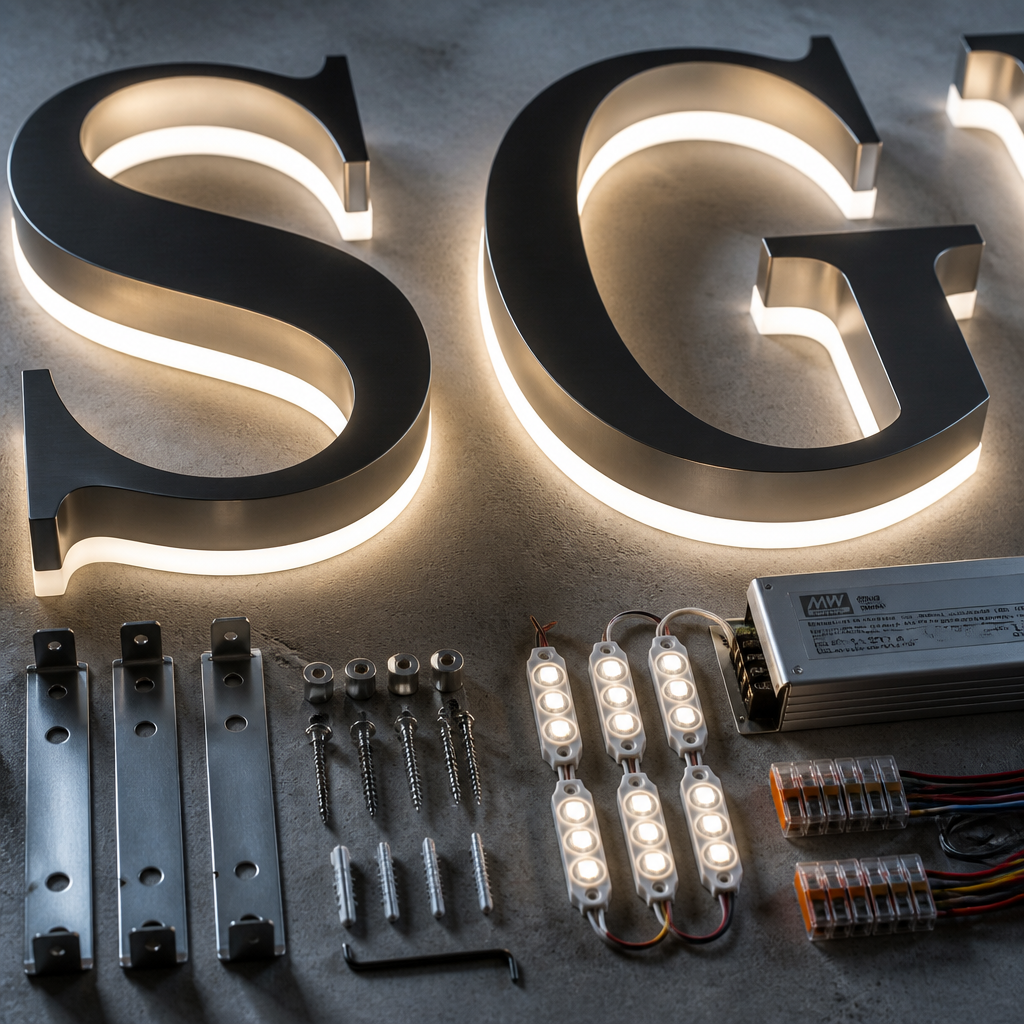
The single most compelling argument for signage rental is cash flow preservation. A high-quality illuminated pylon sign, a set of three-dimensional channel letters, or a full LED-backlit fascia can represent a significant capital investment. For a business that is opening a new location, fitting out a retail store, or rolling out a franchise, that capital is almost always better deployed elsewhere.
Tax Treatment of Rental Payments
In South Africa, monthly rental payments on signage are treated as an operating expense and are fully deductible against taxable income. This contrasts with outright purchase, where you own a depreciating physical asset and the tax treatment is less immediate. For a business paying corporate tax, the effective cost of renting is meaningfully lower than the invoice price once the deduction is applied. This is not a loophole. It is the intended tax treatment for leased business assets, and it is a legitimate reason to prefer the rental model.
Fixed Payments Protect Against Cost Escalation
Signage is heavily materials-dependent. LED components, aluminium extrusions, high-grade vinyl, and steel fabrication are all subject to exchange rate pressures and local supply constraints. When you rent signage, your monthly payment is fixed at the time of contracting. Any future increase in materials costs, labour rates, or replacement parts falls on the provider. A common mistake businesses make is to compare the total rental cost over 60 months to the purchase price and conclude that buying is cheaper. That calculation ignores maintenance, repairs, insurance, and the opportunity cost of the capital deployed upfront.
Pro tip: Before signing a purchase order for signage, calculate the total cost of ownership over five years, including estimated maintenance at roughly 8 to 12 percent of the asset value annually. Then compare that figure to the equivalent rental cost. The gap is usually much smaller than it first appears, and in many cases, renting comes out ahead.
The Best Use Cases for Signage Rental in Gauteng and Beyond
Not every signage need is a good candidate for rental. Knowing which use cases genuinely benefit from a rental structure will save you from either over-committing or under-investing.
Events, Exhibitions, and Seasonal Campaigns
This is where temporary signage solutions deliver the clearest advantage. A business exhibiting at an expo at the Gallagher Convention Centre, Nasrec, or any corporate event venue in Johannesburg does not need to own a 3x3 metre branded display structure. Renting the display stand, pull-up banners, and branded fabric backdrops for the duration of the event is straightforwardly more economical. The same logic applies to seasonal retail activations, product launches, and pop-up store branding.
New Location Openings for Franchises
Franchisees are one of the strongest natural markets for signage rental in South Africa. When a franchisee opens a new outlet, they face significant upfront costs: leasehold improvements, equipment, stock, and working capital. Adding the full cost of exterior and interior signage to that list compounds the financial pressure. Renting the signage spreads that cost over the operational life of the store, aligns the expense timing with revenue generation, and keeps the franchisee liquid in the critical first months of trading.
Construction Sites and Temporary Retail
Developments under construction need prominent site branding, directional signage, and hoarding graphics, but only for the duration of the build. Purchasing full-specification site signage that will be dismantled in 18 months makes no financial sense. Rental is the correct model here, full stop. The same applies to temporary retail spaces in shopping centres, market-style activations, and pop-up brand experiences.
Multi-Site Corporate Rollouts
For a corporate business rolling out signage across 20, 50, or 100 sites simultaneously, the capital requirement of outright purchase can be prohibitive. Rental distributes that capital requirement into a predictable monthly operating cost and allows the rollout to proceed at pace without tying up credit lines or equity.
Corporate Identity Compliance and Franchise Signage
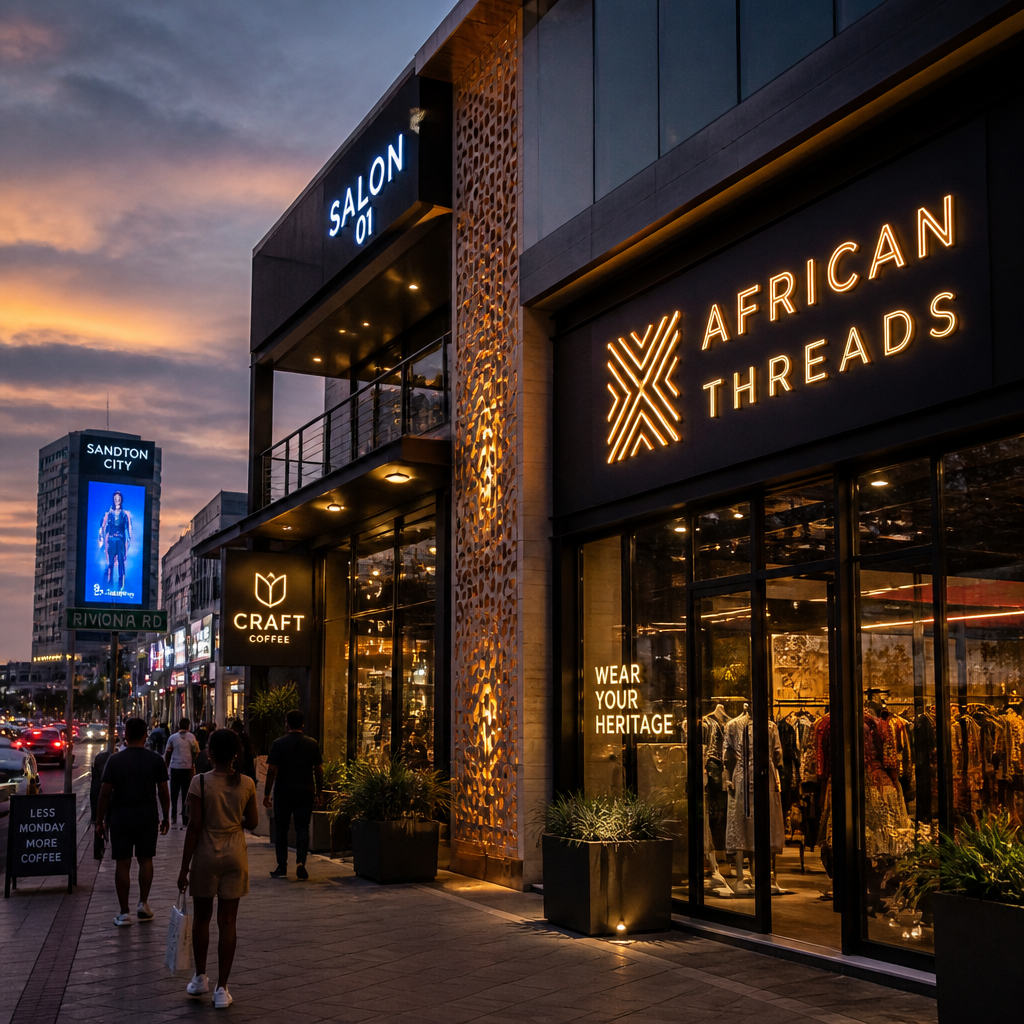
For franchises and large corporates, signage is not just about visibility. It is a legally and commercially mandated expression of brand standards. Getting it wrong, whether through incorrect Pantone colours, non-compliant letter heights, or substandard materials, can result in failed CI audits, penalties from the franchisor, or brand damage that takes years to correct.
A reputable sign rental partner with national footprint experience in franchise and corporate rollouts understands these stakes. They manufacture to specification, document every installation for CI compliance records, and replace any element that degrades below brand standard as part of the maintenance obligation. This is not something every signage supplier can credibly promise.
SignShopper operates specifically in this space, servicing franchises, corporate clients, hotels, fitness centres, and retail establishments across Gauteng and beyond, with teams geared to CI adherence and consistent quality across multiple sites. This kind of specialist capability matters when your brand reputation is on every hoarding, fascia, and pylonsign across dozens of locations.
Consistent, well-maintained signage across multiple locations is one of the most visible signals of operational discipline. A brand that looks sharp at every site earns trust before a customer walks through the door.
Pro tip: When briefing a signage rental provider for a franchise or corporate rollout, provide your CI manual upfront and ask for a sample sign before production begins. Any provider worth working with will welcome this and build it into the project timeline. If they push back, that is a red flag.
Rental vs. Outright Purchase vs. Lease-to-Own: A Direct Comparison
The South African signage market effectively offers businesses three procurement routes. Each has its place, and the right choice depends on your business type, site tenure, and capital position.
| Factor | Signage Rental | Outright Purchase | Lease-to-Own |
|---|---|---|---|
| Upfront cost | None or minimal deposit | Full cost payable on delivery and installation | Deposit plus structured payments |
| Monthly cash flow impact | Predictable fixed monthly payment | None after purchase (maintenance excluded) | Monthly instalment until ownership transfers |
| Tax treatment in South Africa | Fully deductible as operating expense | Depreciation over asset life; capital not immediately deductible | Interest portion deductible; capital portion subject to depreciation rules |
| Maintenance responsibility | Provider's responsibility (included in rental) | Business owner's responsibility and cost | Business owner's responsibility once payments begin |
| Flexibility to upgrade or change | High, especially at contract renewal or rebrand | Low, asset must be written off or sold | Low until asset is fully owned |
| Suitable for temporary or event use | Yes, short-term rental options available | No, poor ROI for short-duration use | No, ownership terms require long-term commitment |
| Best suited to | Franchises, corporates, events, new openings, multi-site rollouts | Established businesses with permanent sites and available capital | Businesses that want eventual ownership but cannot fund full purchase upfront |
In practice, outright purchase is the right choice only when a business has long-term security of tenure at a site, available capital that has no better deployment, and the operational capacity to manage ongoing maintenance. For most growing businesses in Gauteng, those conditions are not all present at the same time.
What to Ask a Signage Rental Provider Before Signing Anything
The signage rental market in South Africa includes providers with very different levels of capability. Choosing the wrong partner means locked-in payments for signage that underperforms, degrades, or does not meet your brand standards. Before committing to a rental agreement, ask these questions directly.
What Does the Maintenance Coverage Actually Include?
Some providers advertise maintenance inclusion but define it narrowly to cover only structural repairs, excluding LED replacements, vinyl degradation, or electrical faults. Get the maintenance scope in writing, itemised. A quality provider will cover all of these as standard. Anything less shifts the real cost of ownership back to you.
What Are the Exit Terms?
Rental agreements in South Africa typically run 36 to 60 months. Understand what happens if you need to exit early, whether due to a store closure, relocation, or rebrand. Some agreements allow cancellation with a settlement fee calculated on remaining months. Others are rigid. Know this before you sign, not after.
Can the Provider Service Your Locations?
A Gauteng-based provider is fine if all your sites are in Johannesburg and Pretoria. If you operate nationally or across Africa, you need a provider with the manufacturing capacity and installation network to match. SignShopper, for example, services clients across South Africa and into neighbouring countries including Botswana, Zimbabwe, and Mozambique. Not every sign rental company in Gauteng can say the same.
Does the Provider Manufacture In-House or Subcontract?
In-house manufacturing gives the provider direct quality control and faster turnaround. A provider who subcontracts fabrication introduces an additional layer of variability and delay. For CI-critical work, in-house capability is not a nice-to-have. It is a requirement.
Pro tip: Ask to visit the provider's manufacturing facility before committing to a long-term rental agreement. A company with strong in-house capability will welcome the visit. The condition of the workshop, the quality of materials on the floor, and the professionalism of the staff will tell you more than any proposal document.
Frequently Asked Questions
Is signage rental available for small businesses or only for large corporates?
Signage rental in South Africa is available to businesses of most sizes, though the structure of rental agreements varies. Large corporates and franchise networks tend to access multi-site rental packages, while smaller businesses can often rent specific items such as display stands, pull-up banners, or illuminated fascia boards on shorter terms. Contact providers directly with your specific need, because many are more flexible than their standard packages suggest.
How does sign rental in Gauteng differ from simply hiring a display stand for an event?
Event hire is typically short-term, from a day to a few weeks, and covers portable display equipment like banner stands, pop-up displays, and branded gazebos. Sign rental in Gauteng, in the longer-term commercial sense, refers to permanently installed or semi-permanent signage such as illuminated fascias, channel letter signs, and pylon structures, under a multi-year agreement with full maintenance coverage. Both are valid, but they serve different purposes and are priced differently.
Are signage rental payments tax-deductible in South Africa?
Yes. Monthly rental payments on signage are generally treated as operating expenses and are deductible against taxable income in South Africa. This is one of the primary financial advantages of renting over buying. You should confirm the specific tax treatment with your accountant, as individual circumstances can affect the application of these rules.
What types of signage can be rented through a provider like SignShopper?
A full-service provider like SignShopper offers rental options across a wide range of signage products, including LED-backlit signs, pylon signage, channel lettering, neon signs, banners, and display stands. The specific products available on rental terms depend on the provider, the contract term, and the scale of the project. For temporary signage solutions at events and activations, a broader range of portable display options is typically available.
What happens to the signage at the end of a rental agreement?
At the end of a rental term, the options typically include renewing the agreement (which may include an upgrade to newer signage), negotiating a purchase of the asset at residual value, or having the provider remove and reclaim the signage. The exit terms vary by provider and should be clearly specified in the rental agreement before signing. Always clarify this upfront, particularly if the signage is structurally integrated into your building.
How do I ensure my rented signage meets franchise or corporate identity standards?
Provide your CI manual or brand guidelines to the signage provider at the outset of the project. A competent provider will manufacture a sample or prototype for CI approval before full production begins. Ongoing maintenance obligations in the rental agreement should specify that any degradation in colour, illumination, or structural integrity will be remediated to the original specification. Working with a provider that specialises in franchise and corporate signage, rather than a generalist, significantly reduces the risk of CI non-compliance.
Have you recently made the switch from buying to renting signage for your business? Share what tipped the decision for you, we would like to hear how other South African businesses are approaching this.
References
- Signs4SA overview of signage rental terms and benefits for South African businesses
- Interactive display and temporary signage rental options for events in South Africa
- Why business signage matters in South Africa's competitive commercial environment
- Exhibition stand hire and temporary signage solutions in South Africa