


Channel Letter Signs South Africa: 3D Storefront Guide
Walk past any well-branded shopping centre in Sandton or Pretoria and you will notice that the stores you remember are not the ones with flat printed boards. They are the ones with bold, three-dimensional letters that catch the light at dusk and hold your eye from across a car park. Those are channel letter signs, and if you are a business owner, franchise manager, or retail property developer in South Africa who has not yet invested in them, this guide explains exactly what they are, why they outperform flat alternatives, and what to look for when commissioning them from a fabricator in Gauteng.
Table of Contents
- Quick Takeaways
- What Are Channel Letter Signs?
- Types of Channel Letters: Choosing the Right Style for Your Brand
- Materials and Construction: What Goes Into a Quality Sign
- Channel Letters vs. Flat Signage: A Straight Comparison
- Franchise and Corporate Identity: Why Precision Matters
- Installation, Maintenance, and Lifespan in the South African Climate
- How to Commission Channel Letter Signs in Gauteng
- Frequently Asked Questions
- References
Quick Takeaways
| Key Insight | Explanation |
|---|---|
| Channel letters are individually fabricated 3D forms | Each letter or logo element is a separate, hollow casing, not a cutout from a flat board. That depth is what creates the visual weight that reads from a distance. |
| Four main styles serve four different brand personalities | Front-lit, halo-lit, open-face, and combination-lit options each produce a distinctly different effect. Choosing the wrong one for your sector undermines the sign before it is even installed. |
| Aluminium and acrylic are the materials of record in South Africa | South Africa's UV intensity and seasonal temperature swings demand materials tested for local conditions. Cast acrylic in particular has a proven track record against fading in African sunlight. |
| LED is now the only practical lighting choice | LED modules consume significantly less power than older neon tubing, last far longer, and handle load-shedding recovery cycles without the fragility issues that shortened neon lifespans. |
| Franchise CI compliance is non-negotiable | Brand standards documents specify Pantone colours, letter heights, and return depths precisely. A fabricator who cannot match those specifications exactly puts your franchise agreement at risk. |
| Raceway-mounted vs. direct-mounted affects both cost and aesthetics | Raceway mounting runs wiring inside a visible backing box. Direct mounting conceals the wiring in the wall for a cleaner finish but requires more installation time and wall access. |
| Well-fabricated signs last ten to fifteen years with minimal maintenance | Powder-coated aluminium returns and waterproof LED modules are the key to that longevity. Cheap imported components typically fail within three to five years under South African conditions. |
What Are Channel Letter Signs?
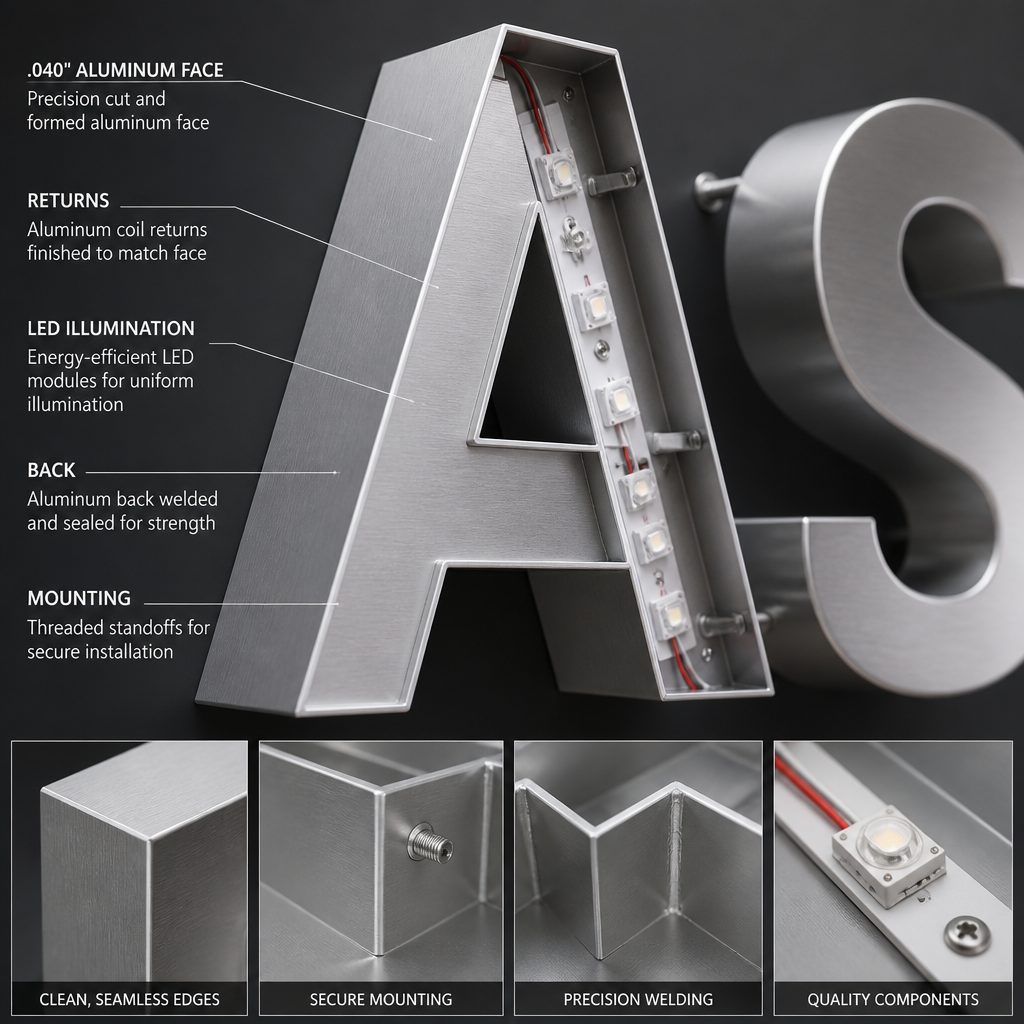
A channel letter sign is a three-dimensional, individually fabricated letter, number, or logo element mounted directly onto a building facade or a raceway backing panel. Each character is its own hollow structure, typically built from an aluminium return (the side wall that gives the letter its depth), an acrylic or aluminium face, and an LED light source inside. The result is a sign that reads as solid type from the front, casts depth shadows that make it pop from the wall, and glows evenly after dark.
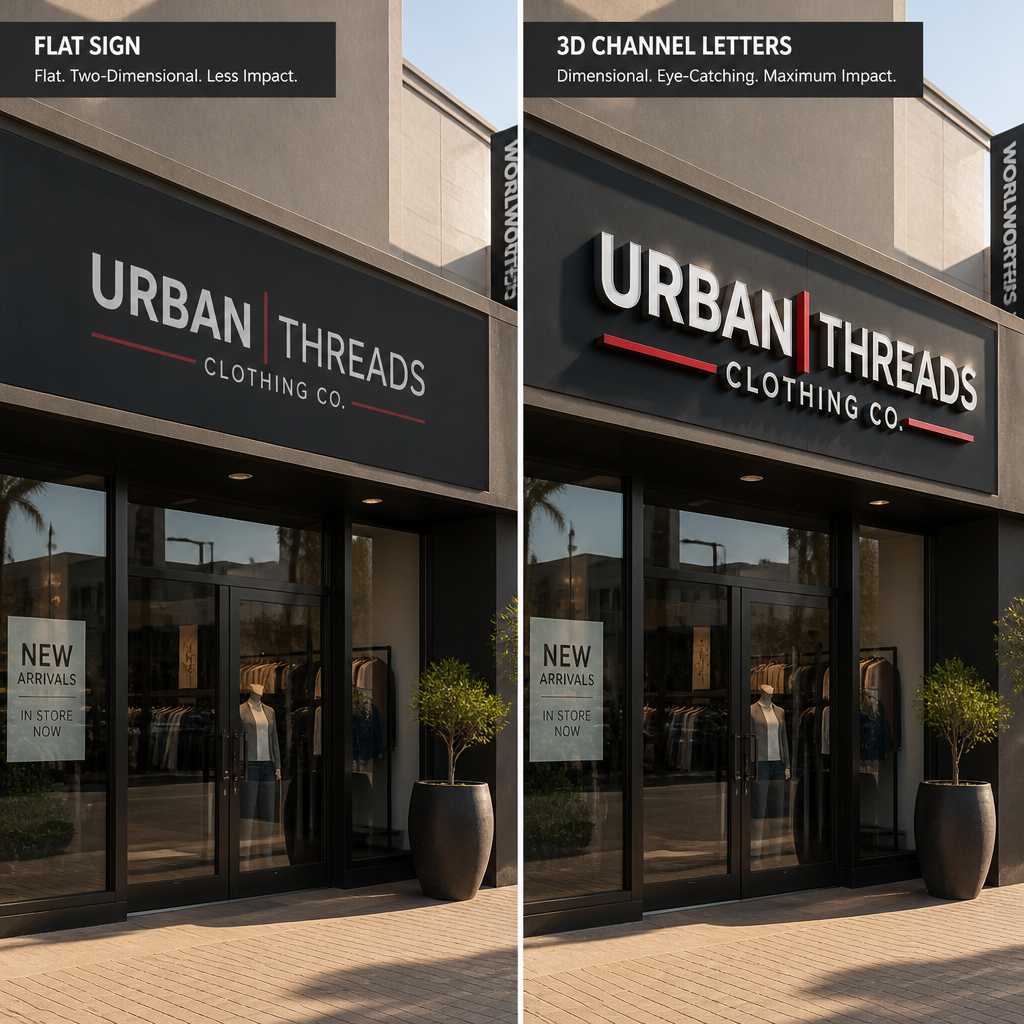
This is what separates channel letters from every flat format. A printed ACM board is two-dimensional; it sits flush with the wall and competes with everything else in a busy retail strip on the same visual plane. A channel letter sign projects outward, creating its own shadow and dimension. That physical presence is not an aesthetic luxury - it is a functional visibility advantage in environments where multiple businesses compete for the same passing eye.
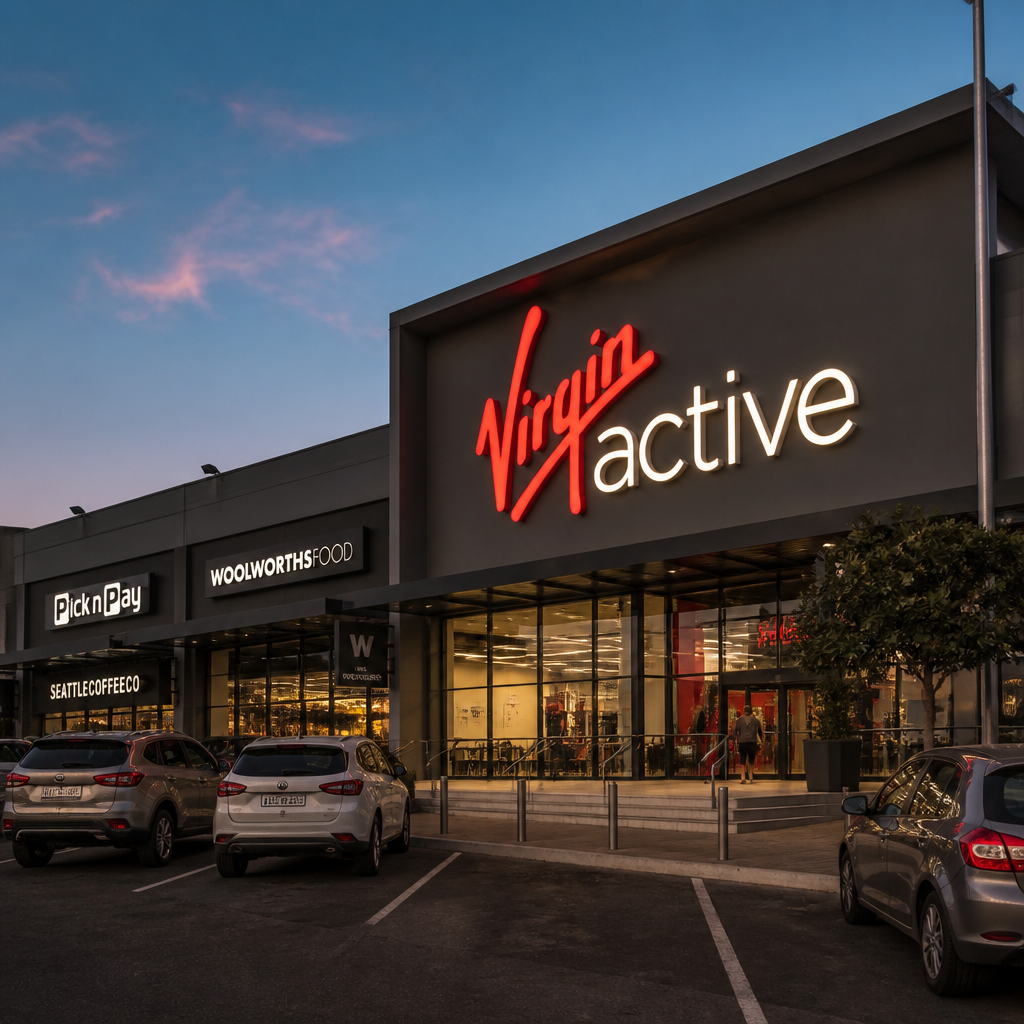
Channel letters first gained widespread adoption in the 1970s and have remained a standard in commercial signage precisely because no flat format has been able to replicate what they do. Modern CNC routing and precision laser cutting have made fabrication far more customisable than the hand-built letters of earlier decades, meaning almost any font, logo shape, or brand colour can now be accurately reproduced at commercial scale.
A sign that reads clearly at fifty metres in full daylight and glows without glare at midnight is not a design aspiration. It is an engineering specification, and channel letters are the format built to meet it.
Types of Channel Letters: Choosing the Right Style for Your Brand
The type of channel letter you choose shapes not just how your sign looks, but what it communicates about your business. Picking the wrong style is a real mistake that costs money to correct, so understand the differences before you brief a fabricator.
Front-Lit (Standard or Face-Lit) Channel Letters
The most common type in South African retail. The face of each letter is made from translucent acrylic so that internal LED light shines through it, making the letter itself glow. The aluminium return and back are opaque. This produces maximum daytime readability and strong nighttime visibility, making it the default choice for high-traffic retail, food and beverage outlets, and any application where the sign needs to compete against direct sunlight or busy visual environments.
Halo-Lit (Reverse or Back-Lit) Channel Letters
Here the face is solid and opaque - often polished or brushed stainless steel or powder-coated aluminium. The back of the letter is translucent, and the LEDs shine rearward onto the building wall, creating a soft halo of light around each character. The effect is sophisticated and restrained. Halo-lit channel letters work well for premium hospitality brands, corporate reception areas, hotels, and any brand positioning that requires elegance rather than loudness.
Open-Face Channel Letters
The front of the letter is left open, exposing the LED or neon light source directly. This creates a raw, high-contrast look with visible light tubes or modules inside the letter form. It is the right choice for bars, entertainment venues, vintage-aesthetic retail, and fitness centres that want an edgy or retro feel. It is absolutely the wrong choice for a corporate law firm or a premium financial services brand.
Combination-Lit Channel Letters
Both the face and the back are translucent, so the letter face glows and a halo appears on the wall simultaneously. This is the most visually complex option and commands the highest fabrication cost, but for landmark flagship stores or hotel entrances that need to make a genuine architectural statement, the investment is justified.
Pro tip: When briefing your signage provider, specify the lighting style in your design brief alongside the Pantone reference, not after. Changing from front-lit to halo-lit after fabrication has started means rebuilding the letter from scratch. The two styles use different face and back materials from the outset.
Materials and Construction: What Goes Into a Quality Sign
Every channel letter has four structural elements: the return, the face, the backing or mounting system, and the lighting component. The quality of each one determines how the sign holds up over a five, ten, or fifteen-year lifespan under South African conditions.
The Return
The aluminium return is the sidewall of the letter and gives it its three-dimensional depth. Aluminium is the material of record because it is lightweight, does not rust, and can be powder-coated in virtually any colour to match brand palettes. The return depth, measured in millimetres, determines how much shadow the letter casts and how far the LED light distributes internally. Shallow returns of around 75mm suit tight wall spaces; deeper returns of 100mm to 150mm or more create a more dramatic dimensional effect and allow better light distribution for larger letter heights.
The Face
For front-lit letters, the face is acrylic. Cast acrylic has a notably stronger track record in South African conditions than extruded acrylic, particularly for colour stability under high UV exposure. The face is routed to the exact letter or logo shape using CNC machinery and then secured to the front of the return. For halo-lit letters, the face is typically solid powder-coated aluminium or polished stainless steel.
LED Lighting Modules
LED modules have replaced neon as the standard internal light source for channel letters, and the reasons are straightforward: they consume significantly less power, they distribute light more evenly inside the letter form, and their lifespan is measured in tens of thousands of hours rather than the shorter service life typical of neon. For South African businesses dealing with frequent power fluctuations, LED modules also handle outage and recovery cycles better than neon tubes, which are fragile under repeated power interruptions.
Pro tip: Ask your fabricator to specify the LED brand and whether they are rated for outdoor use. Generic unbranded modules are frequently used to reduce cost but fail faster, especially in climates with wide temperature ranges. A reputable Gauteng fabricator will be able to name the LED product they use and provide datasheet specifications on request.
Mounting Systems
Letters can be mounted directly onto a wall, with wiring concealed in the building structure behind, or mounted on a raceway, which is a rectangular aluminium channel that houses the wiring externally and provides a single mounting surface for all the letters. Raceway mounting is faster to install and easier to service, but the visible backing box is a design element that needs to be factored into the overall sign layout. Direct mounting produces a cleaner, more premium finish but requires more installation time and appropriate wall access for wiring.
Channel Letters vs. Flat Signage: A Straight Comparison
The signage market offers several formats, and each has its place. This table gives you an honest comparison between channel letters and the two flat formats they most often replace on South African storefronts.
| Criteria | Channel Letter Signs | Illuminated Lightbox (Flat) | Non-Illuminated Flat ACM Board |
|---|---|---|---|
| Dimensional Presence | High. Each letter projects from the wall and casts real depth shadows. | None. Flat face with a recessed glow at the edges. | None. Completely two-dimensional. |
| Nighttime Visibility | Excellent. Each letter glows individually; legibility is high even without streetlighting. | Good. Entire face illuminated, but can create glare that reduces legibility from certain angles. | Zero. Entirely dependent on external lighting sources. |
| Brand Customisation | Very high. Any font, any colour, any logo shape can be fabricated. | Moderate. Limited to what can be printed on the face material. | Moderate. Print quality is excellent but there is no dimensional element. |
| Lifespan | 10 to 15 years with quality materials and periodic maintenance. | 5 to 10 years. Face materials and internal fluorescent or LED components degrade over time. | 5 to 8 years. UV fading and substrate delamination are common failure points. |
| Franchise CI Suitability | Excellent. Return depths, letter heights, and colour values can all be controlled to exact specification. | Fair. Adequate for simpler CI applications but difficult to standardise dimension across sites. | Poor. No dimensional element; looks noticeably inferior next to channel-lettered competitors. |
| Upfront Cost | Higher initial investment than flat alternatives. | Moderate. | Lowest of the three options. |
| Long-Term Value | Strong. Lower maintenance frequency and longer lifespan reduce total cost of ownership. | Moderate. | Poor. Frequent replacement cycles drive up cumulative cost. |
The upfront cost difference between channel letters and a flat ACM board is real and should not be dismissed. But for any business location expected to trade for more than five years, the total cost of ownership calculation typically favours channel letters, because you are not replacing a degraded board every few years and absorbing the associated downtime and design fees each time.
Franchise and Corporate Identity: Why Precision Matters
For franchise owners and corporate property managers, channel letter signs are not a creative decision. They are a compliance requirement. Brand standards documents from franchise head offices specify letter height, return depth, face colour Pantone references, font names, and sometimes even the exact LED product to be used. A fabricator who cannot demonstrate the capability to meet those specifications precisely is not the right fabricator for a franchise signage rollout.
The consequences of non-compliant signage go beyond aesthetics. Franchise agreements typically include signage standards as operational requirements, and a store that is out of specification can face mandatory rectification costs that fall entirely on the franchisee. Getting the sign right the first time, through a fabricator who understands corporate identity documentation and has experience on multi-site rollouts, is consistently the more economical path.
This is where working with a Gauteng-based signage provider who specialises in franchise and corporate accounts makes a material difference. They understand how to read a CI manual, how to translate Pantone values into powder-coat finishes that hold colour, and how to manage the documentation and approvals process that head offices require before installation.
SignShopper's approach of treating CI adherence as a non-negotiable baseline, rather than a nice-to-have, is the correct standard for franchise and corporate work. Multi-site consistency - where a channel letter sign in Johannesburg looks identical to the same sign in Polokwane or Gaborone - is the measurable output of that discipline.
Installation, Maintenance, and Lifespan in the South African Climate
South Africa's climate presents specific challenges for outdoor signage that a fabricator based in a more temperate market would not anticipate. Gauteng experiences intense UV radiation year-round, significant daily temperature variation, summer hailstorms, and increasingly, the electrical stress of load-shedding cycles. Each of these factors has a direct effect on signage longevity.
Installation Considerations
Proper installation of channel letters requires a structural assessment of the mounting surface. Letters mounted on face brick behave differently from those on fibre cement cladding or steel-framed facades. The mounting hardware needs to be appropriate for the substrate, correctly torqued, and sealed against water ingress at every penetration point. Wiring that enters the wall must be sealed to prevent moisture tracking, which causes both corrosion and electrical faults.
Always confirm that the fabricator's installation team is responsible for both the sign and the wiring connection to the building's electrical supply. Splitting responsibility between a sign company and a separate electrician creates accountability gaps when faults occur.
Lifespan Expectations
When built from quality materials, channel letter signs typically last between ten and fifteen years before structural components need attention. LED components have operational lifespans measured in tens of thousands of hours, which at typical operating hours translates to many years of service. The components that fail first are usually power supplies, which can be replaced without rebuilding the sign, and acrylic faces in very high-UV installations, where UV-stabilised materials make a significant difference to longevity.
Maintenance Routine
A basic maintenance programme for illuminated channel letters should include periodic cleaning of acrylic faces to restore maximum light transmission, inspection of sealant at wall penetrations, and testing of power supplies and LED modules. This is not intensive work, but neglecting it allows small issues to become expensive ones. A good fabricator will offer a maintenance agreement alongside the installation, which is worth taking if you are managing multiple sites.
Pro tip: Schedule a visual inspection of your channel letters within the first thirty days after installation. Thermal movement in new signs sometimes causes slight shifts in letter alignment, and addressing those immediately is far easier than correcting them after the sign has been in place for a season.
How to Commission Channel Letter Signs in Gauteng
The commissioning process for channel letter signs has predictable steps, and knowing them in advance keeps the project on schedule and on budget.
Step 1: Brief and Site Survey
A professional signage provider should conduct a site visit before quoting. The site survey establishes the available mounting surface area, the wall substrate and its structural condition, the distance from which the sign will primarily be read, and the building's electrical supply point. All of these inputs affect the design and the quote. A quote generated without a site visit is a guess, not a specification.
Step 2: Design and CI Sign-Off
The fabricator produces artwork showing the sign in context on the building facade. For franchise or corporate projects, this artwork goes to the brand or CI team for approval before fabrication begins. Changes requested after fabrication starts incur real costs. Lock in the design before you authorise production.
Step 3: Fabrication
Channel letter fabrication typically takes between two and four weeks for a standard commercial order, depending on complexity, materials sourcing, and the fabricator's current workload. Rush orders are possible but command a premium. Build lead time into your project schedule, particularly if the sign is needed for a specific opening date.
Step 4: Installation and Electrical Connection
Installation of a standard set of channel letters on a prepared wall typically takes one to two days for a professional team. Add time for raceway fabrication if that is the mounting method chosen. Confirm that the building's electrical installation is ready before the installation team arrives.
SignShopper manages all of these steps, from the initial site visit through to installation, which removes the coordination risk that comes from managing multiple contractors. For businesses operating across South Africa or into neighbouring markets like Botswana, Zimbabwe, and Mozambique, having a single accountable provider across all sites is a significant operational advantage.
Frequently Asked Questions
What is the difference between channel letters and 3D fabricated letters?
Channel letters are a specific type of 3D fabricated letter characterised by their hollow, casing construction, which allows internal illumination. The term "3D fabricated letters" is broader and includes solid dimensional letters that are not designed to be lit from the inside. All channel letters are 3D fabricated signs, but not all 3D fabricated signs are channel letters.
How long do channel letter signs last in South Africa's climate?
Built from quality materials, specifically powder-coated aluminium returns, UV-stabilised cast acrylic faces, and commercial-grade LED modules, channel letter signs typically last between ten and fifteen years before any structural component requires replacement. LED power supplies are usually the first component to require attention and can be swapped out without rebuilding the sign. Signs built from cheaper imported components, particularly acrylic faces without UV stabilisation, tend to fade visibly within three to five years under South African UV conditions.
Can channel letters be made to match franchise brand standards exactly?
Yes, and for legitimate franchise signage, this is the only acceptable standard. Channel letters can be fabricated to precisely specified letter heights, return depths, face colours matched to Pantone references via powder-coat or acrylic tinting, and font profiles routed to the exact brand typeface. A fabricator experienced in franchise rollouts will work directly from your CI manual and produce approval artwork for brand sign-off before cutting a single piece of aluminium.
What is the difference between raceway mounting and direct mounting?
Raceway mounting attaches all the channel letters to a single rectangular aluminium box, which is then secured to the wall as a unit. All wiring runs inside the raceway, making installation faster and maintenance simpler. Direct mounting (also called flush mounting) fixes each letter individually to the wall, with wiring concealed inside the building structure. Direct mounting produces a cleaner, more premium appearance because there is no visible backing box, but it requires more installation time and suitable wall construction for wiring concealment.
Are channel letter signs suitable for indoor applications like reception areas?
Absolutely. Channel letters are widely used for interior brand installations, including reception walls, lobby entrances, and feature walls in corporate offices, hotels, and retail flagships. Indoor applications allow for materials that would not withstand exterior weather exposure, such as polished chrome or brass-effect finishes, and for lighting intensities calibrated to interior lux levels rather than competing with direct sunlight. Halo-lit letters are particularly effective in interior settings because the soft backwall glow creates a premium, architectural quality without harsh brightness.
How do I get an accurate quote for channel letter signs in Gauteng?
The most important step is to request a site visit before any pricing is discussed. A quote that is generated from a description alone cannot account for wall substrate conditions, electrical supply access, or height requirements that affect installation complexity and therefore cost. Provide your fabricator with your CI manual or brand guidelines, your preferred installation timeline, and whether you require a single site or a multi-site rollout. All of these inputs affect the final figure, and a professional fabricator will want all of them before committing to a price.
Have you recently commissioned channel letter signs for your business or franchise? Share what worked well and what you would approach differently for your next site, because real-world feedback from South African business owners is what helps others make better signage decisions.
References
- Overview of 3D signage solutions and resin channel letter trends in the South African market
- Industry guide to channel letter types, history, and fabrication standards
- Channel letter sign materials, lighting options, and storefront application guide
- Guide to outdoor channel letter materials, durability, and weather performance
- Illuminated channel letter signage and cast acrylic performance in African climate conditions