


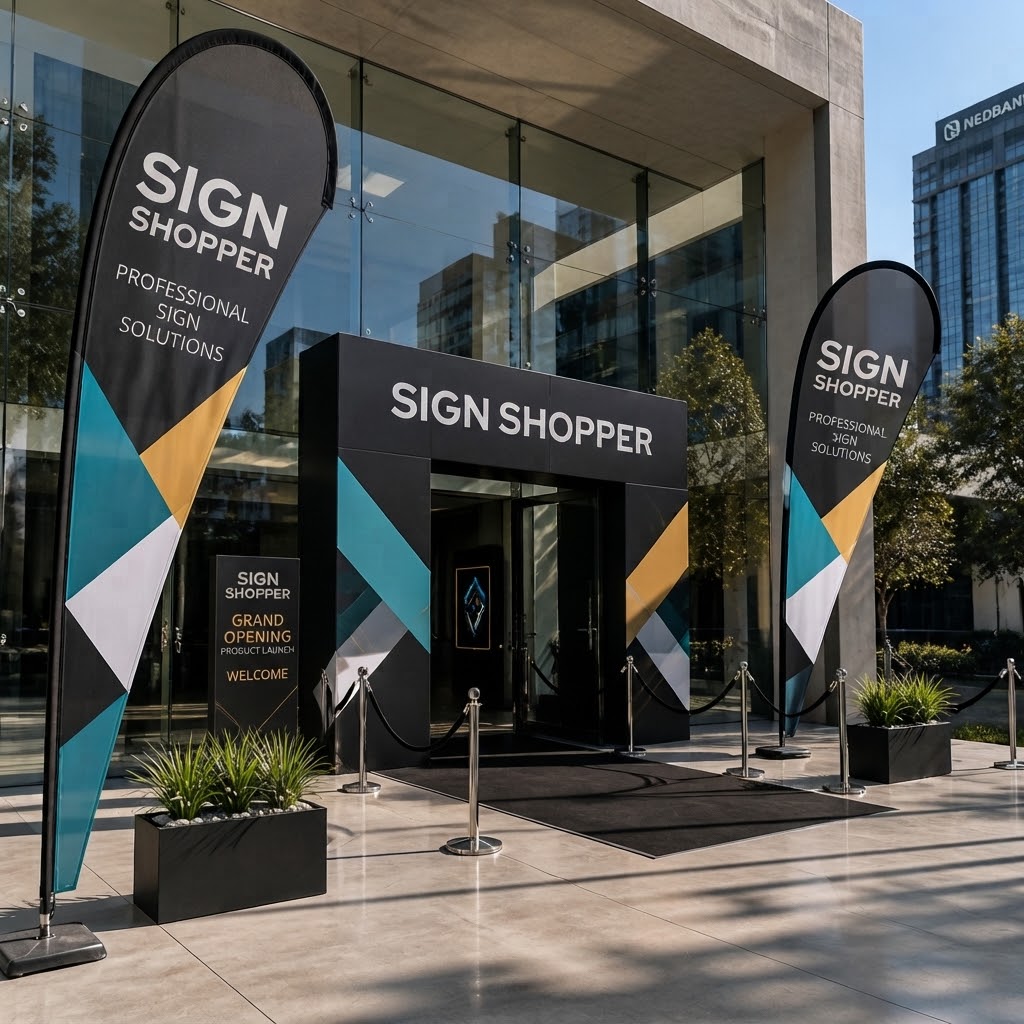
Teardrop Banners South Africa: Event Signage Guide
You have 48 hours before a product launch in Sandton, your event signage budget is tight, and you need something that will stop foot traffic cold. Teardrop banners South Africa suppliers consistently get this order, and there is a clear reason why: no other portable signage format delivers that combination of height, print area, wind stability, and reusability at a comparable price point. Whether you are a franchise manager running a regional activation in Gauteng or a hotel events team staging a branded conference entry, teardrop banners deserve a serious look before you default to a pull-up banner that will disappear into the crowd.
Table of Contents
- What Are Teardrop Banners and Why the Shape Matters
- Cost Breakdown: What You Actually Pay for teardrop banner in South Africa
- Best Use Cases for South African Events and Retail Environments
- Teardrop Banners vs. Feather Flags vs. Pull-Up Banners: An Honest Comparison
- Design Tips That Make Your Teardrop Banner Actually Work
- Buying vs. Renting Teardrop Banners in Gauteng
- Frequently Asked Questions
- References
What Are Teardrop Banners and Why the Shape Matters
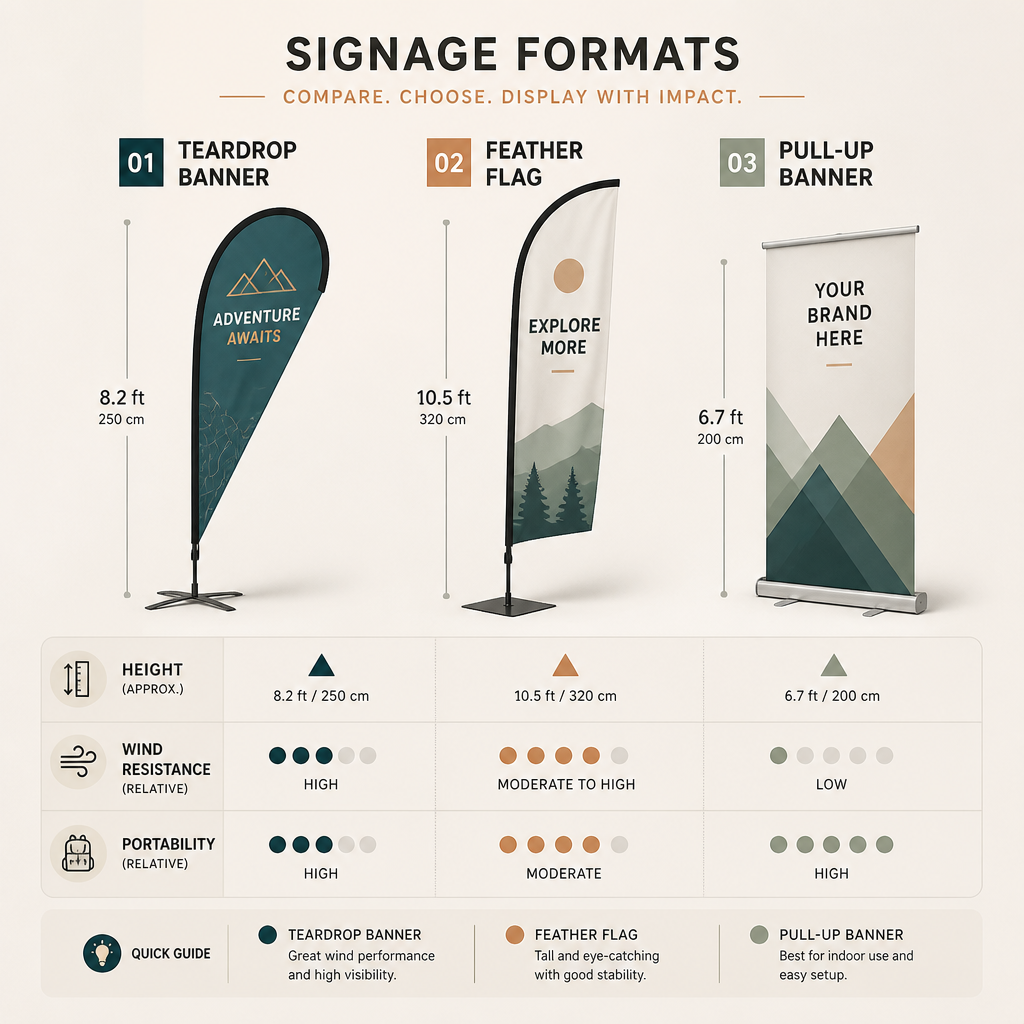
A teardrop banner is an outdoor promotional flag with a distinctive curved profile: wide at the base, tapering to a blunt point at the top. The shape is not just aesthetic. The curvature creates constant tension across the fabric, which means the print face stays taut and readable whether there is no wind or a stiff Highveld afternoon gust rolling across an outdoor venue.
The hardware system is straightforward. A sectional fibreglass or aluminium pole threads through a sleeve in the fabric, and the whole assembly anchors via a ground spike driven into grass or sand, or a cross-base plate for hard surfaces like tarmac and paving. Most full kits pack into a carry bag roughly the size of a golf umbrella bag, which matters when your team is loading and unloading a branded vehicle multiple times a week.
Fabric quality is where suppliers differentiate themselves. The standard material is a lightweight knitted polyester printed using dye-sublimation, which bonds the ink into the fibre rather than sitting on top of it. This means the colours remain vibrant after repeated outdoor exposure and the fabric does not crack or peel the way vinyl-based products can. Double-sided printing is available on most teardrop formats, using two separately printed skins stitched back-to-back with a light-blocking inner layer to prevent colour bleed-through.
Common height options in the South African market run from compact indoor formats at roughly 1.5 metres to large outdoor units approaching 5 metres. The mid-range sizes, typically around 2.5 to 3.5 metres, are the most practical for most event signage South Africa applications because they clear human head height, create genuine visual presence, and still fit comfortably inside a standard venue entrance without hitting ceiling rafters.
Cost Breakdown: What You Actually Pay for Teardrop Banners in South Africa
The price of a teardrop banner is rarely a flat rate. Several components contribute to the final invoice, and understanding each one prevents the frustration of comparing quotes that are not actually comparing the same product.
What a Full Kit Includes
A properly specified teardrop banner kit includes the printed fabric skin, the sectional pole set, at least one base option (either a ground spike for grass or a cross-base for hard surfaces), and a carry bag. Some suppliers quote only the fabric skin as the headline price, then add hardware separately. Always confirm whether the quote is for a complete kit or a skin replacement only before making a decision.
South African suppliers such as Budget Banners list teardrop banner and flag products in a price range from roughly R600 to R1,900 depending on size and specification. These figures align broadly with what you will encounter across the Gauteng market. A single-sided small-format unit comes in at the lower end of that range, while a large-format double-sided kit with a heavy-duty cross-base sits at the upper end.
What Pushes the Price Up
High-quality kits typically include the printed fabric, a sectional pole set, a ground spike or cross-base, and a convenient carry bag. The variables that push the price higher are: larger print area, double-sided printing, premium reinforced sleeve construction for longer hardware life, and expedited turnaround. Rush jobs, typically defined as delivery in under five working days, attract a premium across most South African print suppliers.
Replacement skins are the real long-term cost saving. Once you own the hardware, refreshing the look for a new campaign costs only the fabric. For franchise operators running seasonal promotions or retail chains updating offers quarterly, this ongoing cost is far lower than reprinting roller banners or replacing vinyl mesh banners.
Pro tip: Order hardware and skins as a matched set the first time, then budget only for replacement skins in subsequent campaigns. Three or four skin reprints will still cost less in total than switching to a different banner format that requires new hardware each time.
Best Use Cases for South African Events and Retail Environments
Teardrop banners work hardest when they are used outdoors, in high-footfall environments, or wherever a free-standing display needs to create impact without requiring wall fixings or ceiling rigging. That covers a wide range of scenarios common to SignShopper's client base.
Corporate Events and Trade Shows
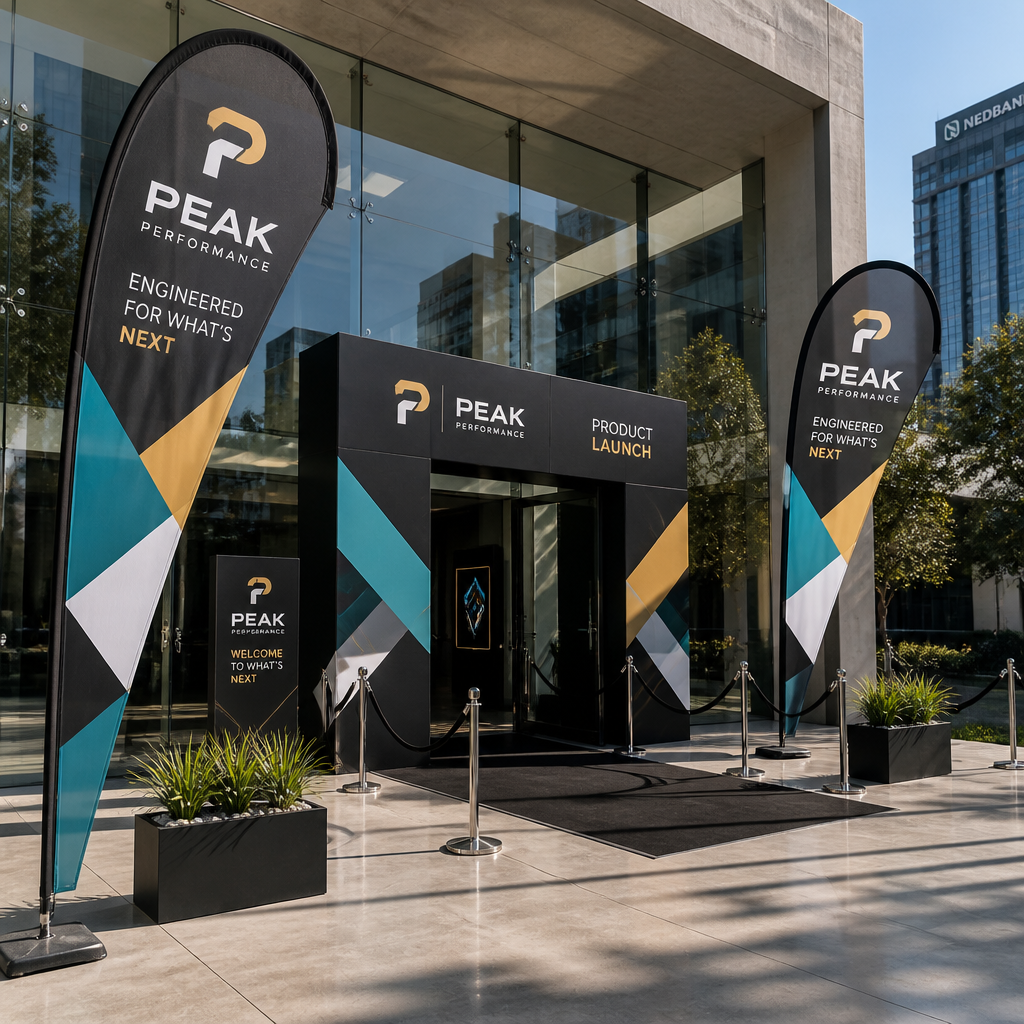
At trade shows and corporate expos, the challenge is not just visibility, it is differentiation within a hall full of competitors all using the same pull-up banners. A row of three matching teardrop banners at the entrance to a stand creates an unmistakable branded corridor effect. Because they stand independently on cross-bases, they work on any floor surface and require no rigging approval from the venue.
Businesses across South Africa rely on flag banners for their durability, visibility, and ease of use. Whether you need a single promotional flag or a full set for national campaigns, these banners offer outstanding value and professional appearance.
Retail Storefronts and Forecourts
Franchise operators and retail chain managers use teardrop banners to mark entrances, highlight promotional offers, and reinforce brand identity at street level. A ground spike planted in a grass verge along a busy road means your banner is at full height and moving gently in the breeze, which is more attention-grabbing than a static fascia sign at roofline height. This use case is especially effective for fuel station forecourts, shopping centre parking entrances, and restaurant drive-through entries.
Hospitality and Events Venues
Hotels and conferencing venues use teardrop banners to direct guests between spaces, identify sponsor brands at gala dinners, and create a branded arrival experience at porte cocheres and garden venue entries. The portability is a direct operational benefit here: the same set of banners can be moved from the conference foyer in the morning to the poolside function area in the afternoon without requiring any tools or specialist labour.
Fitness Centres and Sports Events
Gym openings, fun runs, cycling events, and sports sponsorship activations all benefit from promotional banners Gauteng and nationwide that can handle outdoor conditions without degrading after a single day's use. Dye-sublimation printed polyester fabric handles UV exposure, light rain, and wind without the colour fading or the material tearing at stress points, provided the hardware is quality and the ground anchoring is correct.
The most underused quality of a teardrop banner is its reusability. Most corporate clients treat it as a single-event item, but the hardware has a lifespan of years. The skin is the consumable; the investment is in the pole system and base.
Teardrop Banners vs. Feather Flags vs. Pull-Up Banners: An Honest Comparison
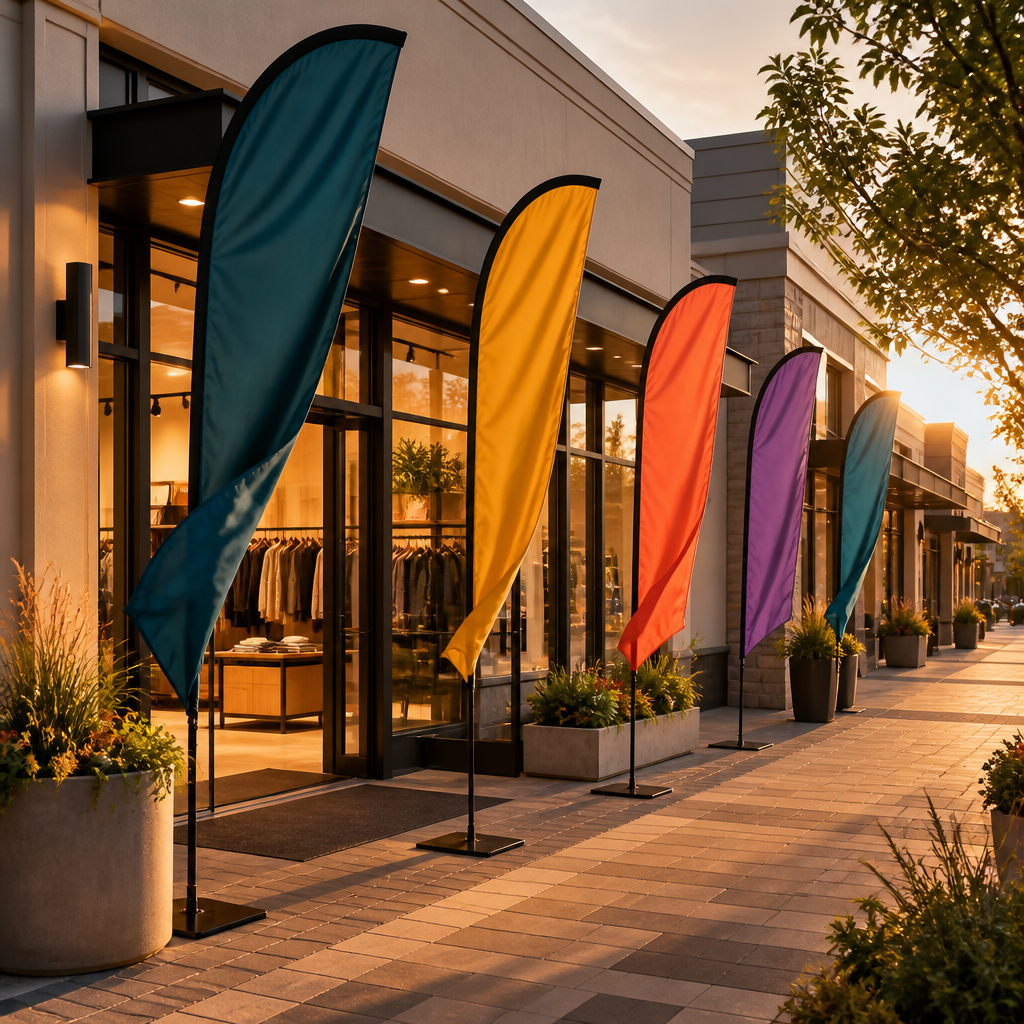
Every signage format has a context where it performs best. The mistake most event and marketing managers make is defaulting to pull-up banners for everything, including outdoor environments where they are genuinely unsuitable. Here is an honest comparison of the three formats most commonly used for event signage South Africa applications.
| Feature | Teardrop Banner | Feather / Sharkfin Flag | Pull-Up / Roller Banner |
|---|---|---|---|
| Wind stability | Excellent. Curved shape reduces drag and keeps print taut. | Good. Flutters in wind, which creates motion but can reduce readability. | Poor. Not designed for outdoor use in any wind. |
| Print area | Wide body suits logos and landscape-format artwork. | Narrow column; better for single words or vertical copy. | Tall rectangle; good for portrait-format artwork and copy-heavy designs. |
| Portability | Packs into a carry bag, sets up in under 5 minutes. | Similar pack size, similar setup time. | Self-contained cassette unit, fastest single-unit setup. |
| Reusability | High. Replacement skins are low cost; hardware lasts years. | High. Same skin-and-hardware model. | Medium. Mechanism can wear with heavy use; replacement cassettes are more complex. |
| Indoor use | Yes, with cross-base on hard floors. | Yes, with cross-base on hard floors. | Yes. Preferred indoor format for conferences and exhibitions. |
| Outdoor suitability | Primary use case. Ground spike handles most outdoor surfaces. | Primary use case. Taller profile for greater distance visibility. | Not recommended outdoors in wind. |
| Typical South African price range | R600 to R1,900 for a full kit. | Comparable to teardrop at similar sizes. | R684 to R2,688 depending on size and substrate. |
The teardrop banner holds its shape in wind and stays readable, while a feather flag flutters and moves, which is eye-catching but can reduce message clarity. The teardrop has a wider body that suits logos and landscape artwork, whereas the feather flag's narrow column is better for single words or vertical copy.
A common question involves the choice between teardrop banner stands and sharkfin flags. While both serve similar purposes, the teardrop flag maintains more tension at the bottom, creating a tighter aesthetic. The sharkfin flag offers a larger surface area for vertical text and a slightly more relaxed look at the tail.
Pro tip: For franchise activations where the brand logo is circular or square, specify a teardrop format. For a campaign that needs a single bold word readable at 50 metres, a feather flag's taller narrow profile may serve better. Use both formats together when budget allows for maximum street presence.
Design Tips That Make Your Teardrop Banner Actually Work
A teardrop banner printed with a poorly prepared artwork file is a waste of money. The shape creates specific design constraints that are different from a flat rectangular banner, and ignoring them is the most common error made by first-time buyers.
Work With the Shape, Not Against It
The tapered top means any copy or logo placed too high will appear narrow and cramped. The optimal print zone is the central two-thirds of the banner face, where the fabric is at its widest. Place your primary logo and any key message in this zone. Use the wider lower section for supporting copy or a call-to-action like a URL or phone number.
Avoid cramming multiple messages onto a single banner. One strong headline, one logo, and one contact point is the maximum for a banner that will be read by someone passing at walking pace or driving speed. If your corporate identity requires multiple elements, use a pair of banners rather than overloading a single face.
Colour and Contrast in South African Outdoor Light
South African outdoor light, particularly in Gauteng and the Northern Cape interior, is intense. Colours that look balanced on a screen can appear washed out or high-contrast when printed on fabric and viewed in direct sunlight. Dark backgrounds with light text (white or yellow) typically hold up better in full sun than light backgrounds with dark text. Always request a physical strike-off or at minimum a printed proof before approving a full production run for a multi-unit order.
Supply Print-Ready Artwork
Most South African banner suppliers require artwork at a minimum of 100 DPI at actual size, in CMYK colour mode, with all fonts converted to outlines and bleed areas specified. Submitting an RGB file exported from PowerPoint is a very common mistake that leads to colour shift in print and delays in turnaround. For organisations with a corporate identity manual, pass the exact hex codes and Pantone references to your signage supplier so they can profile the output to match as closely as possible.
Buying vs. Renting Teardrop Banners in Gauteng
SignShopper offers both purchase and rental options for teardrop banners, which is a less common offering in the South African market and one worth understanding properly before committing to a decision.
When Buying Makes More Sense
If your business runs more than three or four branded events or activations per year, purchasing outright is almost always the lower total cost over a 12-month horizon. The hardware cost is absorbed quickly, and replacement skins for new campaigns are a fraction of the full kit price. Franchise networks and retail chains with recurring seasonal promotions should build a bank of owned hardware and simply refresh skins as campaigns change.
SignShopper is a full-service signage company located in Gauteng, with presence in Durban and Cape Town, servicing all areas in South Africa, Botswana, Zimbabwe, and Mozambique. For businesses operating across multiple provinces or into neighbouring countries, owning a standardised fleet of hardware avoids the logistical complexity of renting in each location.
When Renting Makes More Sense
A single annual conference, a one-off product launch, or a short-term activation in a new market are cases where renting is the smarter financial call. Renting removes the need for storage, eliminates concerns about hardware maintenance, and allows you to scale the quantity up or down for a specific event without owning inventory you will not use again for months.
Teardrop banners grab the attention of possible customers, are inexpensive to purchase, and work well for all businesses. They are also greatly convenient, so you can use them repeatedly across different settings. This dual-use model, both purchased for regular activations and rented for peak event periods, is how the most cost-efficient franchise and corporate clients structure their signage spend.
Pro tip: When renting for an event, confirm with your supplier whether the rental rate includes delivery, setup, and collection, or whether logistics are charged separately. A rental rate that looks low on paper can climb significantly once site delivery and after-event collection fees are added, especially for venues outside the Johannesburg metropolitan area.
Frequently Asked Questions
How long do teardrop banners last outdoors in South African conditions?
With quality dye-sublimation printing on knitted polyester and well-maintained aluminium or fibreglass hardware, a teardrop banner fabric skin can last through multiple outdoor events before showing significant wear. The hardware typically outlasts several fabric skins. The main enemies of longevity are prolonged exposure to intense UV without any recovery period, storage in damp conditions, and ground spikes forced into rocky soil that stresses the pole joints. Used and stored correctly, the hardware investment should serve a business for several years.
Can teardrop banners be used indoors as well as outdoors?
Yes. Most teardrop banner kits come with two base options: a ground spike for outdoor grass or sand, and a cross-base plate for indoor hard floors, tarmac, or paving. This makes them genuinely dual-purpose. Hotels, conference centres, and exhibition halls across South Africa use them in foyers and on hard floor surfaces without any modification to the hardware beyond swapping the base type.
What is the difference between a teardrop banner and a feather flag?
The teardrop banner has a curved shape that tapers to a blunt point at the top, keeping the fabric taut and holding the print flat and readable in most wind conditions. A feather flag, sometimes called a sharkfin flag, is taller and narrower with a pointed trailing edge, and it flutters more in wind. The teardrop shape gives a wider usable print area suited to logos and landscape artwork, while the feather flag suits single words or vertical text. Both use the same ground-spike and cross-base hardware systems and replacement skin model.
How quickly can teardrop banners be produced and delivered in Gauteng?
Standard turnaround for custom-printed teardrop banners from most Gauteng suppliers runs between three and seven working days from artwork approval. Rush production in two to three working days is available from some suppliers at a premium. The critical path item is artwork approval, not print production. Submitting print-ready files at the point of order, rather than waiting for a back-and-forth proofing process, is the single most effective way to compress lead times.
Are double-sided teardrop banners worth the extra cost?
For any placement where people approach from two directions, such as a pavement frontage, a trade show aisle, or a parking lot entrance, double-sided printing is worth the cost. The alternative is a single-sided banner facing one direction, which means half of all passing traffic sees a blank or reversed image. The additional cost for double-sided printing is typically less than 50 percent above the single-sided price, which is almost always justified by the doubled visibility in high-footfall environments.
Does SignShopper offer teardrop banner rentals as well as sales?
Yes. SignShopper offers both purchase and rental options for teardrop banners, which makes them a practical choice for businesses that need signage for a specific event without committing to a full purchase. Rental is particularly useful for once-off corporate events, product launches, or short-term activations where owning the hardware does not make financial sense. Contact SignShopper directly to confirm current rental pricing and availability for your event dates and location.
Have you used teardrop banners for a South African event or retail activation? Share what worked, what did not, and whether the rental or purchase route made more sense for your situation.
References
- What influences teardrop banner prices in South Africa, including kit components and size comparison
- Teardrop banner stands vs sharkfin flags: hardware options and outdoor flag systems explained
- Teardrop banners and flag product range with South African pricing
- Custom printed outdoor feather and teardrop flag specifications and pricing in South Africa
- Feather flags vs teardrop flags: shape, wind performance, print area, and portability compared